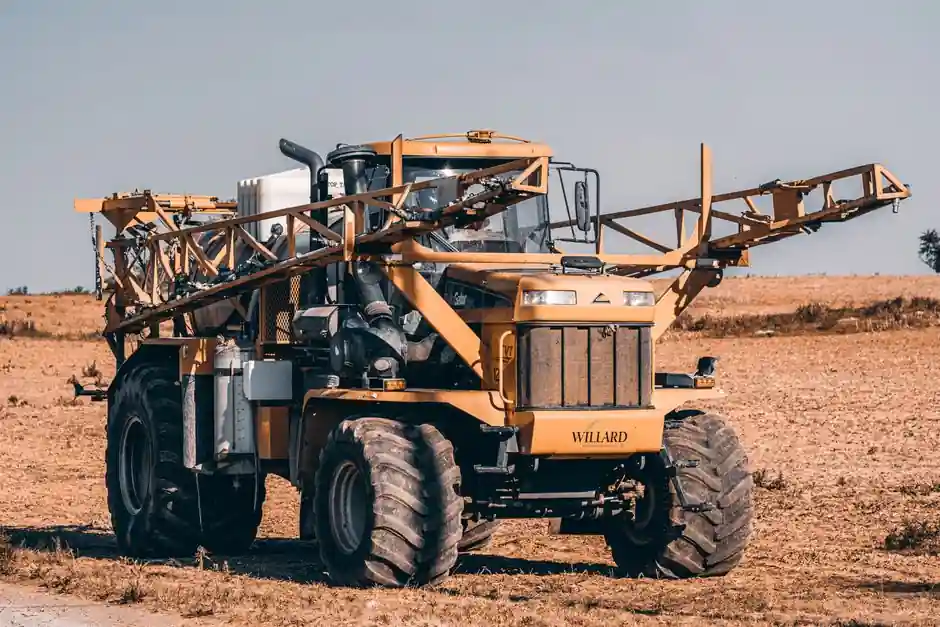
Agricultural machinery shot blasting comes down to three spec gates: part geometry, batch weight, and the required surface grade, with crawler, hook, and rotary table classes each serving a distinct niche of tractor, implement, and wire-rod components [S7][S1].
DX-BLAST's agricultural machinery line standardises on Sa2.5 finish per GB/T 8923-1988, 0.5–2.5 m/min pass speed, ≤92 dB noise, ≤100 mg/m³ dust emission, 199 kW total power, and 1.2–1.5 m³/min compressed air at 0.5–0.7 MPa across its wire-rod coil, wheel-rim, plate, and rotary-table models [S2][S3][S4][S5]. A reference baseline for the broader shot blasting machine category is therefore a 1300×1800×3000 mm work envelope with 5 t maximum loading.
Crawler Type for Sub-300 kg Castings and Stampings
Quanzhou Yueli's ST650 crawler delivers a 7.5 kW STQ036 direct-drive wheel at 200 kg/min shot flow, 1.5 kW elevator at 30 t/h, and a 260 kg workpiece capacity, sized for easy-rolling tractor housings, gearbox covers, and small implement castings [S1]. Total machine power is 13 kW on 380 V 50 Hz three-phase four-wire, with an 8 mm compressed-air inlet at 5–8 kg for the pulse filter cleaning system [S1].
Pro versus Max is a wear-life decision: Pro uses wear-resistant cast iron guard plates, while Max upgrades to non-magnetic rolled Mn13 manganese steel with a tighter turntable gap and adds a fan noise-reduction guide port on the 2.2 kW dust fan [S1]. The 7.5 mm door with container handle and 10 mm Mn13 secondary protection at the right inspection port keep abrasive in the chamber, a recurring failure point in cheaper crawler builds.
Hook, Hanger, and Pass-Through for Heavy Forgings and Coils
DX-BLAST's wire-rod coil, wheel-rim, and plate variants share a hoist + abrasive circulation + dust collection architecture but scale to 5 t loads inside a 1300×1800×3000 mm work envelope [S2][S3][S4]. Turbine count and power are sized to the production rate rather than fixed, which is the right approach for plants mixing thin rod coils with thicker plate components.
Component-level brand choices (Siemens, Omron, Schneider, Mitsubishi for controls) and a BE rotating drum separator with high separating rate keep the abrasive circuit clean enough to hold Ra 25–65 µm roughness, a band that suits powder-coating prep on plough frames, harrow discs, and tractor rim webs [S2][S3]. The 199 kW total and 1.2–1.5 m³/min air at 0.5–0.7 MPa reflect the multi-turbine, multi-elevator layout these bigger pass-throughs demand. Plant engineers weighing this class against a sand blasting machine should note that dry shot at this scale is faster per square metre for steel, but wet cabinets still win on dusty part cleanup in maintenance bays.
Rotary Table and Plate Formats for Small Wheels and Flat Stock
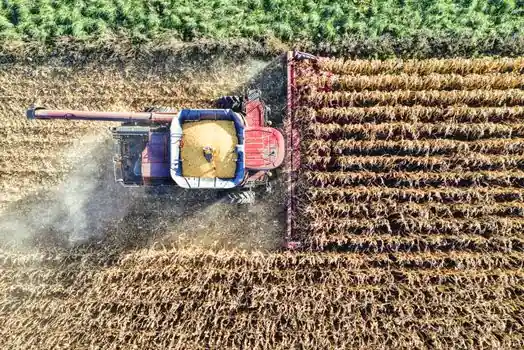
DX-BLAST's rotary table and "Europe style" plate blasting variants keep the same 199 kW / Sa2.5 / GB/T 8923-1988 envelope but use a rotating worktable to expose all faces of wheels, hubs, and flat blanks without operators flipping parts [S5][S6]. This format is the right pick for short-cycle, mixed-size wheel and disc runs common in aftermarket tractor service shops.
For a baseline of how the construction machinery and equipment world uses similar rotary and pass-through units, the same scaling logic applies: more turbines, more elevator capacity, and a bigger dust collector as workpiece cross-section grows. PLC control with local-brand support and a 24-hour after-sale response window are standard across this DX-BLAST tier, which matters for ag plants running seasonal peaks and tight harvest-equipment turnaround windows [S2][S3][S4][S5][S6][S7].
Selection Criteria: Part Geometry, Weight, Finish, and Throughput
Match the machine class to four criteria, with the part envelope and loading weight as hard gates: crawler ≤260 kg at 1300 mm width, hook/pass-through up to 5 t at 1300×1800×3000 mm, and rotary table for repeatable small wheels and plates [S1][S2][S7]. Finish is non-negotiable for any painted ag part: Sa2.5 per GB/T 8923-1988 with Ra 25–65 µm, and dust emission capped at 100 mg/m³ to stay inside typical EU and Chinese shop-floor permitting [S2][S3][S4].
Who it is for: OEM ag-machinery plants blasting tractor frames, plough discs, and wheel rims before e-coat or powder; aftermarket shops rebuilding harvest components. Who it is NOT for: thin-gauge sheet panels that will distort under 7.5 kW direct-drive wheel impact, and any application requiring wet cabinets for dust-sensitive food-grade lines. Crawler machines in the 600 kg class from suppliers like MIZHI extend the crawler option upward, but the published 260 kg "easy-rolling" rating on the ST650 is a more honest figure for bulk-density castings [S1][S10].
Limitations, Failure Modes, and Sourcing Signals
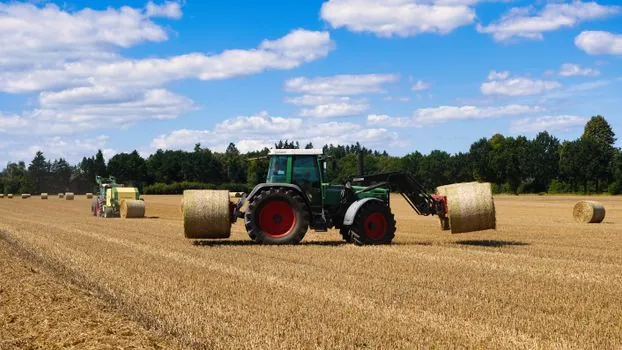
The biggest recurring failure mode in ag-machinery shot blasting is chamber wear, which is why guard-plate material is the first spec to lock: Cr20 high-chromium chilled-cast wheels are standard, but the chamber liners split between cast iron (low cost, faster wear) and Mn13 (longer life, higher price) [S1]. Dust collector cartridge size (320×900 mm) and 2.2 kW fan power set a real ceiling on continuous-shift dust load; undersizing here is the usual cause of visible emissions violations during harvest-season overtime.
Trackable signals when sourcing: ask for the exact turbine model and kW per turbine (DX-BLAST scales this to the production rate rather than publishing a single figure), confirm the separator type (BE rotating drum beats simple air-wash for wire-rod coil fines), and verify the PLC platform for local support [S2][S3][S4][S5]. For comparison, plant engineers cross-referencing shell core machine selection for rail components will recognise the same pattern: spec the wear parts and controls platform first, and treat the published total-power number as a sanity check rather than a sizing tool. A 2026-01 vendor note on using shot blasting for cleaning agricultural machinery reinforces that rust, old paint, and scale removal on frames, wheels, and metal parts is the dominant use case, with surface uniformity before coating as the principal value driver [S9].