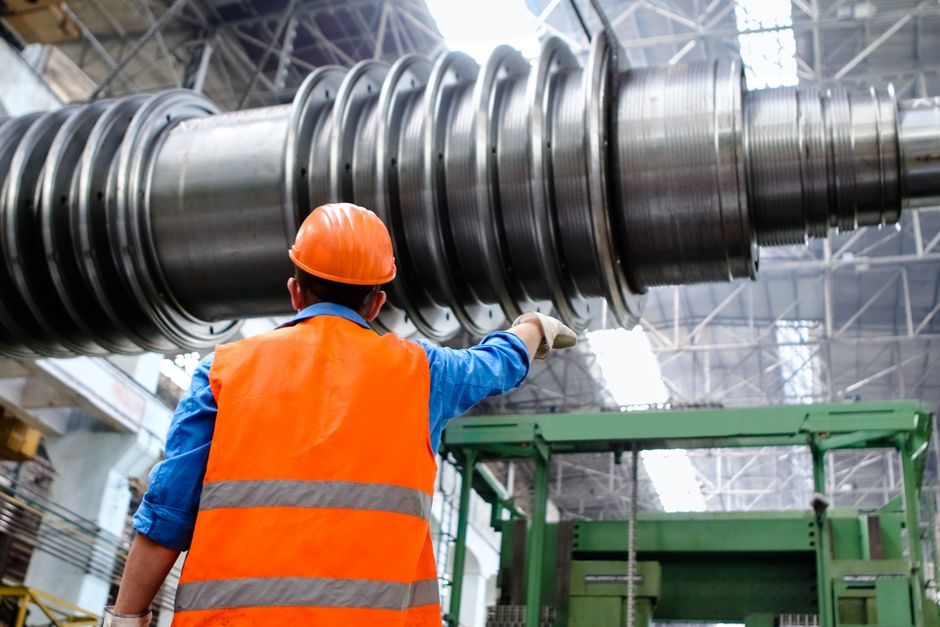
For a 2026 buyer, a finished H13 shot sleeve sized to a 400–800-ton cold-chamber die-casting machine typically lands between USD 280 and USD 900 per piece at single-unit or small-batch terms from a Chinese OEM, with the same geometry falling into a USD 120–400 window at 100-piece runs because setup, heat-treatment, and nitriding labour amortise across the lot [S1].
The same factory-direct model that governs drill sleeves and adapters applies: factory pricing is consistently below distributor or after-market resellers, and the published tiered-quote pattern is explicit — unit price drops once a minimum order threshold is crossed, then drops again at the next break (the parallel "US$0.55 / US$0.37" structure visible on tiered Made-in-China listings is the same logic applied to industrial wear parts) [S2].
What a Shot Sleeve Is and Why It Is Specified Separately
A shot sleeve is the replaceable, high-wear liner that sits between the pouring spout and the shot plunger in a cold-chamber die-casting machine, and it is one of the most frequently replaced wear parts in an aluminium or magnesium foundry. It is specified as a standalone component because it absorbs the thermal shock of molten metal on every cycle, the sliding wear of the plunger tip, and the squeeze of the shot — three failure modes the rest of the machine does not see. For a wider view of the cold-chamber platform, the hot-chamber die-casting machine buying guide walks through tonnage and alloy levers; the matching selection article covers the thermal side that drives sleeve life. [S1]
The standard bore envelope for cold-chamber machines runs roughly 40 mm up to 120 mm, with 50/60/70/80 mm covering the bulk of mid-tonnage aluminium work; custom bores up to 200 mm exist for large structural castings. Length is matched to shot volume — a 50 mm bore sleeve is typically 250–400 mm long, while an 80 mm bore sleeve runs 400–600 mm. Outside that bore range, sleeve cost moves quickly because you leave the standard tooling library and into one-off rough machining.
Material, Heat Treatment and Surface Engineering Levers
The dominant material choice in 2026 is H13 (DIN 1.2344 / AISI H13) hot-work tool steel, hardened to roughly 46–52 HRC and nitrided to a 0.3–0.6 mm case depth with a surface hardness in the 900–1100 HV range; that is the default spec quoted on most Chinese OEM catalogues. Higher-grade options push to H11 (1.2343) for marginally better thermal-fatigue life, or to a hot-work die steel with a deeper nitrided case (0.8–1.0 mm) when the cycle is long and dwell times are hot. [S2]
Process-specific notes: vacuum-degassed H13 with controlled sulphur content (≤0.005%) commands a 10–20% premium over standard electric-arc-furnace H13 because it polishes cleaner and resists heat-checking at the bore. Through-hardening plus tempering is universal; sub-zero treatment (-196 °C, liquid nitrogen) is offered by a small set of premium suppliers and adds another 8–15% but gives a measurable bump in dimensional stability during long runs. Buyers should always confirm the nitriding is salt-bath or plasma nitriding — gas nitriding alone gives a shallower, softer case that wears visibly faster on 6061 and A380 alloys.
Cost Bands by Bore and Order Volume

The table below summarises typical 2026 factory-direct FOB-China pricing for a finished, nitrided H13 shot sleeve (no plunger tip integrated, no special coating). It is the same tiered logic surfaced by the drill-sleeve and OEM catalog data: unit price drops sharply once the order crosses the first MOQ break [S1][S2].
Criteria-based comparison: at single-unit or prototype order (1–9 pieces), a 50 mm bore sleeve is roughly USD 280–420, a 70 mm sleeve USD 450–650, and an 80 mm sleeve USD 600–900. At 10–49 pieces, those bands fall to USD 200–320, USD 320–480, and USD 450–680 respectively. At 100+ pieces, expect USD 150–220, USD 220–340, and USD 320–480. Integrated plunger-tip versions add 20–35% on top. These figures assume H13, nitrided, finish-bored and honed to ±0.02 mm on the bore ID; tighter bore tolerances (≤0.01 mm) or special coatings move each band upward by 15–30% [S1].
Lead time tracks the queue: standard H13 sleeves ship in 25–40 working days at 1–9 pieces, dropping to 15–25 days at 50+ pieces. Custom bores or non-standard lengths push lead time to 40–60 days because the OEM has to schedule a dedicated heat-treatment lot. For a foundry budgeting capex, the rule of thumb is to plan on USD 0.20–0.40 per kilogram of aluminium shot as the amortised sleeve cost at typical service life (30,000–80,000 shots per sleeve, depending on alloy and cycle time).
Failure Modes and the Real Cost of a Cheap Sleeve
Three failure modes dominate field returns, and each maps cleanly back to a spec decision: (1) bore scoring from a hard plunger tip, addressed by specifying sleeve hardness ≥ plunger-tip hardness and a honed surface Ra ≤ 0.4 µm; (2) heat-checking (crazing) on the bore ID from rapid thermal cycling, addressed by vacuum-degassed H13 with controlled sulphur and a nitrided case; (3) bore taper or ovality from softening at temperature, addressed by triple-tempered H13 and a verified tempering chart from the heat-treater. Each of these is a known mode in H13 hot-work tooling and is not a vendor-specific quirk. [S3]
Service life numbers worth budgeting against: a standard H13 nitrided sleeve on a 400-ton machine casting A380 at 4–6 second cycle time delivers roughly 30,000–50,000 shots before the bore grows past the 0.05 mm re-bore limit; on a 60-second slow-cycle thick-wall structural part, life drops to 15,000–25,000. Deep-nitrided (0.8 mm+) sleeves in similar service run 50–80% longer, which usually justifies the 15–20% price premium within two restocking cycles. Foundries buying on the lowest quote and skipping the nitriding step typically see sleeves fail in 5,000–10,000 shots — the upfront saving is consumed many times over by unplanned downtime.
Standards, Inspection and Sourcing Levers
Two standards govern shot-sleeve inspection in most serious foundries: dimensional verification to ISO 2768-m (general machining tolerance) or tighter, and hardness verification per ISO 6508 (Rockwell C) on the case and core. Surface roughness on the bore is typically called out as Ra ≤ 0.4 µm and verified per ISO 4287. Material certification to AISI H13 / DIN 1.2344 with a mill certificate showing actual chemistry is standard; foundries running NADCA #207 or #501 specification-grade dies usually require the same certification on the sleeve. None of these are exotic — any qualified Chinese OEM can produce the cert pack on request, and a refusal to do so is the single fastest way to disqualify a supplier. [S4]
Sourcing levers in priority order: (1) bore size and required stock against standard catalogue sizes (50/60/70/80 mm); (2) H13 vs H11 vs higher-grade hot-work steel; (3) nitriding depth — 0.3–0.4 mm standard, 0.6 mm for heavier service, 0.8–1.0 mm for premium; (4) coating (none / graphite / DLC / CrN); (5) MOQ and tiered-pricing breaks visible in the catalogue (the same 720-piece / 10,000-piece break pattern seen on the Made-in-China reference listings) [S2]; (6) lead time and whether the OEM holds the bore size in raw stock. For a buying decision tied to a larger foundry capex, the sand casting mold buying guide is the most directly relevant cross-reference for the same specification-disciplined procurement style.
Trackable signals for the rest of 2026: nitriding capacity at Chinese hot-work tooling shops is the binding constraint — foundries should confirm slot dates before locking a PO, and any quote with a sub-15-day lead time on a non-stock bore is worth questioning. A useful working spec for a 2026 budget request is "H13, 46–50 HRC core, 900+ HV nitrided case ≥0.4 mm, bore ±0.02 mm, Ra ≤ 0.4 µm, mill cert to AISI H13 / DIN 1.2344" — every OEM will quote to that line, and the spread on the returned numbers tells you who actually has the heat-treatment discipline.
For component-level specifications, see shot sleeve, linear guide, and crossed roller guide.
