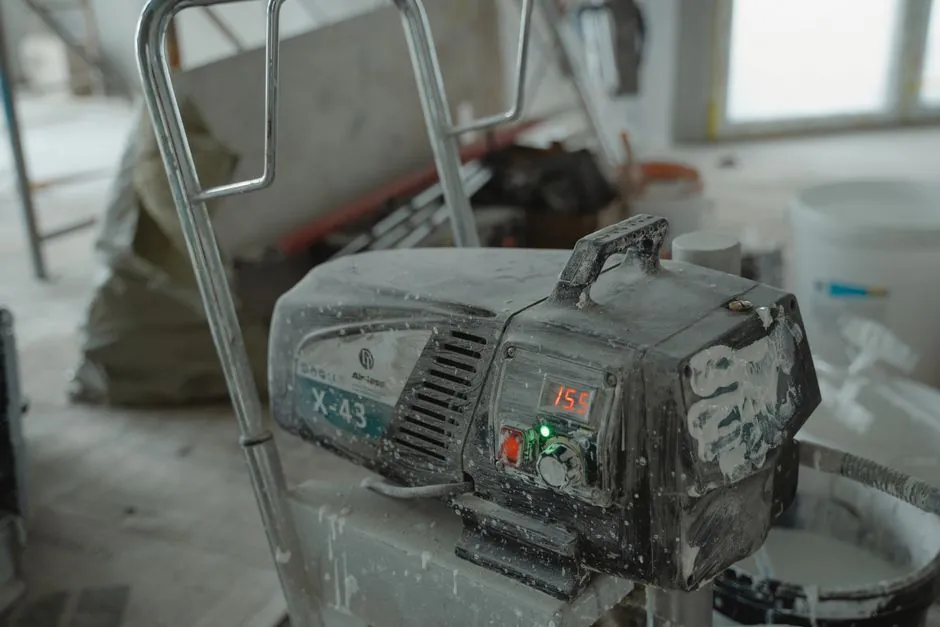
A shotcrete machine specified for interior pool finishing must deliver consistent 4000+ psi compressive strength with low rebound (under 8 percent) on curved shell geometry, and the right rig for residential pool work is a wet-mix unit with a 3-inch material hose and rated output of 30-50 cubic yards per hour [S1][S2].
Pool interior finishing is the troweled, sprayed, or aggregate-applied surface layer over a cured gunite or shotcrete shell, and machine choice for the shell placement phase dictates the finish quality, crew size, and the bonding behavior of the subsequent plaster, pebble, or quartz coat [S2]. For Georgia residential and commercial work, this phase sits under the International Building Code and International Residential Code as adopted by the Georgia Department of Community Affairs, with commercial pools additionally subject to Georgia Department of Public Health Rule 511-3-5 [S2].
Dry-Mix (Gunite) vs Wet-Mix (Shotcrete) Process Trade-offs
Dry-mix and wet-mix placement differ in where water enters the material stream, and that single fact controls rebound, dust, hose diameter, and pump distance on an interior pool job [S1][S2].
In the dry-mix process, a dry cement-and-sand blend is delivered through the hose and combined with water only at the nozzle, which is how AMD Pool & Patios describes gunite shell construction in their Rhode Island and Southern Massachusetts installations [S1]. This method allows very long hose runs and small-diameter hoses, but it generates higher rebound (typically 10-20 percent on vertical shell walls) and a dustier working environment inside an excavated pool pit.
In the wet-mix process, all ingredients including mix water are pre-blended at the pump and delivered through the hose as a ready-mixed concrete, which is what Atlanta-area pool contractors reference when they describe their shotcrete shell service for Suwanee and surrounding Georgia markets [S3]. Wet-mix placement produces lower rebound (commonly 5-8 percent on properly prepared shell surfaces), enables larger hose diameters up to 3 inches, and is the standard for interior finishing work where smooth troweling transitions into the plaster coat.
Output Class, Hose Diameter, and Crew Sizing
Output class, hose diameter, and crew size are coupled parameters: a 30-50 cu yd/h wet-mix rig typically pairs with a 2.5-3 inch material hose and a 4-6 person nozzle-and-finisher crew on a residential pool shell [S3].
Smaller wet-mix pumps in the 10-20 cu yd/h range use 1.5-2 inch hoses and suit spa additions, raised walls, and tanning-ledge pours where placement volume is low and access is tight. Mid-range 30-50 cu yd/h machines with 2.5-3 inch hoses cover the bulk of custom residential pools 30-50 ft long with variable depths, steps, benches, and integrated spas [S3]. Larger 60+ cu yd/h rigs with 3-4 inch hoses target commercial pool builds, hotel installations, and large freeform shells where continuous placement matters to avoid cold joints in the structural shell.
For interior finishing work specifically, the hose diameter choice carries downstream consequences: smaller hoses limit aggregate size to roughly 3/8 inch pea gravel, while 3-inch hoses can handle 3/4 inch aggregate and the higher build rates used for thick structural shells. Pool plastering crews working over a cured shell typically use separate pumping equipment for the finish coat, since the aggregate size, slump, and air-entrainment requirements differ from the shell-pour mix [S2].
Comparison: Dry-Mix vs Wet-Mix for Interior Finishing Applications
Three criteria separate the two processes for interior pool work, and the comparison below maps the practical decision points an engineer or contractor weighs during equipment selection. [S2]
Rebound and waste: dry-mix 10-20 percent on vertical shell, wet-mix 5-8 percent on the same surface [S1][S3]. Hose diameter and reach: dry-mix handles 1-2 inch hoses at long distances, wet-mix prefers 2.5-3 inch hoses at moderate distances. Crew size and skill: dry-mix needs a dedicated nozzle operator to control water addition at the tip, while wet-mix allows the crew to focus on placement, consolidation, and screeding because the mix is pre-blended. Interior environmental impact: wet-mix produces less airborne dust inside the excavated shell, which matters when neighboring homes are close or when commercial DPH Rule 511-3-5 inspections are pending [S2].
For residential pool work where finish quality and low rebound drive the spec, the wet-mix shotcrete path is the more common choice on 30-50 ft custom pools, and the dry-mix gunite path remains in use for repair work, remote-access sites, and small-diameter cavity fills where hose reach outranks placement rate [S1][S3].
Use Cases: New Shell, Renovation, and Replastering
The shotcrete or gunite machine requirement differs by phase, and a contractor that owns only one rig typically rents a second for the largest pours [S2].
For new custom pool construction with integrated spas, tanning ledges, and freeform shapes, a wet-mix shotcrete rig at 30-50 cu yd/h is the workhorse, and All In One Pool Construction in Suwanee lists the shell phase (excavation, steel, plumbing, concrete placement) as the core of their service [S3]. For major renovation projects where the existing plaster is removed by chipping, sandblasting, or hydroblasting down to the structural shell, a smaller dry-mix or wet-mix rig handles the localized shell repairs before the bond coat and new finish layer go on [S2].
For replastering and resurfacing, the structural shell is intact, and the shotcrete machine is generally not involved. The plaster, pebble, or quartz finish is troweled or sprayed directly, with controlled curing and immediate water-chemistry balancing to prevent calcium scaling or etching of the new surface [S2]. A small pre-blended plaster pump or hand-trowel crew is the typical resource at this stage, and a Georgia DPH pre-opening inspection is required for commercial pools before refilling [S2].
Limitations, Failure Modes, and Common Selection Traps

Three failure modes show up on interior finishing jobs when the machine is undersized, mismatched, or operated without the right crew training [S2].
First, undersized pumps cause cold joints in the structural shell, and cold joints create delamination and cracking that show through the plaster or pebble finish years later, exactly the failure mode described in the All In One Pool Construction community pool repair case where pebble lining was delaminating and cracking after long service [S3]. Second, the wrong hose diameter for the chosen aggregate size creates blockages and surge pressure at the nozzle, which raises rebound and weakens the placed shell. Third, using a dry-mix rig in a confined interior excavation without adequate ventilation or dust control creates a respirable-crystalline-silica hazard for the nozzle operator and finishers, a concern that grows in importance for commercial pools where DPH inspections are rigorous [S2].
The selection trap to avoid is buying (or renting) on output rate alone: a 60 cu yd/h rig on a 25 ft residential pool is wasted capital, and a 10 cu yd/h rig on a 60 ft commercial pool creates cold joints and overruns the cure window. Match the rig class to the shell volume, hose diameter to the aggregate size, and crew size to the placement rate, and reserve a margin for the integrated spa, raised walls, and water features that often double the placement volume versus a simple rectangular pool [S1][S3].
Standards, Permits, and Sourcing
Georgia residential and commercial pool work is governed by the International Building Code and International Residential Code as adopted by the Georgia Department of Community Affairs, with commercial pools additionally subject to Georgia DPH Rule 511-3-5 and federal CPSC guidance where it intersects Georgia practice [S2].
For broader equipment context, a side-by-side review of shotcrete machine selection for concrete work maps output, process, and mobility across rig classes. The companion encyclopedia entry on shotcrete machine covers the wet-mix and dry-mix pumping principle in more detail, while the finishing material reference covers the plaster, pebble, quartz, and aggregate options that go on after the shell cures. For project sites where the shell phase runs parallel to slab and hardscape work, a complementary floor grinder selection map covers the surface-prep equipment used on the surrounding deck.
Trackable signals to watch between now and the next quarter: ANSI/APSP pool finish standard updates, county-level adoption of the 2024 IRC in Georgia jurisdictions such as Fulton, Gwinnett, and Cobb, and any revision to Georgia DPH Rule 511-3-5 affecting commercial pre-opening inspection timing.
Component reference pages worth checking: coding machine.