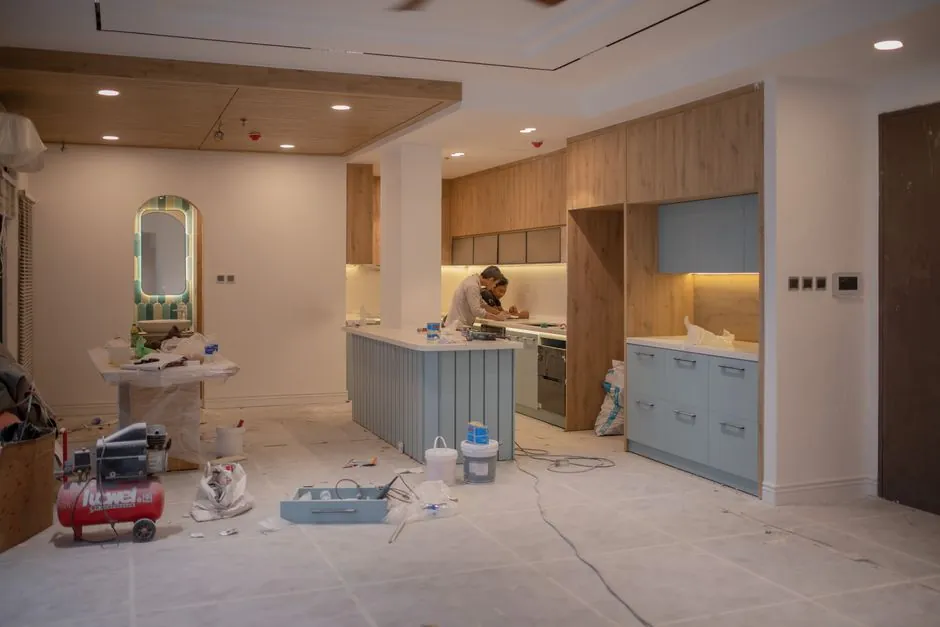
For an electrical-installation contractor buying a floor grinder in 2026, the first decision is not brand or diamond bond; it is the power supply already sitting in the consumer unit, because that single constraint fixes width, head count, and motor topology [S4][S5].
A 5 HP single-phase grinder pulling roughly 28 A at 240 V typically needs a 40 A dedicated breaker with appropriately sized cable, while a three-phase 400 V machine of the same nominal power draws balanced current across three legs and avoids the heavy single-leg loading that trips domestic boards [S5]. On a UK site the realistic supply is 230 V single phase or a 110 V site-transformer tap, so a brushless single-head unit is the only configuration that holds rated torque on that supply [S4].
Single-Phase 230 V vs Three-Phase 400 V: Which Supply the Site Actually Has
UK domestic and light-commercial premises are wired with 230 V single phase, and on construction sites the same single-phase feed is stepped down to 110 V via a centre-tapped transformer for safety, so any grinder rated for 110 V or 230 V single phase plugs straight in without an electrician [S4]. Three-phase 400 V is only found where it has been deliberately installed, typically in workshops, factories, and large distribution units, which is why it earns its place on warehouse slab grinding and continuous industrial runs rather than on a shop fit-out [S4]. A 240 V outlet is ambiguous on its own, because it can be either a split-phase single-phase leg or one phase of a three-phase system, so the consumer-unit labelling, not the socket, decides the grinder choice [S5].
The electrical-install contractor's decision rule is simple: if no three-phase breaker is present in the distribution board, specify single-phase only, because hiring a generator or requesting a three-phase connection adds cost and downtime for a machine that is rarely run long enough to need the headroom [S4]. The same logic reverses on an industrial fit-out where the board already has a three-phase isolator; in that case a three-phase grinder is the lower-risk choice because the supply is balanced and the cabling is already sized for the load [S5].
Brushless vs Brushed Motor: Why Single-Phase Output Is Higher in 2026
A brushless single-phase motor holds constant torque across the working speed range because there are no carbon brushes generating friction loss, which is the failure mode that historically pushed buyers toward three-phase for "extra headroom" on demanding jobs [S4]. A brushed equivalent loses a meaningful share of its torque under sustained load as the brushes wear, so the operator ends up leaning on the machine to keep cut rate steady, which adds fatigue and slows production regardless of what the nameplate claims on day one [S4].
On the same current draw a brushless single-phase unit delivers more usable cutting power, which matters on a site running off a single 230 V socket or a 110 V transformer shared with other tools, where headroom is measured in amps rather than horsepower [S4]. For an electrical-installation contractor this translates to a practical spec: a brushless single-head grinder in the 2-5 HP range handles coating removal and surface prep on floors up to about 3,000 sq ft, while a brushed unit of the same nameplate rating will not sustain that output on a 110 V tap [S5].
Width Selection by Project Scale: 18-22 inch, 25-30 inch, 32 inch Plus

Grinding width is matched to the typical area, not the occasional one-off, because an undersized machine costs days of labour per month while an oversized one becomes unusable in tight spaces and burns capital on unused production capacity [S1]. The 18-22 inch band fits single-car garages, basements, and small patios, passes through standard doorways, and can be one-person-loaded into a van, which is the envelope most electrical-installation subcontractors operate in [S1].
The 25-30 inch band suits auto shops, retail spaces, and restaurant floors where the operator needs a balance of speed and manoeuvrability, typically on a planetary machine with magnetic grinding heads running in opposite directions for smooth operation [S1]. The 32 inch-plus band is reserved for big-box stores, distribution centres, and aircraft hangars, where production rate per hour is the dominant variable and a four-head planetary with all-gear rotation on a three-phase 220 V motor is the standard configuration [S1]. For an electrical-install contractor this means defaulting to the 18-22 inch class unless the project mix is consistently larger than about 500 sq m, at which point stepping up to 25 inch starts to pay back in labour time [S1].
Head Type: Planetary for Polish, Rotary for Coating Strip
Planetary grinders carry three or four counter-rotating heads driven through a common carrier plate, which produces a swirl-free, flat finish and is the standard head for polishing and fine finishing work; most modern floor grinders sold for polish duty use planetary action [S1][S2]. A three-headed planetary is more cost-effective and grinds quicker, while a four-headed planetary is the apex configuration for clarity and gloss on large workspaces, at higher purchase cost [S3].
Rotary (direct-drive) grinders use one or two heads spinning in a single direction, which makes them more aggressive on thick coating removal such as epoxy, mastic, and urethane, but they demand more operator strength and are harder to control on finish passes [S1]. For an electrical-installation contractor the practical mapping is: planetary for any job that ends in a polish or a coating that needs a flat profile, rotary for the strip-out phase of a refurbishment where the priority is mass removal rather than finish [S1][S2]. Edge work in corners and against skirting is done with a smaller single-disc unit or a handheld angle grinder rather than a full-size walk-behind, because no planetary will reach into a 90 degree internal corner [S5].
Power, Propane, and Site Constraints Compared

Electric heavy-duty grinders produce no exhaust emissions, run significantly quieter than engine-driven units, and need less maintenance because there is no internal-combustion service interval, which suits occupied interiors and any site where propane is prohibited [S3]. Propane grinders free the operator from a power cord, which is an advantage on outdoor slabs or well-ventilated indoor areas with no available power, and they handle wet grinding with less visible dust, reducing the load on the dust collector [S3]. For electrical-installation work indoors the default is electric, both because emissions and noise are usually restricted and because the supply is already on site [S3][S4].
Breaker Sizing, Cable, and Generator Headroom
A 5 HP single-phase grinder on 240 V draws around 28 A and therefore needs at least a 40 A dedicated breaker with cable sized to the run length, otherwise the breaker trips under sustained load and the operator loses the headroom the spec sheet implied [S5]. Three-phase at 400 V spreads the same power across three conductors, so each leg carries roughly a third of the single-phase current, which is why the cabling on a three-phase installation is typically smaller for the same delivered power and why nuisance tripping is rarer on continuous runs [S5].
If the site has no utility three-phase and the project justifies a three-phase machine, a generator sized for the motor's starting current, not its running current, is required; a common misspec is to size the generator to running kW and then lose headroom every time the motor starts under load [S5]. For an electrical-installation contractor the practical check before purchase is: read the motor plate, sum the full-load amps, multiply by 1.25 for continuous duty per common wiring practice, and confirm the breaker and cable on site meet that figure, otherwise the grinder will not deliver its rated output regardless of brand [S5].
Who This Selection Map Is For, and When to Walk Away
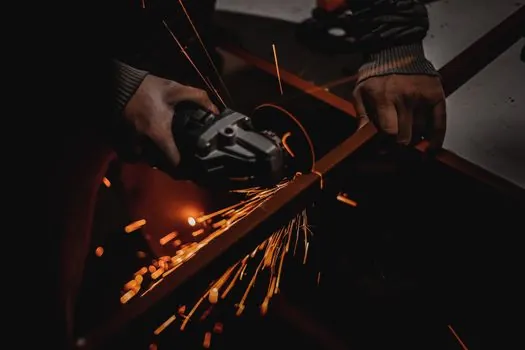
For an electrical-installation contractor working on a rotation of small commercial and residential refurbishments, the correct floor grinder spec in 2026 is a brushless single-phase 18-22 inch planetary, and the buying decision should be made on motor topology and head count before brand [S1][S4]. For a facilities team specifying a warehouse-floor renovation where 400 V three-phase is already terminated, the correct spec is a 32 inch-plus four-head planetary on three-phase, and a single-phase machine should be ruled out on production-rate grounds alone [S1][S3].
Walk away from any grinder purchase if the site supply cannot deliver the motor's full-load current within the existing breaker and cable ratings, or if the project mix is dominated by edge work that a walk-behind cannot reach, because in both cases the right answer is a smaller dedicated edge floor grinder or a fettling grinder rather than a larger walk-behind [S5]. For broader tool selection across an electrical-installation kit, the electrical automation and LV electrical references cover the surrounding control and distribution gear that pairs with floor-prep equipment on the same site. For interior-finishing and masonry scopes that overlap with floor grinder selection, the related maps on width, head type, and scale and on width, head type, and power match provide adjacent selection criteria.