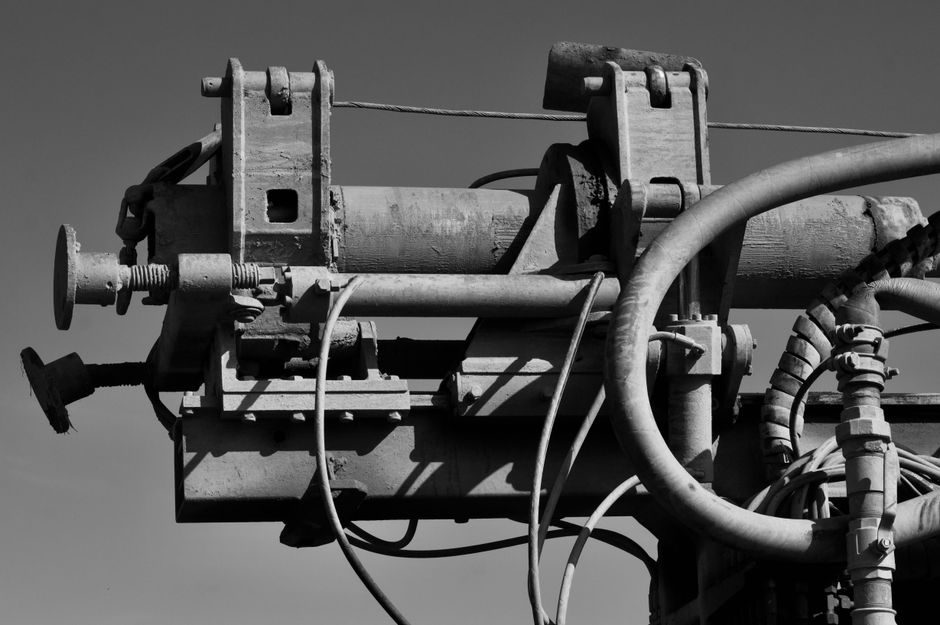
Shotcrete machines fall into two process families — dry-mix and wet-mix — and three chassis classes: portable/handheld, truck- or trailer-mounted, and robotic with placing boom. Dry-mix units typically deliver 4-9 m³/h using rotor- or screw-fed chambers, while wet-mix piston pumps reach 20-30 m³/h at 40-70 bar line pressure [S1][S2].
Changsha Keda Intelligent Equipments, a manufacturer operating from China, lists robotic wet-shotcrete units, climbing placing booms, and tower placing booms as a single product family, indicating that robotics and the placing boom are now sold as an integrated package rather than as separate attachments [S2]. Henan Tytion Machinery similarly markets dry and wet shotcrete machines alongside grout pumps under one design-and-build operation [S1].
Process split: dry-mix vs wet-mix and the rebound/dust trade-off
Dry-mix machines meter cement, aggregate, and accelerator at the nozzle, with water added at the spray point; this gives low pump wear and the ability to start/stop instantly, but rebound rates climb to 15-25% in vertical or overhead work because water content is operator-dependent [S1][S3]. Wet-mix machines pre-blend water at the mixer and pump the slurry through a concrete piston pump, so the operator only controls air, accelerator dose, and nozzle angle — rebound typically falls to 5-10% on smooth substrates [S2].
Wear parts in the wet-mix pumping path are explicitly catalogued as consumables: rubber seal plates, rotating wear liners, feed chambers, conical sleeves, rubber elbows, spray nozzles, spraying hoses, hose joints, nozzle seats, and the pressurized endless screw (S-type rotor) — all listed as factory-supplied replacements on the parts catalog [S3]. Dust load in dry-mix spraying routinely exceeds visible 50 m visibility, which is why underground dry-mix work increasingly requires auxiliary ventilation or a shift to wet-mix robotic units [S1].
Chassis classes: portable, truck-mounted, and robotic with placing boom
Portable / handheld class — typically 0.5-3 m³/h output, weighing 200-600 kg, fed by a small rotor or screw pump; used for small repairs, swimming pools, and slope patches. Henan Tytion's catalog and Gaodetec's GMP70/30 double-piston mortar sprayer both fit this portable band, with the GMP70/30 sized for 70 L/min nominal output at site-mixer feed [S1][S4].
Truck- or trailer-mounted class — chassis-mounted piston pumps, on-board air compressor, 360° boom (or no boom) and an operator cab; output 15-30 m³/h, total weight 12-22 t. Keda's "15T Wet Shotcrete Machine 360 Degree Rotation Double Circuit Hydraulic System" lands in this band — a 15 t wet-mix unit with full 360° rotation and twin-circuit hydraulics for independent boom and pump control [S2].
Robotic class — 4-wheel-drive carrier, 3- to 4-section telescopic boom, electric-hydraulic manipulator, integrated accelerator dosing, and PLC rate control. The KC2012W wet-mix shotcrete robot, listed at 5900×2000×2650 mm envelope, supports tunnels up to 11 m height; the 4-telescopic-boom KS80 robotic unit is specified at 0-25 m³/h programmable output [S2]. The KC3017 variant is a 4-wheel-drive wet-mix manipulator package for cross-section and slope work [S2].
Selection criteria: output, pressure, reach, and accelerator dosing

Specifying a shotcrete machine is a four-axis decision — the four levers engineers actually compare on a quotation: [S1]
- Output (m³/h): portable 0.5-3, truck-mounted 15-30, robotic 20-30 (KS80 listed 0-25 programmable) [S1][S2][S4].<br>- Pumping pressure: dry-mix rotor 7-15 bar, wet-mix piston 40-70 bar for long hose runs and high-rise [S3].<br>- Reach: handheld ~2 m hose, truck boom 10-17 m, robotic telescopic up to 17 m with 11 m tunnel clearance (KC2012W) [S2].<br>- Accelerator dosing: robotic units dose liquid accelerator at the nozzle electronically; dry-mix units meter powder at the nozzle, which limits control accuracy on wet substrate.
Henan Tytion positions its dry/wet machines for customers needing "design and manufacture machines for you as your special requirements" with project and process design bundled, indicating that mid-tier Chinese suppliers still treat output/pressure sizing as a build-to-order choice rather than off-the-shelf [S1].
Who it is for — and who should not specify it
Wet-mix robotic with placing boom fits tunnel, mine drift, hydropower penstock, and large-diameter cavern lining where rebound control, accelerator accuracy, and operator distance from a freshly sprayed crown drive specification. Dry-mix portable or truck-mounted units fit slope stabilization, swimming-pool shells, small repair, and remote sites where pre-mixed wet supply is impractical. A dry-mix machine is the wrong choice on a 50 m²-plus overhead pour with strict rebound and dust limits; a handheld wet-mix is the wrong choice on a 200 m tunnel drive where reach and dose control matter. Concrete placing booms — climbing, tower, walking, and stationary types — are a separate product line that pairs with the wet-mix pump to extend reach on high-rise and shaft work; the Keda lineup places them adjacent to the robotic wet-mix shotcrete family [S2].
Limitations and failure modes
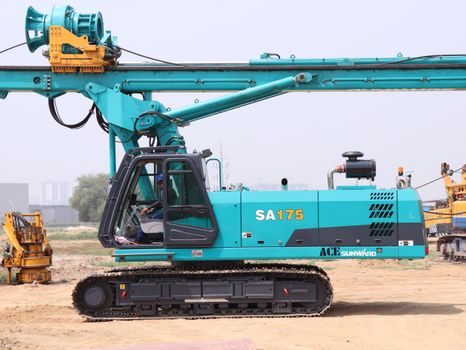
Dry-mix rotor pumps bind when aggregate moisture exceeds ~6% or when fines migrate into the rubber seal plate, forcing the entire wearing plate and conical sleeve to be replaced as a wear set [S3]. Wet-mix piston pumps suffer accelerated cup seal wear on long hose runs over 100 m, and on the boom-mounted robotic units hose whip at cycle end is the main failure trigger for the hose joint and rubber elbow. For the portable GMP70/30 double-piston mortar sprayer, the dual-piston balance is the maintenance pivot: a single worn piston unbalances flow and cracks the manifold [S4]. Dust overspray on dry-mix units is itself a failure mode in confined spaces — silica exposure drives ventilation design, not just the equipment choice.
Standards and sourcing signals
Henan Tytion holds ISO 9001 and CE certificates, which most EU-bound shotcrete shipments will be required to produce at customs; Keda markets robotic shotcrete "for tunnel" use, aligning with the underground concrete sprayer category that many metro and mine projects now pre-qualify [S1][S2]. For project specifications, a cross-discipline check on shotcrete machine selection should also review concrete placing booms pairing, grout pump compatibility for backfill, and mortar spraying machine variants for finish work. For comparison with other concrete-handling equipment, see the concrete groove cutter installation spec map and the roller bearing types and classifications reference, which use the same chassis/pump/boom decision logic.
Trackable signals: (1) whether more dry-mix portable models adopt closed-loop water rings for dust suppression as Chinese mine codes tighten; (2) whether robotic 4-section telescopic booms standardize on CAN-bus or stay on proprietary PLC for the next model year.
Component reference pages worth checking: coding machine, and core machine.