
Shrink wrap machine sizing is a physical-fit decision: build an envelope from every limiting product, convert it to per-model constraints, and verify sealing architecture before approving any configuration [S2]. The 2026 buyer landscape still spans manual impulse sealers, chamber units, semi-automatic L-bar systems, and fully automatic bundlers, with through-puts and capital costs scaling roughly 10x between adjacent tiers [S3].
Across recent guides, sizing starts with length, width, and height measured in running orientation (not catalog SKU volume), then layer in weight, geometry, stability, contact risks, and heat sensitivity for each representative item [S2][S5]. That envelope is the only honest input into a constraint sheet, because usable tunnel opening and sealing envelope depend on the film path, required seal position, and model-specific guarding rather than the exterior frame dimension [S2].
Define the Product Envelope, Not a Single Largest SKU
Length, width, and height do not always reach their maximum on the same SKU; a tall narrow carton can limit tunnel height while a short wide tray limits film width and sealing clearance, so every limiting product should become its own row in the sizing table [S2]. Each row must record actual assembled weight, geometry (rigid, flexible, round, tapered, irregular), stability in running orientation, contact risks (sharp edges, soft finishes, labels, exposed controls), and heat sensitivity of the product, adhesive, print, and primary package [S2]. A practical pilot brings 3 to 5 representative SKUs into a supplier test cell to confirm seals, corners, shrink, readability, and dimensions before any order is signed [S3].
The envelope also has to capture the package objective, whether the requirement is a fully enclosed overwrap or an open-ended sleeve, because sleeve systems have their own constraint logic around bundle cross-section and seal opening [S2]. Future SKUs belong on the sheet only when they are a defined requirement, and they should be flagged as future rather than blended into current production data, so suppliers can show whether they change the machine frame or only the setup range [S2].
Convert the Envelope into Per-Model Machine Constraints
The envelope only becomes useful when it is mapped against machine-side constraints: sealing envelope, film path, tunnel opening, conveyor load, transfers, working height, and access envelope, with one column per proposed model [S2]. For each model the supplier must confirm the product-size rule for the exact seal architecture, the supported web format and usable film width range, the usable tunnel width and height (not exterior dimensions), and the rated product load on the conveyor surface [S2].
Usable dimensions are not the same as frame dimensions: a catalog blade length or outer tunnel housing tells you almost nothing about what the product will actually clear once guarding, side guides, and seal position are factored in [S2]. Treat any number not supported by a model-specific confirmation as a guess, and price the line on confirmed usable limits, not on the brochure.
Match Sealing Architecture to Product Geometry
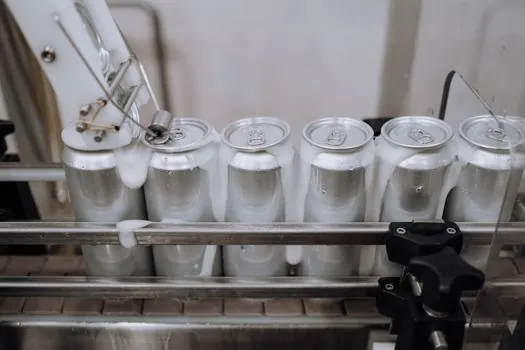
For an L-bar system, product length, width, and height interact within the usable sealing envelope, and the supplier should demonstrate the rule for the exact model and package orientation rather than handing you a generic envelope diagram [S2]. A side-seal system handles product length differently, but width, height, longitudinal-seal position, and cross-seal timing still define fit, so the same envelope check applies with a different dominant axis [S2]. A sleeve system, used widely for multipacks and bundles, requires confirmation of bundle cross-section, sleeve presentation, seal opening, and stability while the unshrunk bundle transfers to the tunnel [S2].
If the architecture is not yet selected, start from the shrink wrapping machine type landscape rather than forcing all products into one sizing rule, because the wrong seal geometry is the single most common reason a line fails to match a real SKU mix [S2].
Chamber, Semi-Automatic, and Fully Automatic Compared
Three architectures dominate the mid-market, and the right pick depends on volume and changeover pattern: chamber machines are compact, low-capex, ideal for small batches and frequent changeovers, with sealing and shrinking in one step [S3]. Semi-automatic L-bar plus tunnel systems add conveyors and infeeds, lifting cadence and repeatability for SMEs scaling from artisan volumes [S3]. Fully automatic lines integrate infeed, detection, and continuous sealing for multi-shift, multi-SKU production with recipe-based changeover [S3].
A practical comparison grid for buyers is roughly: chamber for low speed and very fast changeovers, suited to startups and seasonal batches; semi-automatic for medium speed and fast changeovers, suited to SMEs increasing throughput; fully automatic for high speed and recipe-based changeovers, suited to stable, multi-shift demand [S3]. Lines producing over 10,000 pieces per day typically require the fully automatic tier, while impulse sealers, I-bar sealers, and heat guns still cover entry-level and very low volume work [S4].
Film, Gauge, and Tunnel Aperture
Film choice and tunnel aperture are coupled: POF is the retail-clarity default with food-grade variants widely available, PVC is economical but increasingly restricted by local rules, and PE dominates bundles and heavier items, especially in sleeve and bundler configurations [S3][S4]. Gauge, perforation, slip, and shrink memory control corner quality and film waste more than unit price, so the standard guidance is to test two gauges on the largest SKU before locking a film spec [S3].
Tunnel sizing uses the sealed product dimensions plus clearance for airflow and conveyor guards, not the largest SKU outer dimension; usable height and width after sealing, with margin, is the only honest input [S3]. Energy profile also matters: insulation, warm-up time, standby behavior, and airflow control directly drive operating cost and operator comfort, especially on multi-shift lines [S3].
Who Should Not Buy a Chamber or Semi-Automatic
A chamber unit is the wrong pick for any line running more than one shift on a stable SKU mix, because the operator-paced seal-and-shrink cycle cannot keep up with continuous-flow infeeds and becomes the throughput bottleneck within months [S3]. A semi-automatic L-bar is the wrong pick when the SKU mix is wide and recipes change every hour, because manual placement and re-set time erode the cadence advantage over a chamber [S3]. Fully automatic is the wrong pick when daily volume is low or changeovers are daily rather than per-shift, because recipe memory and integrated detection only pay back when the line runs long campaigns [S3].
For a related workflow on the buyer side, the spec-anchored buyer's workflow for choosing a shrink wrapping machine walks through the same architecture decision from a different angle, and food and beverage plants should cross-check the 2026 spec map for the best shrink wrapping machines before locking a hygienic POF grade.
Total Cost, Pilot Run, and Sourcing Signals
Total cost of ownership is dominated by energy, consumables, labor, planned maintenance, and parts availability, not the headline price; tool-less adjustments and saved recipes cut training time, while consistent seals cut rewraps and waste more than film unit cost [S3]. Local service shortens downtime and protects ROI, so geography of the OEM's authorized service network is a real selection criterion, not a procurement afterthought [S3].
Trackable signals to watch over the next buying cycle: (1) whether suppliers publish usable tunnel opening and usable sealing envelope separately from exterior frame dimensions, since that distinction is the single biggest source of sizing disputes [S2]; (2) whether pilot test cells accept 3 to 5 representative SKUs and document settings as standard operating procedures rather than one-off demonstrations [S3]; (3) whether POF food-grade certification and PE recyclability claims are backed by documentation for the target market, because local rules on PVC continue to tighten [S3][S4].
Detailed specification references: shrink wrapping machine, and linear guide.