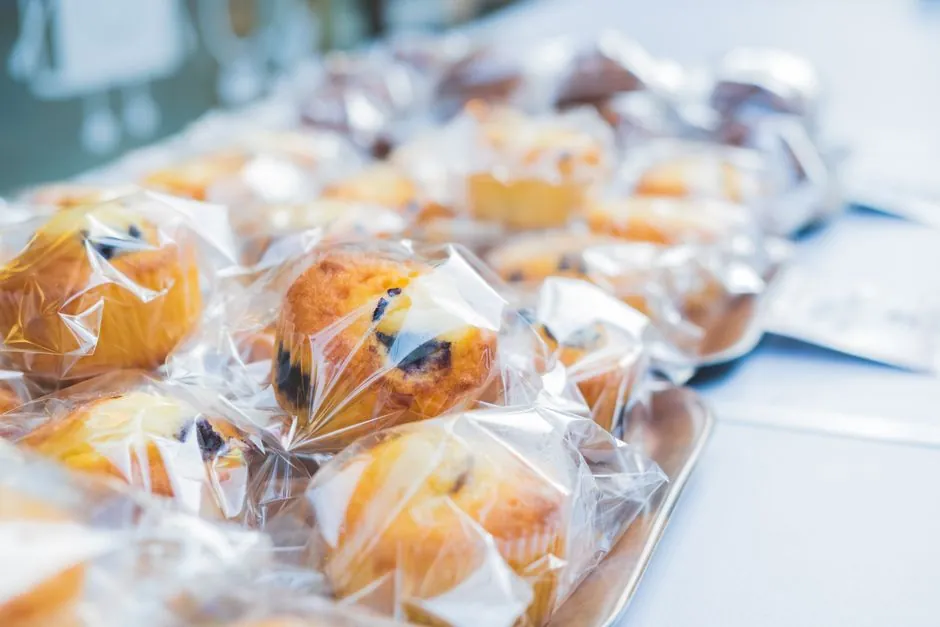
Food and beverage packagers in 2026 choose shrink equipment by three numbers: packages per minute, film grade (polyolefin vs polyethylene), and pack format (single unit, tray, or multi-pack), with automatic L-bar sealers delivering 30-40 packages per minute for retail-ready units [S2].
The dominant machine classes documented for food and drink lines are automatic L-bar sealers, automatic side sealers, automatic shrink bundlers, and semi-automatic chamber or L-seal units, with named food-grade OEMs including Polypack (IL shrink bundler), Texwrap, Autobag, Conflex, and Robopac [S4][S5]. Shrink wrapping sits inside the broader shrink wrapping machine category, which also covers non-food industrial pack formats such as pallet collation and printed-film club packs.
Machine Classes Mapped to Food and Beverage Use Cases
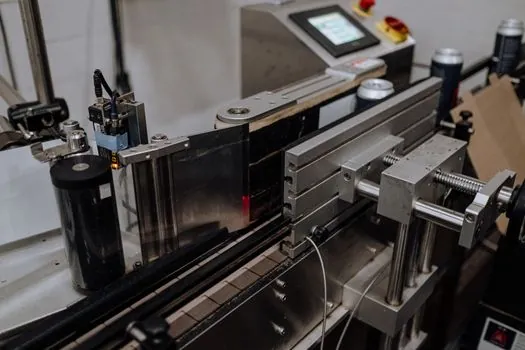
Automatic L-bar sealers are documented at 30-40 packages per minute on small to medium retail food products, making them the throughput default for bakeries, confectionery, single-serve drinks, and convenience foods [S2]. Automatic side sealers handle long or irregular items, and automatic shrink bundling machines wrap multipacks such as bottled water, canned goods, and produce using thicker film [S2][S8].
ME Shrinkwrap separates the two film pathways for food and beverage: polyolefin (POF) for presentation packs and polyethylene (LDPE) for transit packs, and explicitly recommends a Semi-Auto or Automatic L-Sealer for presentation wrapping versus a Semi-Auto or Automatic Sleeve Sealer for transit packs, covering both naked collations and tray/base-card collations [S3]. For canned food, Polypack's IL shrink bundler is documented as compatible with clear or printed film on handloaded trays, fitting mid-volume co-packers, private-label brands, and club-store multipacks [S5].
Throughput, Film, and Pack Format: Decision Criteria
Selection boils down to four criteria, each with a documented value range. Throughput: fully automatic lines are rated to package 20,000+ products per day, while automatic L-bar sealers sit at 30-40 packages per minute on small goods [S2]. Film grade: POF for presentation, LDPE polythene for transit, with both used in printed film for shelf branding [S3][S5]. Pack format: single unit (L-bar), long/irregular (side sealer), or multi-pack/bundled (sleeve sealer or bundler) [S2][S3]. Daily volume: 20,000+ per day points to full automatic; lower volume justifies semi-automatic, which Dipack positions as the most cost-effective class for small food businesses [S6].
A direct comparison helps frame the trade. Automatic L-bar sealers win on small-retail speed (30-40 ppm) but cap out on bundle weight. Automatic shrink bundling machines accept heavier multipacks (bottled water, canned goods, firewood) because they run thicker film [S2]. Semi-automatic units trade speed for capital cost and operator flexibility, which is why they dominate small food businesses [S6]. The general wrapping machine family also includes flow wrappers and VFFS baggers, which are typically chosen when a hermetic seal or modified-atmosphere pack is needed rather than a simple shrink wrap.
Who Should Buy Which Class
Small food businesses, co-packers under 5,000 packs per day, and start-up bakeries fit the semi-automatic bracket, where capital cost and footprint matter more than throughput [S6]. Mid-volume producers of canned food, bottled water, and club-store multipacks are the documented fit for the Polypack IL shrink bundler, which is designed for handloaded trays and printed film [S5].
High-volume food and beverage manufacturers, including breweries, mineral-water lines, and fresh-produce packers, are the users of fully automatic lines running sleeve or L-bar sealers with in-line product handling, which is also the configuration that 2026 OEM literature continues to push for new builds [S3][S8]. Hualian's 2026 machine-type survey specifically lists beverage, beer, mineral water, and fresh produce as the four food and beverage sub-segments where automatic machines are now the default [S8].
Limitations, Failure Modes, and Sourcing Realities
Shrink wrap is a transit-and-display pack, not a hermetic barrier: ME Shrinkwrap's own copy states the film "helps to protect the product from moisture and dust" and "helps to stop damage during transit," it does not claim a vacuum or modified-atmosphere seal [S3]. That means shrink wrapping is wrong for any food format that requires oxygen control or a validated shelf-life claim, where flow wrappers or VFFS are the correct fit.
Film grade is a common failure point. Running LDPE where POF is required causes burn-through and poor optics; running POF on heavy multipacks causes bag burst under drop impact, which is why the spec sheets for bundlers explicitly call out thicker-gauge film [S2][S3]. Sourcing reality from 2026 distributor catalogues: WebstaurantStore's food and commercial shrink wrap machine range is dominated by VacPak-It, Bizerba, Eurodib, and Heat Seal chamber units, while Crown Packaging's industrial shelf lists Texwrap, Autobag, Conflex, and Robopac alongside shrink wrappers for higher-volume lines [S1][S4]. For adjacent line integration (case packing, labeling, coding) the right next step is a sourcing map of case packing machine suppliers and labeling machine suppliers, because shrink wrappers are almost always sold as part of a wider end-of-line cell rather than as a stand-alone unit.
Standards, Materials, and Sourcing Anchors
Food-contact compliance for shrink film is governed by regional food-contact regulations (FDA 21 CFR in the US, EU 10/2011 in Europe) rather than by a single ISO number, so buyer specs should call out film grade (POF or LDPE), gauge in microns or mil, and printed-film registration tolerance for club-store packs [S3][S5]. The mechanical side of the equipment falls under general packaging machinery safety (ISO 12100 and IEC 60204-1 in the EU) and UL/CSA electrical compliance in North America, which any food-line buyer should confirm on the OEM datasheet before purchase.
Polypack's 2025 canned-food post is explicit that its IL shrink bundler is built in the USA, designed for fast changeovers, and intended for cans of soup, beans, vegetables, and sauces on manual or semi-automated lines [S5]. ME Shrinkwrap's general food and beverage page documents that its range spans both manual slow-speed production and high-speed in-line fully automatic product handling, with a UK sales line (01202 870 201) for direct OEM contact [S3]. For buyers cross-referencing shrink wrap machinery against other end-of-line equipment, the broader construction machinery and equipment and lamps and light fittings reference pages cover the plant-side context (line power, inspection lighting) that a food and beverage specifier will need when sizing a new shrink cell.
Track these three signals before placing a 2026 order: (1) confirm film grade match (POF vs LDPE) on the OEM data sheet rather than trust distributor copy; (2) verify packages-per-minute rating at the actual pack size you run, not the headline figure, because L-bar sealer rates drop sharply on tray-loaded multipacks; (3) lock the printed-film registration tolerance in writing for any club-store or retail-ready pack, since this is the single most common source of line stoppages on shrink bundlers.