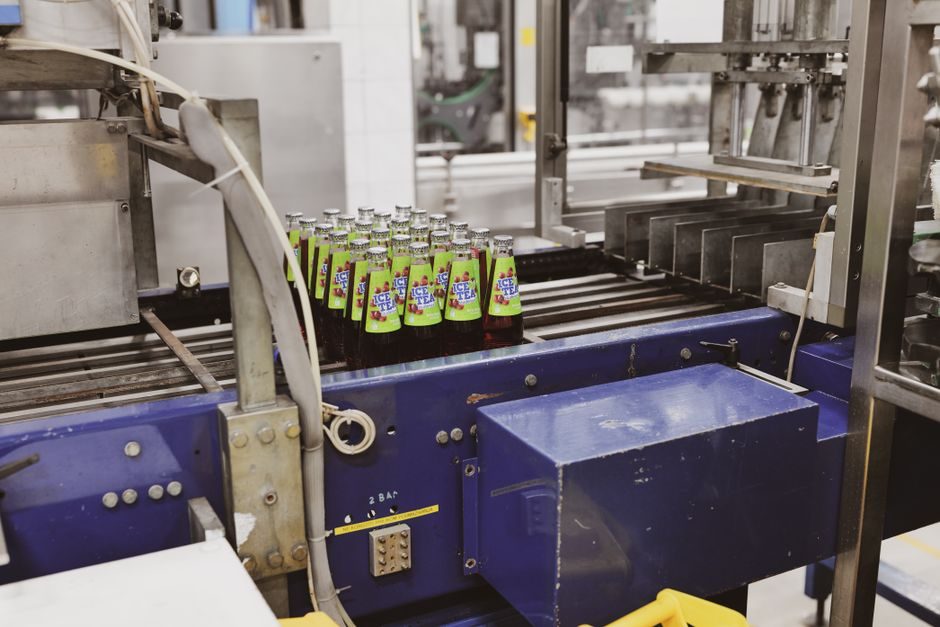
On a typical bottling line the filling machine meters liquid into PET or glass at rates quoted up to 32,000 bottles per hour for turnkey 3-in-1 drinking-water blocks, while a downstream shrink wrapping machine consolidates those filled units into multi-packs at 600 packs per hour for compact low-speed units up to 20+ packs per minute on integrated bottling lines [S6][S1].
Both categories sit inside the secondary-packaging envelope of a plant, but they solve different problems: filling is a metering operation governed by volumetric or mass accuracy, whereas shrink wrapping is a bundling operation governed by film gauge, seal temperature and tunnel dwell time. Sourcing data from June 2026 shows Chinese audited suppliers offering shrink-wrappers from US$2,300 per piece (semi-automatic PE film sealing, MOQ 1 piece) up to US$38,000 per set for a fully integrated 3-in-1 water line with shrink-wrap module [S7][S6].
What Each Machine Actually Does on the Line
A filling machine doses a defined product volume or mass into a container and is selected on the basis of container geometry, product viscosity and required accuracy. Compact automatic shrink wrappers, such as the ROBOPAC Pack series, are described as machines that handle low and mid speed production rates of a wide variety of items with a limited footprint and high reliability, operating at 600 packs per hour with a maximum pack footprint of 500 mm wide by 400 mm long [S1]. The two machines rarely compete: a line either needs a filler or it needs a bundler, or both in series when finished bottles are wrapped into a 6-, 12- or 24-pack sleeve.
Larger semi-automatic and automatic shrink-wrappers cover much wider envelopes. The THIMON DRA-PAL 7000 R is published as an automatic unit applicable to food products, bottles, cylindrical objects, glass, boxes, cosmetics, pallets, furniture, plastics, cardboard, steel, chemicals, metal, paint cans, sacks and rolls, indicating how the same shrink platform can be re-tasked by changing the conveyor and seal head [S2]. That product-application breadth is one reason shrink-wrappers are commonly specified by general packagers rather than dedicated beverage plants.
Throughput Bands and the Production-Rate Gap
Shrink-wrapper throughput scales with pack size, film width and tunnel length, and the public spec data on 2026-vintage equipment clusters into three rough bands. The low band sits at roughly 600 packs per hour on machines such as the ROBOPAC Pack series aimed at low- to mid-speed lines [S1]. The mid band covers most Chinese semi-automatic and automatic units shipping at single-digit packs per minute to roughly 20 packs per minute; the Derun MBJ shrink-wrapping packaging machine, marketed for drinking water and beer lines, ships with a stated production capacity of 1,000 pieces per year from the supplier and is paired with turnkey bottling blocks [S10].
The high band overlaps with filling-line speeds. A Suzhou Planet 3-in-1 automatic PET bottle drinking water production line with shrink-wrap module is listed at 32,000 bottles per hour in the made-in-china catalog, with shrink wrap integrated as the final pack stage [S6]. The comparison matters for engineers: a 32,000 bph filler cannot be matched by a 600 p/h shrink-wrappers feeding a single-lane collator, so high-speed lines require multi-lane shrink tunnels or shrink-sleeve labelers rather than bundle wrappers. The Shrink Wrapping Machine 2026 Buying Guide: Architecture, Throughput and Sourcing Levers walks through how lane count and tunnel length drive the upper end of that band.
Selection Criteria: When a Filler Beats a Wrapper, and Vice Versa
If the deliverable is a sealed container of measured product, only a filling machine does the job. If the deliverable is a tamper-evident multi-pack of already-filled units, a shrink wrapping machine is the right tool. The two converge only on finished-beverage lines, where volumetric or mass filling is followed by sleeve-labeling or bundle-wrapping; the published Suzhou Planet and Derun MBJ product pages both market their equipment against the water and beer segments, which are precisely the markets where a 3-in-1 filler plus integrated shrink-wrap tunnel is the standard architecture [S6][S10].
Selection hinges on four decision criteria. First, product form: free-flowing liquids, viscous pastes and powders each rule out generic shrink wrappers and demand purpose-built fillers such as piston, gravity, peristaltic or auger designs. Second, container format: PET, glass, cans, jars and boxes each have different infeed geometries; THIMON markets its DRA-PAL 7000 R against bottles, cans, boxes, glass, plastics, metal and cardboard to show the breadth of infeeds a wrapper can accept [S2]. Third, throughput target: a low-speed contract packer running 200-600 units per hour sits comfortably on a compact automatic wrapper, while a 32,000 bph bottler requires integrated shrink-sleeve or full-bundle wrap modules built into the OEM line [S6]. Fourth, compliance and traceability: regulated lines (food, beverage, pharma, cosmetics) require sanitary contact parts on fillers and food-grade films on wrappers, which is why the Multipack site lists container interchangeability with minimum-size parts and high accuracy as the headline selling point for its shrink sleeve applicators and cap lining modules [S4].
Cost, Lead Time and Sourcing Reality in 2026
Quoted price bands diverge sharply between the two categories. A semi-automatic beverage-bottle PE-film sealing shrink wrapper from a Diamond Member audited Shanghai supplier is listed at US$2,300-4,300 per piece with a 1-piece MOQ and a 3.0/5.0 supplier rating on the catalog page [S7]. At the integrated end, a Suzhou Planet 3-in-1 PET water line with shrink-wrap module lists at US$17,500-38,000 per set with a 1-set MOQ, reflecting the cost of combining rinsing, filling, capping and shrink-wrapping into a single OEM block [S6].
Lead time on Chinese catalog listings is short: Hangzhou Youngsun Intelligent Machinery publishes a shrink-wrapping machine category alongside its filling-machine, flow-wrapper and vacuum-machine lines under a Mainland China supplier profile, and a separate Indore, India listing quotes 2-3 day delivery windows for shrink-wrapping machine inquiries [S5][S3]. Beijing Superway Packaging Machinery, registered more than 10 years as a shrinking-machine manufacturer, lists shrink packaging machines and wrap-style equipment as its main product range, illustrating the depth of the Chinese supply base for both categories [S8]. The Case Packer 2026 Price & Cost Guide: Spec Levers, Tiers and Sourcing article covers the adjacent case-packing segment where shrink wrappers often hand off bundled packs.
Failure Modes, Constraints and What Each Machine Cannot Do
A shrink-wrapping machine cannot correct under-fill or over-fill; it only seals and shrinks around the bundle presented to it, so seal defects on a shrink line are almost always upstream issues (loose collation, misaligned bottles, low seal-bar temperature). Conversely, a filling machine cannot create a retail-ready multi-pack by itself; without a downstream coding machine, sleeve labeler or shrink wrapper, filled bottles leave the line as individual units. The Derun MBJ product page explicitly couples the shrink-wrapping packaging machine to drinking-water and beer applications, which is the segment where both operations are mandated and the line economics justify the integrated build [S10].
Throughput is the binding constraint when the two are mismatched. A 600 p/h ROBOPAC Pack series wrapper cannot keep up with anything beyond a low-speed filler, so engineers pairing equipment must match filler output in bottles per minute against wrapper output in packs per minute, multiplied by pack count [S1]. Container interchangeability, listed by Multipack as a "unique feature" with minimum size parts, is the other practical constraint: a changeover from 330 ml glass to 1 L PET on a shrink line typically requires new collating fingers, seal-jaw pads and tunnel air-flow settings, even on broad-application machines such as the THIMON DRA-PAL 7000 R [S2][S4].
Standards, Materials and Sourcing Channels Worth Tracking
Food- and beverage-grade shrink films are commonly LDPE, LLDPE or polyolefin shrink films selected to match seal-bar temperature and product-contact rules; the Multipack site highlights food and beverage as a core segment for its shrink sleeve applicator and cap lining machine, implying compliance with food-contact film specifications even though specific FDA or EU food-contact citation numbers are not reproduced on the catalog pages [S4]. On the filling side, sanitary construction (stainless contact parts, CIP capability) is the recurring theme in supplier literature from audited Diamond Members on made-in-china, which is the gate most regulated buyers use to pre-qualify vendors [S7][S6].
Two sourcing signals are worth tracking through the second half of 2026. First, Chinese audited-supplier density for both shrink wrappers and integrated filler-plus-shrink blocks remains high on made-in-china, with Diamond Member status and 3-in-1 turnkey offerings dominating the higher end of the catalog [S7][S6]. Second, the proliferation of multi-application wrappers (THIMON's 30+ listed product applications including steel, chemicals and pallet loads) signals that the shrink-wrapping category is drifting from a packaging-line tool into a general material-handling tool for heavy or awkward loads, while filling machines stay anchored to the beverage, food, chemical and personal-care verticals [S2]. Engineers specifying either equipment should verify container-format fit, throughput match and food-contact film grade against the actual product datasheet before locking the order.