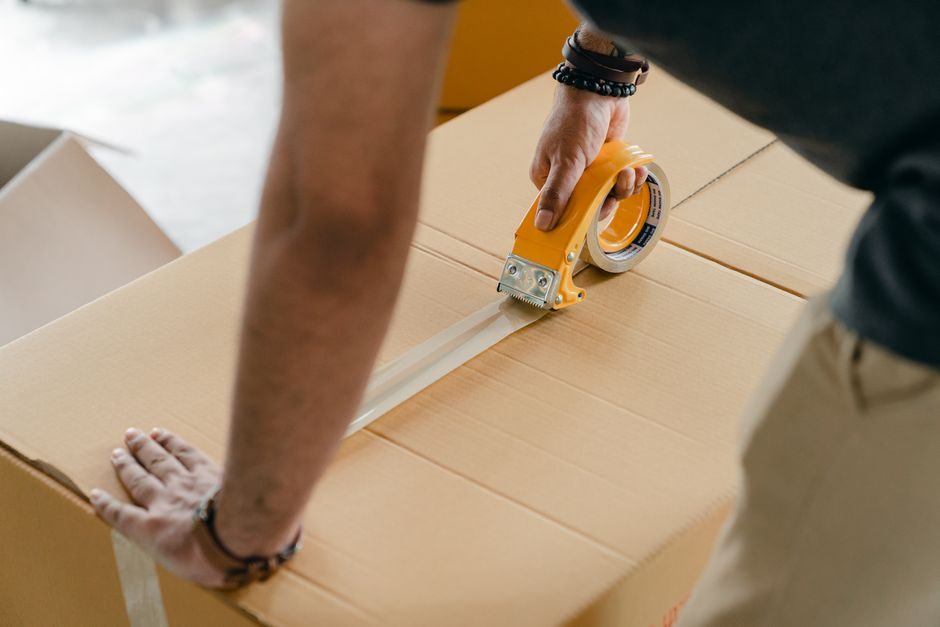
A new automatic case packer in 2026 typically lands between USD 25,000 (semi-automatic top-load, single-operator station) and USD 350,000+ (robotic top-load with integrated case erector, taper, and pallet interface), with the 3-axis gantry/Delta-style top-load band sitting at roughly USD 60,000 to USD 150,000 fully guarded [S2].
The figure band that matters most for sourcing is end-of-line integration: a stand-alone packer is rarely the deliverable. Buyers in 2026 budget for upstream collation, downstream case sealing, and CE/EMC conformity, which routinely adds 25 to 40% to the headline price [S2]. For readers comparing adjacent equipment classes, the labeling machine 2026 price & cost guide breaks down the bands that usually sit one station upstream of the packer.
Price bands by packer architecture
Top-load wrap-around (TL/WA) case packers, the workhorse of FMCG bottle lines, anchor the mid-band at roughly USD 60,000 to USD 130,000 for a stainless frame running 10 to 25 cases/min; speed-rated versions above 30 cpm cross into the USD 140,000 to USD 200,000 range with servo collation and hot-melt case seal [S1][S2].
Side-load horizontal-shaft packers (tuck-in or wrap) for cartons, pouches, and flow-wrapped bundles typically price at USD 80,000 to USD 220,000 depending on collation count, reject station inclusion, and servo count; a four-axis robotic top-load or gantry style for varied SKUs runs USD 150,000 to USD 350,000 with vision-guided pick and place [S1].
Semi-automatic benchtop packers, where an operator manually loads an erected case, sit between USD 8,000 and USD 25,000 and are the right answer for throughputs under 6 cpm, but they do not amortise above roughly 10 cpm once labour cost is loaded [S2].
Spec levers that move the quote
Three specifications move a quote faster than any other: rated throughput in cases-per-minute, frame and contact-parts material, and guarding/control architecture. Going from 15 cpm to 30 cpm typically adds 35 to 60% to the price because of the additional servo axes, heavier guarding, and a larger changeover recipe database [S2].
Frame and contact material is the second lever: painted carbon-steel frames are the default at the entry band; 304 stainless contact parts add roughly 8 to 15% but are effectively mandatory for food, personal care, and pharmaceutical duty, and full 316 stainless washdown frames add another 12 to 25% on top [S1].
Control architecture is the third.
Total cost of ownership beyond the PO
Spare-parts kits, changeover parts, and service contracts are the real cost drivers a low headline price can hide. A typical OEM recommended 2-year spares kit (bearings, belts, vacuum cups, gripper fingers, photoeyes, one servo drive, one HMI panel) lists at 4 to 8% of machine price; a 2-year warranty and on-site commissioning package, when bundled, adds another 5 to 10% but materially de-risks line ramp-up [S2].
Energy and air consumption are non-trivial at high throughput. A servo case packer in continuous duty draws 3 to 6 kW and consumes 200 to 400 NL/min of clean compressed air at 6 bar; pneumatic-heavy designs in the low price band can exceed 600 NL/min, which a buyer should weigh against the compressed-air infrastructure cost over a 10-year horizon.
For lines with frequent SKU changeovers, the format-set cost — physical parts, not counting changeover labour — runs USD 1,500 to USD 12,000 per SKU on a TL/WA packer and USD 8,000 to USD 30,000 on a robotic top-load; locking these into the initial PO is the cheapest way to control multi-SKU TCO [S1][S2].
Options, add-ons and the integration premium
The integration premium is the gap most under-budgeted buyers miss. Integrating a case packer with an upstream bottle unscrambler, inline checkweigher, and downstream case taper and palletizer pushes total line price to roughly 2.5 to 3.5x the packer's stand-alone quote, with the case erector, taper, and inkjet coder each adding USD 15,000 to USD 60,000 depending on throughput and case-style range [S1].
Vision-guided robotic picking is the single largest add-on. A 2D vision system for SKU verification on a robotic top-load adds USD 20,000 to USD 45,000; 3D vision for random-bin picking pushes that to USD 60,000 to USD 120,000 and is justified only when the SKU range or random presentation genuinely requires it [S1].
Trackable signals for 2026 sourcing: monitor whether your vendor will publish a 2-year warranty and a CE/EMC declaration of conformity in the PO (not as a marketing claim on the website) [S2]; and whether the lead time is quoted in weeks from PO and from FAT-ready drawing approval, since 2026 lead times for servo-packers with stainless contact parts are running 10 to 16 weeks for Tier 2 Chinese OEM lines and 18 to 28 weeks for European builders [S1][S2].
Who a case packer is for (and who it is not)
A case packer earns its place on lines running 8+ cpm of a stable SKU mix, on lines with hand-pack labour cost exceeding roughly USD 30,000 per shift per year, or on lines where manual packing cannot meet ergonomic or repetitive-strain thresholds. It is the wrong purchase for sub-6 cpm micro-lines, for trial batches under six months, or for product profiles that change case dimensions more than twice a quarter without a budgeted changeover kit [S2].
Buyers whose priority is format flexibility above all else should evaluate robotic top-load units even at the higher price; buyers whose priority is cost-per-case at high volume should evaluate a fixed-format TL/WA with a hot-melt seal and stay within the USD 60,000 to USD 130,000 band. For process engineers who already run a high-pressure pneumatic system, our 2026 solenoid valve price & cost guide maps the body/port/actuator decisions that determine how clean and dry the air feeding the packer has to be.
Decision criteria and a side-by-side comparison
Four criteria separate the architectures cleanly: rated speed (cpm), format-change time (minutes), footprint (m x m), and unit cost (USD). A TL/WA scores 10-25 cpm, 10-20 min changeover, 3-6 m x 1.5-2.5 m footprint, and USD 60,000-130,000. A side-load horizontal packer scores 15-40 cpm, 15-30 min, 4-7 m x 1.5-2.5 m, USD 80,000-220,000. A robotic top-load scores 10-30 cpm, 5-15 min, 3-5 m x 2-3 m, USD 150,000-350,000. A semi-automatic benchtop scores 4-8 cpm, 2-5 min, 1.5-2 m x 1-1.5 m, USD 8,000-25,000 [S1][S2].
If the operating envelope is high volume and stable SKU, the TL/WA wins on cost-per-case. If the envelope is a wide SKU mix, robotic top-load wins on format flexibility despite the 2x to 3x price premium. A practical decision rule: budget under USD 100,000 and need 8+ cpm of stable format — specify TL/WA; budget USD 150,000+ and run more than six SKUs — specify robotic top-load; under 6 cpm or trial batch — specify a semi-automatic unit and reinvest when throughput is proven [S2].
For component-level specifications, see gland packing.