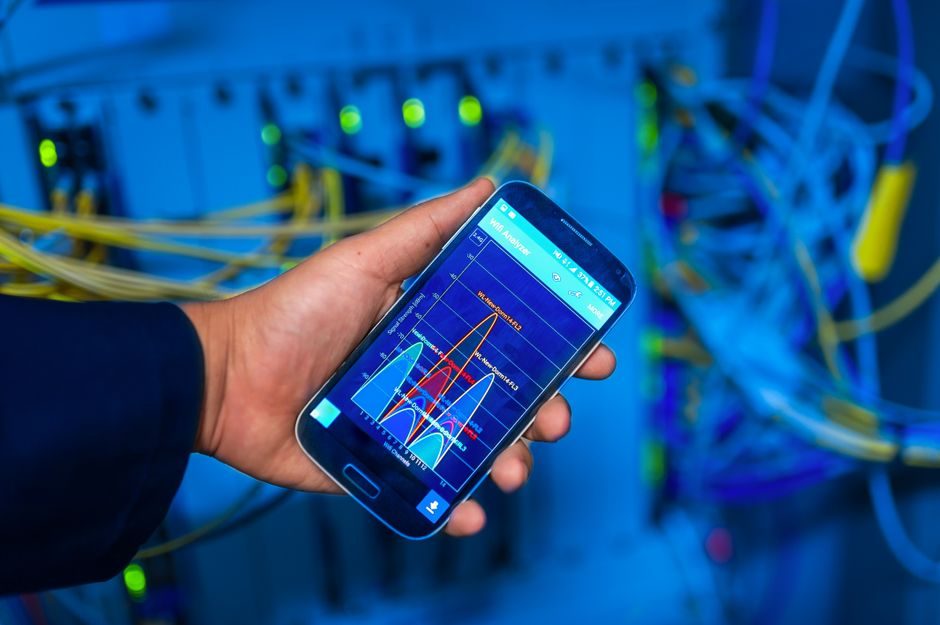
A signal conditioner in a brownfield migration is the bridge device that lets a 20-year-old 4-20 mA or millivolt-class sensor speak the I/O vocabulary of a new PLC without ripping out the field wiring.
The decision is driven by six engineering filters: sensor output type, cable run length, isolation needs, hazardous-area classification, SIL budget, and the receiving controller's analog or digital input card specification, drawn from [S1] Control Engineering (2025-08) and [S6] PLC Construction (2025-09).
What a signal conditioner actually does in a brownfield retrofit
A signal conditioner is a device that converts one type of electrical or mechanical signal into another so the downstream monitoring or control device can read it, with amplification, excitation, and filtering cited as the three most common modifications applied to sensor outputs [S5] Dynamic Rep (2025-08).
In a brownfield upgrade the conditioner typically sits between the existing transmitter—often a 2-wire 4-20 mA loop or a strain-gauge bridge on a pressure sensor—and the new PLC's analog or digital input module, with the AutomationDirect buying guide [S2] (2025-08) framing the choice as a sensor-output-first exercise rather than a brand selection.
Selection criteria that actually move the decision
Buyers should first specify the sensor type, output range, and excitation requirement, because a strain-gauge pressure sensor conditioner must provide constant-voltage bridge excitation, amplify the millivolt output, and reject high common-mode signals, while a thermocouple conditioner must provide cold-junction compensation and linearization [S2] AutomationDirect (2025-08) and [S8] Dwyer Omega (2025-09).
Cable distance drives the second filter: 4-20 mA current-loop outputs are preferred for cable runs exceeding 15 meters because current signals are less susceptible to voltage drops and noise pickup than voltage outputs [S3] Transcell (2025-10). For modern control systems, digital outputs via Modbus RTU, Profibus, or Ethernet/IP eliminate analog conversion errors and carry diagnostic data alongside the measurement value [S3].
Isolation is the third filter: four-way galvanic isolation between power supply, input, and (2) outputs eliminates ground-loop and noise-related error, and the input is protected against overvoltage and polarity reversal on industrial signal isolators such as the 931N series [S9] Rockwell Automation (2025-07).
Comparing conditioner families against four decision criteria

The four conditioner families that matter in brownfield work are (a) analog current/voltage isolators, (b) strain-gauge/bridge amplifiers for load cells and pressure sensors, (c) thermocouple/RTD linearizers, and (d) fieldbus-to-analog or analog-to-fieldbus gateways that translate Profibus PA, Modbus, or Ethernet/IP into the new PLC's native I/O [S2] and [S10] Design World (2025-09).
Lining them up against the four criteria that drive purchase orders: cost-per-channel is lowest on analog isolators; lowest-noise performance is best on bridge amplifiers with built-in 1000 Hz low-pass filters and bi-polar differential front ends [S7] Interface (2025-08); retrofit-friendliness is highest on isolators that accept the existing 4-20 mA loop with no field rewiring; and digital-readiness is highest on protocol gateways that expose diagnostics to the new controller [S3] Transcell. For a flow meter on a 50 m cable run in a noisy MCC room, the bridge amplifier and current-loop isolator dominate; for a thermocouple-heavy reactor survey, only the linearizer will read the sensor correctly [S8] Dwyer Omega.
Who a signal conditioner is for, and where it is overkill
Signal conditioners earn their place when the legacy field device is being retained, the wiring is too short or too valuable to replace, or the new PLC's input card cannot directly accept the sensor's native output [S1] Control Engineering (2025-08).
They are overkill on greenfield installs where the new pressure transmitter already carries a digital protocol output, on short runs under 3 m where voltage drops are negligible, and on any loop where the existing isolator is already SIL-rated and the new PLC has a compatible input range [S6] PLC Construction (2025-09). Replacing a working conditioner in those cases adds cost and one more failure point to maintain.
Safety, SIL, and hazardous-area constraints

Brownfield migrations must preserve the safety integrity level of the loop: SIL claims, proof-test intervals, and response times must be documented and reviewable for audit, with the conditioner treated as part of the safety instrumented function rather than a passive accessory [S6] PLC Construction (2025-09).
Where the sensor sits in a classified area, the conditioner must carry the matching hazardous-area approval, and in many cases the safer engineering move is a single isolated barrier at the marshalling cabinet rather than per-channel conditioners that each demand their own certification paperwork [S4] DigiKey (2025-08). On SIL loops the proof-test interval of the barrier becomes the dominant maintenance cost, not the device price.
Failure modes and limits to design around
Millivolt-class sensor signals are susceptible to electrical noise, so signal conditioners filter such noise with internal signal-processing algorithms and passive filters; common-mode rejection and shielding termination become the practical limit on bridge-amplifier performance [S10] Design World (2025-09).
The other hard limit is the input range: voltages or currents outside the device's specified input range may damage the device and other system components, so the selection sheet must list the actual minimum and maximum signal under all process conditions, not just the nominal 4-20 mA band [S4] DigiKey (2025-08). Linearization is the third limit—a nonlinear sensor output must be mapped to a linear scale, and skipping that step shows up as a hidden calibration error after the cutover [S10].
Procurement discipline and two signals to track

For a brownfield upgrade, every conditioner on the bill of material should be traceable to a specific loop, a specific input card, and a specific SIL or hazardous-area requirement; loose spares that drift between projects are the most common cause of "the new PLC reads 3.6 mA but the old one read 4.0" complaints at first startup [S1] Control Engineering (2025-08).
Two trackable signals engineers should watch on the next migration: (1) whether the new PLC's analog input card supports protocol passthrough, which can eliminate the conditioner entirely on digitally-equipped transmitters, and (2) whether the marshalling cabinet has enough DIN-rail space and 24 VDC capacity for the additional isolators, since most brownfield cabinets are already heavily loaded before the upgrade [S4] DigiKey (2025-08) and [S9] Rockwell (2025-07).