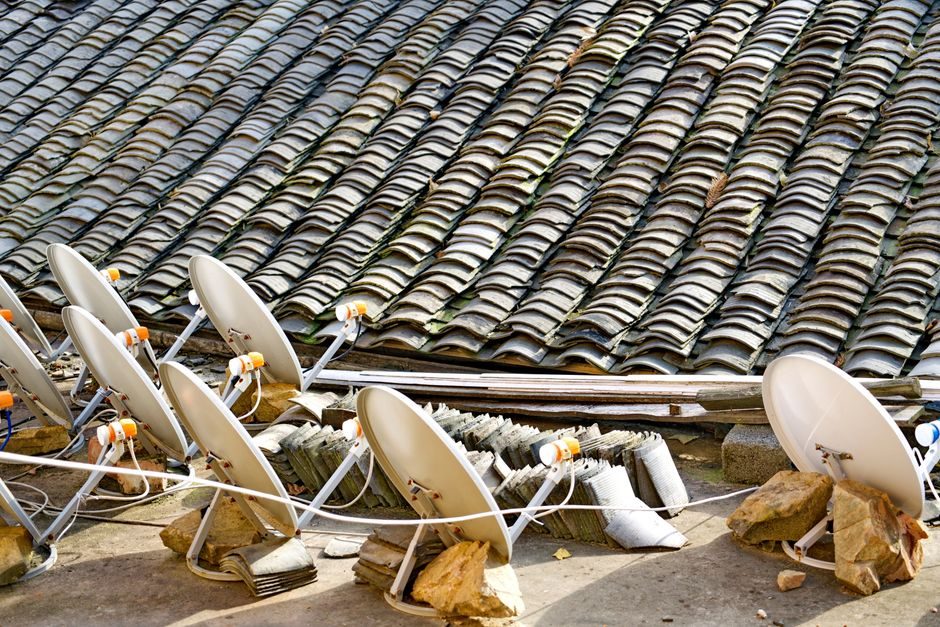
Signal repeaters in 2026 are not one product but two distinct categories: industrial pulse/analog repeaters (often called signal conditioners or signal isolators) used on 4-20 mA, voltage-pulse, open-collector, and current-pulse loops; and RF cellular boosters that re-radiate 2G/3G/4G/5G bands from 700 MHz to 2600 MHz with 60-105 dB of gain [S3][S6][S7].
Picking the wrong family is the single most common spec error: a panel-mount Yokogawa-class pulse repeater cannot rebroadcast LTE, and a 76 dB 1900 MHz RF booster will not clean a noisy 4-20 mA loop [S1][S6]. Buyers who treat "repeater" as one keyword routinely overpay for a misapplied unit.
Process-Control Pulse and Analog Repeaters: What the Loop Demands
Pulse and analog repeaters regenerate, isolate, or convert a signal on an instrumentation loop, typically powered from a 24 V DC rail and DIN-rail, rack, or wall-mounted [S1]. Yokogawa's JUXTA D Series, for example, sits on a JIS/EIA nest with terminal blocks for field wiring and connectors for DCS tie-in, while the JUXTA F Series compresses the same function into a 24 mm-wide module with front terminals and field-configurable microprocessor settings [S1].
Input acceptance is the gating spec: a pulse repeater must declare which of voltage pulse, open-collector, non-voltage contact, and current pulse it accepts, and whether an external pull-up resistor is required or built in [S1]. When the output goes silent, Yokogawa's published troubleshooting sequence is to verify power-supply voltage, polarity, the external resistor on voltage/open-collector/non-voltage inputs, the accessory resistor on current-pulse inputs, and the external power feed on open-collector / non-voltage-contact outputs [S1]. That checklist is a useful generic acceptance test on any vendor's pulse repeater.
RF Cellular Repeaters: Gain, Band, and Output Power Thresholds
RF cellular repeaters are characterised by frequency band, uplink/downlink gain, maximum output power, noise figure, and ALC range — and 2026 retail listings show wide numeric spread. A 5 W indoor 1900 MHz (Band 2) repeater from a Guangdong OEM publishes 76 dB ±1 uplink / 83 dB ±1 downlink gain, 60 MHz instantaneous bandwidth across 1850-1910 / 1930-1990 MHz, 3 W and 5 W output-power options, 4.5 dB / 8 dB noise figure at max gain, and a 30 dBm ALC with 31 dB MGC in 1 dB steps [S6].
Higher-tier commercial units push 20-43 dBm output with 70-105 dB gain, and TETRA/CDMA 450 MHz ICS repeaters up to 10 W/20 W/40 W are listed for utilities and transit [S3][S7]. Dual-band consumer boosters sit at the bottom of the range — 23 dBm output with 70 dB gain is typical for small-office GSM/LTE deployments [S3][S7]. Multi-band B1/B3/B5/B7/B8/B20/B28 4G-5G boosters covering 700-2600 MHz are now the consumer default in markets including Israel, Brazil, Australia, and Korea [S5].
Selection Criteria Compared: Pulse vs RF, and Why the Crossover Fails
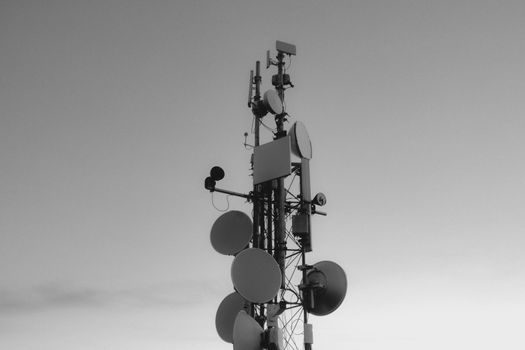
The two repeater families diverge on every decision criterion, and treating them as substitutes is the most common spec mistake. Process pulse repeaters are specified by signal type (voltage pulse / open-collector / non-voltage / current pulse), input impedance or pull-up requirement, output drive (relay, transistor, analog 4-20 mA), isolation voltage, and 24 V DC power; RF repeaters are specified by frequency band, gain in dB, output power in dBm or watts, noise figure, and ALC/MGC range [S1][S6][S7].
A buyer who needs to extend a 4-20 mA loop across a plant will get no value from a 70 dB LTE booster, and a buyer who needs indoor LTE coverage gains nothing from a 24 V DC DIN-rail pulse isolator [S1][S3]. The crossover is purely semantic: both regenerate a "signal," but the physics, certification path, and deployment code are unrelated. Buyers comparing options should first lock the signal type, then the band or loop class, and only then weigh vendor price and lead time.
Who Should Pick Each Variant — and Who Should Not
Process-control pulse/analog repeaters are the right tool for instrumentation engineers, DCS integrators, and panel builders who need galvanic isolation, signal conversion, or pulse-rate scaling between field devices (flow meters, counters, tachogenerators) and a PLC, DCS, or recorder [S1]. They are wrong for any wireless coverage problem, and they are wrong when the input is already 4-20 mA and the requirement is just to drive a second load — a signal splitter or signal isolator with two isolated outputs is the lighter, cheaper answer [S1].
RF cellular repeaters fit building owners, fleet operators, mining sites, and rural ISPs that need to fill a coverage hole from 700 MHz to 2600 MHz in a fixed location, and they are wrong for moving vehicles (directional donor antenna and selective repeaters are then required), wrong where donor signal is below about -100 dBm at the outdoor antenna (no amplifier recovers a missing signal), and wrong in jurisdictions where the operator's licence forbids re-radiating licensed spectrum without a permit [S3][S5][S7].
Certification, Sourcing, and the 2026 Supply Map

Guangdong, China remains the dominant manufacturing cluster for RF cellular repeaters: Shenzhen Etenda, SaiTongTian, and a long tail of Alibaba and Made-in-China suppliers list ISO 9001, CE, ROHS, and CCC as the baseline certifications, with a few also publishing FCC or RCM marks for export [S3][S4][S7][S8]. MOQ of 1 piece and negotiable FOB pricing is standard at the Made-in-China tier, while T/T, Western Union, and PayPal are the published payment terms at the AliExpress retail tier [S3][S5][S8].
Process-control pulse repeaters are dominated by established DCS-vendor families (Yokogawa JUXTA D/F/M/VJ, Phoenix Contact, WAGO, and similar) with published installation manuals, MTBF figures, and 24 V DC supply tolerance; the alternative-supplier path on Made-in-China and Alibaba is largely RS-485 and industrial-fieldbus repeaters, not pulse-class instrumentation units, and those listings should be cross-checked against IEC 61131-2 and the relevant EMC directive before procurement [S1][S3][S10]. For broader industrial-instrument sourcing context, the spec map used for Smart Meter Suppliers and Manufacturers and the Industrial Modem / DTU 2026 Price & Cost Driver Map apply the same factory-audit logic. Two trackable signals for the rest of 2026 are 5G n78 (3500 MHz) repeater certification filings and any operator-side deregulation of indoor booster deployment in the EU CEPT band plan.
The underlying component specifications are covered under signal repeater.