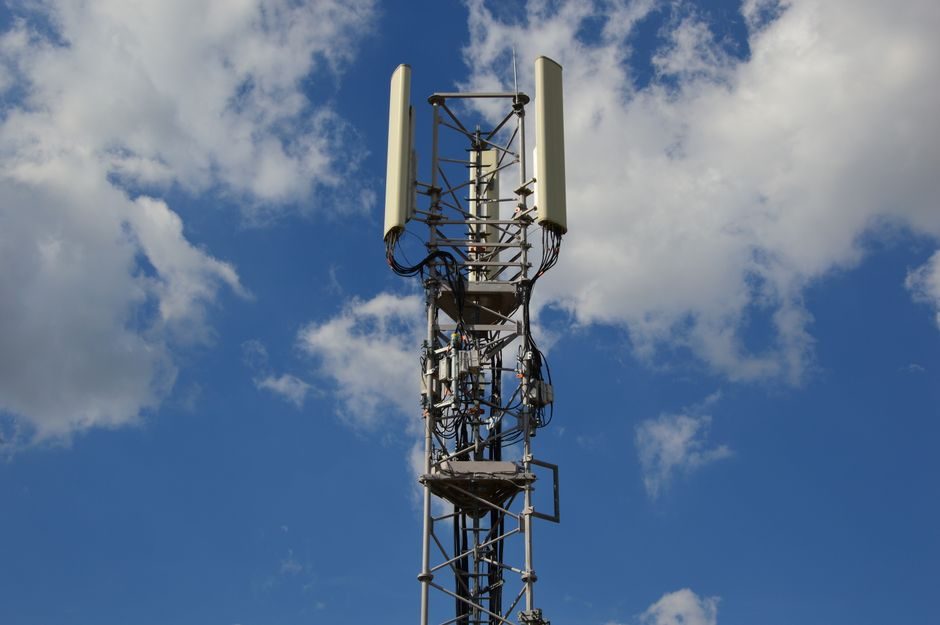
A 2026 DirectIndustry catalogue of 11 manufacturers and 26 DTU products shows serial-protocol dominance: RS485 appears on 23 entries, RS232 on 22, and TCP/IP on 15, with cellular generations spanning GPRS, UMTS, 4G LTE and 4G LTE Cat 1 [S1]. The same catalogue's InHand InDTU324 illustrates a typical DTU envelope: −40°C to 70°C operating temperature, 5–35 VDC input, IP30 metal housing, wall mount, and conversion paths for Modbus RTU ↔ Modbus TCP plus IEC 60870-5-101 ↔ IEC 60870-5-104 [S2].
Industrial wireless modules sit at a different layer. The MX520VX WiFi 5 module is described as an IEEE 802.11ac Mini-PCIe card with 2×2 MIMO, +21 dBm at 2.4 GHz and +20 dBm at 5 GHz per chain, backward-compatible with 802.11a/b/g/n [S3]. That is silicon-level integration, not a serial gateway. The decision between a DTU modem and a wireless module is therefore a decision about system boundary, not brand preference.
Definition and Scope: Where the Box Ends and the Module Begins
An industrial DTU is a finished appliance that converts a serial field protocol (RS232/RS485/TTL) into an IP packet stream over a cellular or licensed radio bearer, with its own power input, enclosure, and configuration software [S1][S2]. The InHand InDTU324 description frames the function explicitly: "wireless data communications between field serial devices and the central control system," with DATA mode for autonomous cloud connection and AT mode for standard AT commands [S2].
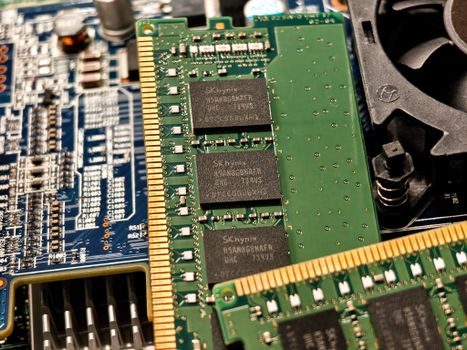
An industrial wireless module is a radio subsystem — typically a Mini-PCIe, M.2, or solder-down SiP — that exposes a host interface (PCIe, USB, SDIO) and an RF chain; the OEM integrates it into a router, gateway, HMI, AGV controller or sensor [S3]. GE Grid Solutions describes its industrial wireless portfolio in the same register: "wireless radios for unlicensed and licensed narrowband communication" and "industrial 2G, 3G, and 4G LTE cellular routers and gateways," packaged and rated for harsh service [S4]. A DTU is one of those rated packages; a wireless module is what goes inside the package.
Selection Criteria: Envelope, Power, Protocol Conversion
Five criteria separate the two in a working spec. (1) Operating temperature: industrial DTUs are commonly rated −40°C to 70°C or −40°C to 85°C; the InDTU324 is the former [S2]. (2) Input voltage: DTUs accept wide DC ranges (the InDTU324 spans 5–35 VDC) so they can be powered from 12/24 VDC plant rails or solar batteries; a wireless module expects a regulated 3.3 V or 5 V rail from the host. (3) Protocol conversion: DTUs perform serial-to-IP and Modbus/IEC conversion inside the unit [S2]; modules expose AT commands or a network interface and leave conversion to host firmware. (4) Compliance: finished DTUs ship with radio certifications and EMC/ESD test reports; modules rely on the integrator to complete the full product certification. (5) Service: DTUs are field-replaceable spares; modules are factory-rework items.
Wlink's D80-1 illustrates a narrow-scope DTU (RS232/485/422 → GPRS 2.5 G), while the D83 series narrows further to NB-IoT / CAT-M1 (eMTC) for low-bandwidth IoT/M2M, and the D82 adds a second serial port and PPP/TCP-IP/DDP protocol stack [S1]. The progression — from dual serial to NB-IoT — is typical of the DTU category.
Who Each Option Is For (and Who It Is Not)
Spec a DTU when the requirement reads: a stand-alone wall- or DIN-mounted box, IP30 or higher, a wide DC input, transparent serial-to-IP, and one or two Modbus/IEC protocols. Concrete fits: distribution-automation feeders, intelligent-lighting controllers, greenhouse sensor concentrators, AMR/AMI meters on RS485, and remote SCADA outstations [S2]. The InDTU324's published applications are distribution automation, intelligent-lighting cellular connectivity, agricultural greenhouse remote monitoring, and water-utility remote meter reading [S2].
Spec a wireless module when the requirement reads: integrate a radio into a product you already design. Concrete fits: an OEM router, an industrial gateway, an AGV/AMR controller, a smart sensor, or a robot that needs Wi-Fi 5/6, Bluetooth, or a private 5G module on its mainboard [S3]. If the deliverable is a finished industrial-grade appliance sold under your brand, a module plus your own power tree, enclosure, and certification is the normal path. If the deliverable is a single, drop-in cellular link for an existing serial device, the DTU is the right artefact and re-engineering would be wasted effort.
Comparison Matrix: DTU vs Wireless Module on Decision Criteria
On a 5-criterion decision matrix, the two options line up as follows. (a) Time to deploy: DTU wins — screw to wall, wire RS485, apply 12–24 VDC, configure via local serial or SMS; modules require host firmware, drivers, RF tuning, and full product certification. (b) Integration effort: modules win for OEMs (one PCIe slot), DTUs win for system integrators (zero firmware). (c) Operating envelope: comparable; the InDTU324 is rated −40°C to 70°C with 5–35 VDC and IP30 metal housing [S2]; module environmental claims depend entirely on the host. (d) Protocol conversion: DTUs do it inside the box (Modbus RTU/TCP, IEC 60870-5-101/104, transparent TCP/UDP, user-defined heartbeat) [S2]; modules expose only the radio link. (e) Total cost at low volume: DTUs have a higher unit cost (e.g. US$60–95 per piece for 4G/5G CPE units on Made-in-China) [S5][S6], but the all-in BOM-plus-certification cost of a module plus custom enclosure is usually higher below ~500 units/year.
Mobile-network generation is a secondary filter. A 2026 catalogue of UMTS DTUs still lists 4G LTE Wi-Fi routers with SIM slots, 300 Mbps, firewall/QoS/VPN, and OpenWrt at US$60–90 per piece [S6], and 4G/5G CPE with 2.4/5 GHz Wi-Fi and PoE at US$60 onwards [S5]; these are converged router/DTU products, not raw modules, and the price floor reflects the China-domestic OEM market in mid-2026.
Integration Patterns and Common Failure Modes

DTU failure modes are well-known: SIM failure in high-vibration cabinets, antenna VSWR drift in outdoor enclosures, watchdog-reset behaviour on transient brown-out, and GPRS/2G sunsets that strand legacy units on decommissioned bearers. The InduBox GSM M4 modem, in its 15-year-design derivative, lists a watchdog reset and optional supercap hold-up as explicit design responses to those failure modes [S1]. A wireless module's failure modes are different — driver/firmware mismatches after a kernel upgrade, RF desense from a noisy host PCB, and thermal throttling at the module's own junction limit — and the system engineer owns them, not the radio vendor.
Integration pattern that recurs in 2026 spec sheets: cellular DTU as a sub-assembly bolted onto an RS485 bus, with the DTU handling Modbus RTU-to-TCP conversion and pushing to one to five centres over LTE Cat 1, while a local Wi-Fi module on the same cabinet serves HMI tablets [S2]. The two radio roles do not compete; they are scoped. The mistake to avoid is treating the wireless module as a serial-to-IP gateway — most modules will not do that conversion without a substantial host-side application layer.
Sourcing, Standards, and What to Verify Before Spec Sign-off
On sourcing, the 2026 supplier pool is concentrated in Guangdong (Shenzhen Ex-link) and Fujian (Xiamen Signshine) for low-cost 4G/5G CPE router-DTU hybrids, with InHand (Beijing) holding the higher-end industrial-M2M line and CHC Navigation supplying niche UHF radio modems such as the DL8 for RTK GNSS base-to-rover correction links [S1][S2][S5][S6]. Verify on the datasheet before purchase: operating-temperature range, DC input range, IP rating, EMC/ESD declaration, carrier certifications (CE/FCC/CCC), supported bands (B42/B43 is appearing on 2026 5G CPE units) [S5], and protocol-conversion support — these are the items most often glossed over in catalogue listings.
For a related reading on module-level certification friction in adjacent hardware, the 2026 DC fast-charger supply squeeze analysis of module, firmware, and power bottlenecks in 2026 is directly relevant: a wireless module inside a charger faces the same integration friction as one inside a router. For systems where a wireless module is embedded into a cooling-loop or pump controller, the Industrial Chiller Selection piece clarifies how the host-side thermal envelope is sized; in turn, a stand-alone DTU on a chiller's Modbus port is a textbook use case for the InDTU324 envelope [S2]. Two trackable signals to watch into late 2026: the rate at which LTE Cat 1 bis replaces LTE Cat 1 in industrial DTU BOMs (signalled by new 4G/2G fallback options on supplier datasheets) and whether 5G RedCap modules move from the M.2 module category into finished DTU enclosures within the next two product cycles.
Component reference pages worth checking: industrial adhesive.