
A signal tower light ownership model must include acquisition, installation, energy, maintenance, deployment, downtime and residual value over a defined service period, because the equipment purchase price covers only one part of lifecycle spending [S3].
For industrial users, the decision is usually between a fixed signal tower light, a networked unit and a service-based arrangement, with the correct choice determined by required status visibility, control integration, operating environment and maintenance access rather than lamp count alone.
What Signal Tower Light TCO Includes
Total cost of ownership is the cost of obtaining, deploying, operating, maintaining and eventually disposing of an asset over a defined service period, after allowing for expected residual value [S3]. For a signal tower light, the calculation should therefore include the tower or light-body price, required accessories, installation, commissioning, electrical work, software or control integration, routine service, repairs, energy, and the cost of equipment being unavailable when it is needed [S3].
The comparison period must match the decision. A short project, a rental fleet and a permanent production line do not have the same ownership horizon, and nominal spending should not be mixed with discounted cash flows [S3]. Costs should also be separated into one-time charges and recurring costs triggered by hours, calendar time, events or moves. This prevents transport, service or monitoring charges from being multiplied incorrectly by operating hours [S3].
The result should be a transparent model rather than a promised saving based on an undocumented energy rate or supplier headline [S3]. A practical structure is acquisition and setup, plus energy, routine service, repairs, deployment and administration, plus defined interruption cost, minus residual value. Currency, service period and quotation scope must remain consistent across alternatives.
Purchase Price Is Only One Cost Driver
For industrial signal tower lights, the quotation scope determines whether the apparent equipment price is comparable. A low price may exclude required accessories, delivery, setup, documentation, training or separately purchased installation, while a higher price may include services that the alternative quotes separately [S3].
The comparison should therefore list the light body, mounting arrangement, lens or lamp configuration, color and status requirements, audible alarm options, electrical connection, control interface, and any required network or monitoring equipment. For equipment with a tower or mast, the same logic applies: mast mechanism, light source, energy source, height, runtime, mobility and enclosure weatherproofing are identified price drivers for comparable light towers [S4].
Volume tier, material and manufacturing choices also affect the initial price, although a source does not provide a universal percentage uplift for any one factor. The defensible approach is to request configuration-specific quotations and record what each price includes. Comparing a bare unit with a fully installed package produces an arithmetic result, but not a valid TCO comparison.
LED, Networked and Service Options Compared
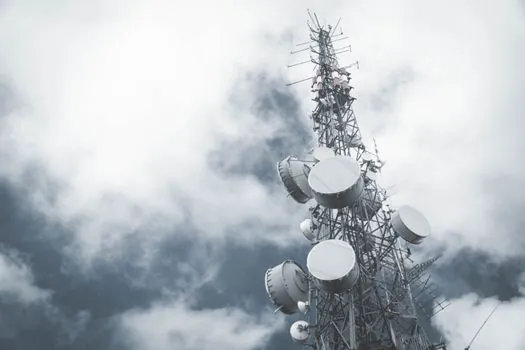
Signal tower lights, also known as stack lights, andon lights, or machine status indicator lights, are visual and audible signaling devices used in industrial and commercial environments to communicate machine status, process conditions, and safety alerts [S5]. The relevant comparison is therefore not simply LED against incandescent, but fixed local indication against networked or service-supported coverage.
This structure supports direct selection by total installed cost, annual operating burden, diagnostic capability and internal staffing requirement. A lower-energy unit may still cost more over its life if it requires specialized integration, while a networked unit may be justified when remote fault information reduces troubleshooting and downtime.
Industrial Use Cases and Real Cost Triggers
Signal tower lights, also called stack lights, andon lights or machine status indicators, are used to communicate machine status, process conditions and safety alerts across automotive, electronics, food and beverage, chemical and pharmaceutical environments [S5]. Their operating cost depends less on the visible tower body than on the number of controlled states, installed quantity, monitoring strategy and maintenance regime.
A practical use case is a production line where a failed indication can stop a machine. The TCO model should add an interruption cost based on the defined consequence of loss of indication, including affected shift hours and the organisation’s documented interruption valuation. That value should not be replaced with an arbitrary percentage or a claim that every outage causes the same loss [S3].
Another use case is a multi-site estate where remote diagnostics change the maintenance model. A monitoring unit, AC power adapter, and two additional unspecified items were estimated at $1,200–$1,500 [S8]. That figure belongs in the acquisition scope, but it does not establish a universal price for a networked signal tower. Each quotation must identify the actual sensor, communications and service elements.
The comparison framework is also applicable to adjacent industrial assets, as shown in the lifecycle approach used for an industrial buzzer TCO analysis. The shared discipline is to compare equivalent service scope and include installation, maintenance, energy or operating resources, downtime and residual value.
Maintenance, Downtime and Compliance Exposure

Signal tower light TCO must account for the labor required to diagnose and replace failed units, plus the operational consequence of unavailable status indication. For a tower-lighting example, one annual repair, including parts and climbing labor, was valued at $1,900, quarterly inspections cost $89 per month, and compliance monitoring and data added $72 per month [S2]. These are aviation-tower cost examples, not signal tower light prices, but they demonstrate why labor, inspection frequency and documentation belong in an ownership model.
Reliable ownership analysis also records failure exposure. A lighting system may fail through lamp, power, control, communications or mechanical problems, and the correct response differs by configuration. LED operating life above 50,000 hours does not remove the need to examine power supply, lens condition, switching, control logic and network availability [S5].
Soft costs deserve a separate line. Vendor scheduling, procurement, site access, documentation, internal compliance management and safety coordination consume staff time even when they do not appear as a maintenance invoice. The tower-lighting example identified tower climbs, vendor contracts, logistics, site access and record keeping as operational burdens that should be quantified rather than treated as zero [S2].
The principal failure mode of the analysis itself is false precision. Without a duty schedule, verified energy rate, quoted configuration, service interval, response time and residual-value assumption, a spreadsheet can produce an attractive number that cannot be reproduced by another reviewer.
Sourcing, Standards and Procurement Evidence
The market context is substantial but does not determine project economics. The signal tower light market was valued at $1.82 billion in 2025 and projected at $2.65 billion by 2034, a 4.3% CAGR for 2026–2034, with modular signal towers holding 58.4% of the 2025 type share and Asia Pacific representing 39.2% of 2025 revenue [S5]. These figures describe market scale, not a product’s quality or an installation’s TCO.
Procurement files should contain the quotation, bill of materials, electrical and control drawings, lighting and alarm requirements, environmental ratings, ingress-protection data, compatible PLC or network protocols, warranty terms, spare-parts policy, service response commitments and end-of-life treatment. Signal conditioners, signal isolators and digital panel meters may be adjacent control-system components, but they should be included only when the actual signal architecture requires them.
For mobile or tower-mounted lighting, the equivalent operating method also requires a documented duty schedule and energy model. A combustion-powered arrangement can be estimated from operating hours multiplied by a verified consumption rate and unit fuel price, while solar equipment must be assessed using available solar exposure and required operating duration [S3]. The model must use configuration-specific documents rather than infer an engine, battery, warranty or fuel rate from a photograph [S3].
Building a Defensible Ownership Decision
A signal tower light TCO comparison becomes decision-ready when it contains at least three alternatives evaluated over the same period, with one-time and recurring costs separated. Each alternative should show installed acquisition cost, annual energy cost, annual maintenance labor, monitoring or communications cost, expected downtime cost, disposal cost and residual value [S3].
The next procurement action is therefore a configuration-controlled quote and an approved duty schedule. After those two documents exist, the energy rate, labor rate, inspection frequency, failure interval, outage consequence and discount treatment can be populated with project-specific values, then sensitivity-tested against a higher energy rate, a major repair and a longer service interval.