
A credible counter TCO analysis compares purchase price with installation, operating, maintenance, replacement, and disposal costs over a defined 5-year or 10-year horizon.
The scope applies to industrial counters used for production counting, machine monitoring, and operational measurement, where failure can create downtime, waste, or inaccurate production records.
What Counter TCO Analysis Measures
Counter TCO analysis covers acquisition and operating costs, plus replacement or upgrade costs at the end of the asset life cycle [S3]. For an industrial counter, acquisition includes the instrument, accessories, installation, commissioning, and any required signal-interface equipment; operating costs include energy, inspection, calibration, cleaning, repair, and internal labor [S3][S4].
The comparison must use one common time horizon and one common definition of ownership. Charles River Development describes a structured TCO approach that considers current and future operating-model costs to provide a comprehensive understanding of costs and benefits. [S2]. A counter that appears inexpensive at purchase can become costly if it needs frequent replacement, consumes disproportionate technical labor, or cannot be integrated with existing equipment.
A practical counter TCO model is therefore: purchase price plus installation and commissioning, plus operation and maintenance labor, plus consumables and energy, plus expected downtime and scrap loss, plus replacement and upgrade expenditure, minus residual value [S3][S6]. The downtime term should use the site's actual production rate, labor burden, and contribution margin rather than an arbitrary downtime percentage.
Cost Drivers That Move Counter Pricing
The counter hardware is only the first price driver. The material, sensing method, environmental protection, output architecture, display, power input, enclosure rating, and required accessories determine whether the unit can be mounted directly or needs extra interface hardware. These requirements affect the quoted equipment price and the installation hours needed to commission it [S3][S4].
Certification and compliance work adds another price layer when a counter is installed in a classified or regulated area. The analysis must identify whether the selected configuration requires hazardous-area approval, particular ingress protection, electrical isolation, or documentation for the complete installation. Chaffey College applies TCO analysis primarily to facilities and technology to inform institutional planning and budgeting.
Volume, configuration, and lead time should be handled as separate cost drivers rather than folded into a single quote comparison. Grouping counters with similar technical characteristics can improve consistency, while variable factors such as cable length, sensor type, display option, communications, and enclosure material should remain visible [S5]. The Reshoring Now estimator calculates 30 cost factors for each source and provides a 5-year TCO forecast.
Selecting the Lowest-Cost Counter Configuration
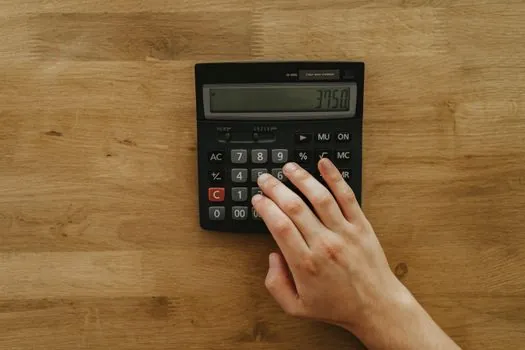
The lowest-total-cost counter is not necessarily the lowest purchase price. Compare candidates against 4 criteria: acquisition cost, installation effort, operating burden, and failure exposure. Installation effort includes mechanical mounting, wiring, signal verification, and commissioning; operating burden includes maintenance, calibration, consumables, and energy; failure exposure includes downtime, production loss, and replacement lead time [S2][S3].
For industrial use, a counter that supports the required count or rate function should first be checked against the application's physical and electrical conditions. The comparison should record the enclosure, sensing method, power supply, output type, counting range, and required accessories. Where a counter feeds a counter meter, the interface must be included in the same TCO model because incompatible signal handling can create installation rework or added conversion cost.
For control-panel use, the relationship between the counter and command devices can affect commissioning effort. If the counter triggers an emergency-stop-button, pushbutton pilot light, or industrial buzzer, the analysis should include the associated wiring, interface devices, functional checks, and maintenance procedures. A counter can also pass control signals through a relay module, making that module's acquisition, replacement interval, and failure consequences part of the counter system cost.
Industrial Use Cases and Quantified Business Impact
Counter TCO is useful for production counting, budget planning, asset lifecycle management, vendor selection, and replacement decisions [S3]. On a production line, the financial consequence of a failed counter is not limited to the instrument replacement cost. The model should include lost production time, operator troubleshooting, possible scrap, and the cost of verifying the count after service [S2][S6].
Three scenarios should be compared at minimum. The base case uses the submitted counter configuration and planned maintenance interval. The low-cost case substitutes a lower-priced unit and applies its expected failure and recalibration exposure. The resilient case includes more durable sensing, enclosure, wiring, and interface arrangements, then applies a longer planned service interval. All three scenarios must use the same 5-year or 10-year horizon [S2].
For each scenario, record at least 10 measurable inputs: purchase price, installation labor hours, commissioning labor hours, annual maintenance hours, annual energy consumption, replacement frequency, replacement lead time, annual downtime hours, production value lost per downtime hour, and disposal value. This level of definition makes the TCO model auditable and supports the break-even question for each proposed transformation [S2]. The line-item approach is also consistent with the 25-page TCO implementation framework published in 2023 [S4].
Limitations and Failure Modes in the Model
Three limitations can distort a counter TCO comparison. First, price-only analysis can miscalculate sourcing cost by 20% to 30% because overhead, balance-sheet effects, risk, strategy, and external conditions are omitted [S5]. Second, a horizon that is too short can conceal replacement and upgrade costs that are explicitly part of lifecycle ownership [S3].
Third, estimates must remain consistent. Products with higher intellectual-property risk should carry higher intellectual-property cost, products with frequent design changes should carry higher innovation cost, and politically less stable supply sources should carry higher political-stability risk [S5]. Applying estimates selectively makes the counter with the preferred result look artificially inexpensive.
Spreadsheet models also need version control. Record the source date, currency, inflation assumption, labor rate, energy rate, production value, and discount rate. Keep residual value separate from annual operating cost, and maintain both nominal and real-cost views if the horizon exceeds 5 years. The Reshoring Now estimator provides a useful process pattern through exposed formulas, cumulative cost charts, and a 5-year forecast based on user-entered wage and currency assumptions [S5].
From Purchase Decision to Traceable Counter TCO
The defensible counter decision is the option with the lowest modeled lifecycle cost after installation, maintenance, energy, downtime, replacement, and disposal are included. A structured TCO supports budgeting, lifecycle management, vendor selection, and operating-model design [S2][S3].
A relay module TCO lifecycle cost guide provides a related framework for interface components that can extend a counter system's maintenance and failure exposure.
Before approval, require the vendor or internal engineering team to document the counter configuration, quoted price, installation hours, maintenance interval, replacement assumptions, and excluded costs. Then track 2 signals after installation: actual downtime per operating hour and actual maintenance hours per 12 months. Those operating records provide the first correction cycle for the forecast model.