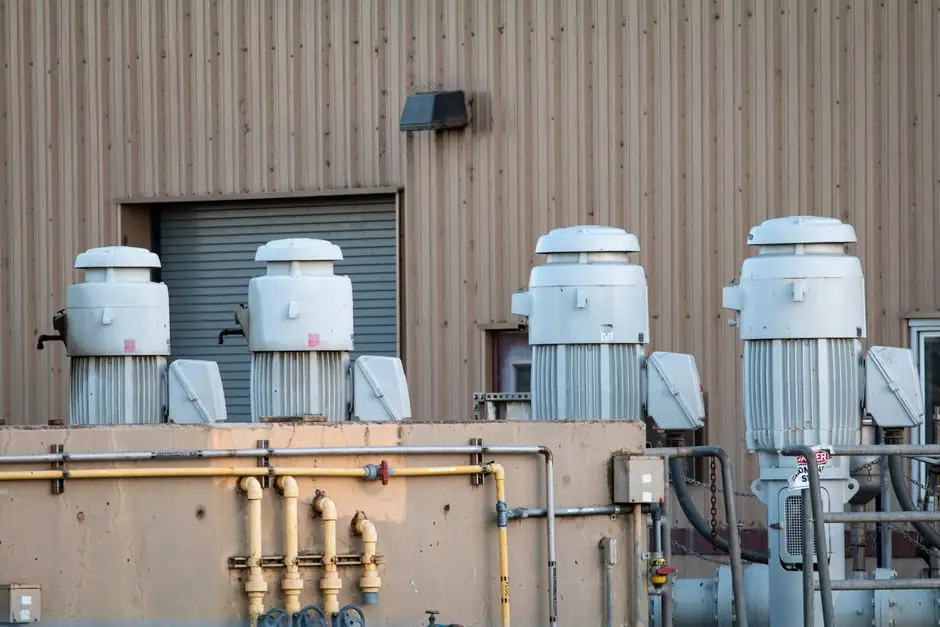
A hydraulic power unit built around one fixed-displacement pump is the cheapest path when the machine only operates one function at a time, but the moment two actuators can be demanded together, a single pump either stalls, overheats, or trips its drive motor [S4].
A tandem (multi-section) pump lets one electric motor or engine drive two independent circuits in a compact package: the shaft-end section typically handles a high-flow, low-pressure job (steering, fan, conveyor), while the cover-end section feeds a higher-pressure, intermittent load (clamp, lift, pilot). The convenience comes with a sizing condition, because the shaft, coupling, inlet port, and reservoir return must all be rated for the combined worst case [S4].
What the Two Topologies Actually Are
A single-pump HPU is one pump, one motor, one relief, one reservoir: simple to spec, simple to maintain, and well matched to machines with a single dominant actuator such as a press, a test rig, or a single-ram scissor lift. [S4]
A tandem-pump HPU mounts two pump sections on a common shaft inside one housing (or two coupled housings), so one prime mover flows two circuits. In Blince's July 2026 selection guide, the shaft-end section is illustrated as 35 cm3/rev and the cover-end section as 17 cm3/rev, and the guide explicitly warns that "the two pump sections were selected as individual pumps, while the shaft, inlet, prime mover, and return system must carry them as one assembly" [S4].
Selection Criteria, Not Catalog Displacement
The first citable decision rule: do not start with the model code, start with the two work functions and the duty overlap. A field note in the Blince guide reads, "The front section drives a conveyor motor continuously at about 95 bar. The rear section operates a clamp at 145 bar for six seconds per cycle. Motor current rises sharply when the clamp closes while the conveyor is running. Oil temperature reaches 68 C after forty minutes." That single paragraph specifies simultaneous duty, branch pressure, cycle time, and thermal load, all of which a single-pump HPU cannot satisfy with one fixed displacement [S4].
The second rule: check the common inlet. A hose selected only by thread size may have too little internal area for two sections pulling at once, and a shared suction port that is fine for one section can cavitate when both are at full flow. The third rule: check the return filter and reservoir together, because two return streams arriving together can overload a return filter sized for one [S4].
Single vs Tandem, Criterion by Criterion
On simultaneous-duty capability, a single pump fails by definition: one displacement, one relief, one branch. A tandem pump handles two independent functions running at once, but only if the shared drive is sized for combined worst case [S4].
On cost and lead time, a single-pump HPU wins on parts count, wiring, and stocking one model code; a tandem pump adds a second section but removes the need for a second motor, second coupling, and second mounting plate, so the real comparison is against two separate HPUs, not against one.
On serviceability, a single-pump HPU lets a mechanic swap one cartridge; a tandem pump requires matching the two sections on torque and inlet, so a like-for-like replacement is the only safe path, since "a replacement tandem pump can fit the flange, slide onto the shaft, and send oil from both outlets. The machine may still be wrong" [S4].
On noise and cold-start, the Blince guide flags a real failure mode: "On a cold morning, the rear pump section rattles for ten seconds while the front section sounds clean," which is an inlet-starvation symptom unique to multi-section pumps sharing one suction line. A single-pump HPU does not expose this fault because there is no shared inlet [S4].
Who Each Topology Is For
Single-pump HPU is the correct pick when the machine runs one actuator at a time, the duty cycle is well under the motor's continuous rating, oil temperature stays under roughly 60 C, and there is no second circuit waiting in the wings. Typical fits are small machine tools, single-ram lifts, and hydraulic test benches. [S4]
Tandem-pump HPU is the correct pick when two functions are mechanically independent (steering plus lift, conveyor plus clamp, fan plus pilot) and there is no room, no budget, or no tolerance for a second prime mover. The trade-off is that every component in the loop (motor nameplate, coupling, inlet hose, return filter, cooler, reservoir baffling) must be re-evaluated against combined demand, which is exactly the case where ordering errors become expensive [S4].
Failure Modes Unique to the Tandem Topology
Three recurring faults show up in the field and are diagnostic of an underspec'd tandem, not a bad valve or cylinder: motor overcurrent only when both functions run together, which points to undersized drive torque; clamp pressure dropping the moment the conveyor accelerates, which points to a control valve starving the higher-flow section; and return-filter bypass alarm after long shift cycles, which points to combined return flow exceeding the filter rating [S4].
A fourth fault is the cold-morning rattle already cited, where the rear section momentarily cavitates because the front section has pulled the inlet below the rear section's minimum NPSH. The fix is rarely a new pump, it is a larger common suction line, a relocated reservoir, or a flooded inlet. Single-pump HPUs do not fail this way.
Engineering Standards and Sourcing
For the hydraulic side, pump and motor ratings trace to ISO 4391 (displacement) and ISO 4413 (general hydraulic system rules), with fluid cleanliness typically governed by ISO 4406 target codes such as 18/16/13 or 17/15/12 for axial-piston and gear-pump circuits. For the electrical drive, motor selection sits under IEC 60034-1 for rotating machines and IEC 60204-1 for the safety of machinery electrical equipment, including the overcurrent trip the Blince guide describes [S4].
Procurement should reference the field note style in S4, not just the old model code: simultaneous duty, branch pressures, cycle timing, ambient, and oil temperature target. That information is the only basis on which a supplier can correctly match a tandem replacement, and it is the same data that justifies choosing a tandem over a single pump in the first place.
For comparison with adjacent mechanical decisions, the spec-driven logic used here is the same logic used in Shaft-Mount vs End-Mount Screw Conveyor Drives and Self-Priming vs Submersible Sludge Pump for Dewatering: define the work function, then pick the topology.
Trackable next signals: (1) whether the OEM's specified common-inlet minimum diameter has been adopted in the maintenance manual for the next revision, and (2) whether a flooded-suction or separate-inlet variant is offered as a catalog option for cold-ambient sites, both of which would reduce the cold-morning rattle class of failure documented in [S4].
Detailed specification references: single girder crane, asrs system, and shuttle system.