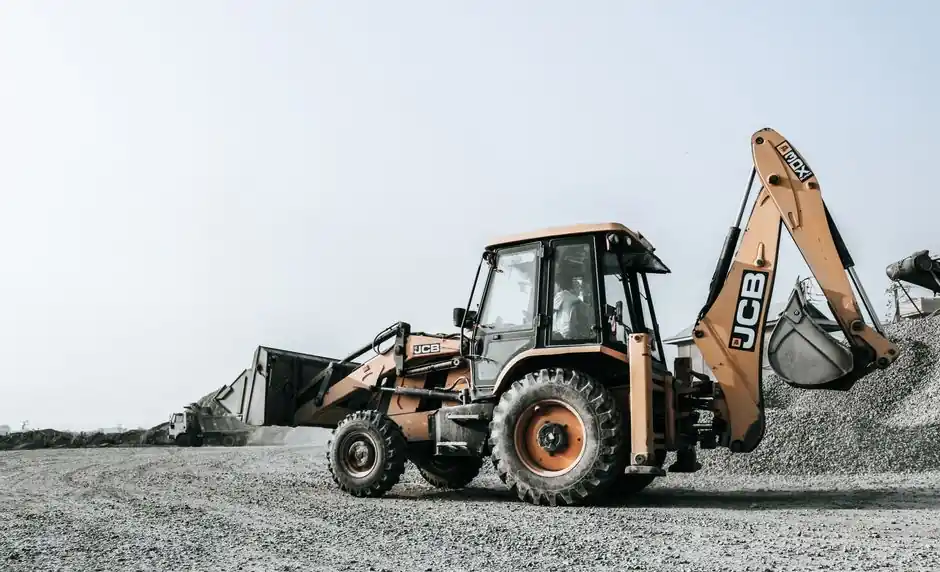
Counterweight kits are engineered to add rear ballast for improved machine stability and provide secure, lockable on-machine storage, and their steel construction uses 1/2 in and 3/8 in steel [S2].
The deciding calculation depends on attachment weight, payload, load position, lift geometry, and machine model, so a ballast kit should be treated as a stability modification rather than a capacity re-rating [S1][S3][S4].
What Rated Capacity Means After a Ballast Change
Rated operating capacity is the manufacturer’s specified safe working load for the machine under defined conditions, while the higher tipping point can occur before the actual rollover limit [S1]. For a machine with approximately 1,500 lb of stated lift, one discussion estimated an almost 1:1 added-weight-to-lift ratio, meaning about 500 lb would need to be added depending on how far back the weights could be placed [S1].
Counterweighting moves the balance point rearward and reduces the chance of the chassis rotating around its front axle during a lift. It does not increase attachment strength, hydraulic force, chassis structure, tire capacity, or the OEM’s published rating, and the installed kit still has to meet the machine’s mounting and stability requirements [S2][S4].
For specification work on a skid steer loader, keep three values separate: rated operating capacity, calculated tipping load, and actual load at the specified attachment radius. A kit may improve the second and third without changing the first.
How Much Capacity Can Rear Ballast Add?
There is no universal pound-for-pound conversion from ballast to rated capacity. One discussion estimated an almost 1:1 relationship for a particular rear-mounted arrangement, meaning about 500 lb of added mass might correspond to 500 lb more lift in that geometry [S1]. That is a machine-specific rule of thumb, not a rating formula.
The calculation also depends on the lift path and what is being lifted. Radial and vertical lift systems do not present the same load geometry, while a forward-positioned attachment increases the overturning moment before the lift reaches its final height [S1]. The attachment’s mass must be included in the loaded condition, not treated as an independent payload.
A separate operating example involved a 1,000 lb silage-bale load and a squeeze attachment weighing at least 500 lb, producing a 1,500 lb combined load. The proposed response was two 100 lb suitcase weights on each side behind the rear tires, but the discussion did not establish that the machine’s rating had changed [S3].
Counterweight Types Compared
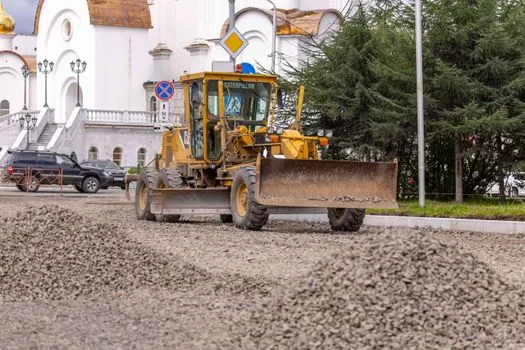
Solid cast-steel weights, welded plate weights, suitcase-style rear weights, and storage-box counterweights all add rear mass, but their effectiveness depends on mass, mounting pattern, and distance behind the front axle [S2]. Storage-style counterweight kits provide secure, lockable on-machine storage and are built from 1/2 in and 3/8 in steel [S2].
Cast steel provides concentrated mass, but casting geometry and mounting details still determine whether the weight sits low and far enough rearward. Welded plate kits offer model-specific layouts and can use a full bolt pattern, while suitcase weights are convenient when several smaller units must be positioned behind the tires [S2][S3]. Multifunction storage boxes add ballast while carrying tools, chains, and tie-downs, but their usable payload must not be confused with ballast mass [S2].
Lower and more horizontal counterweight profiles can improve stability, while higher configurations may increase tipping risk during turns or on uneven ground.
Who Benefits and Who Should Not Add Weight
Ballast kits are appropriate for operators using a heavier front attachment, carrying load farther forward, or operating where extra rear mass reduces front-end lift instability [S2][S4]. A storage-box kit can also replace separate tools carried in the operator compartment, provided its contents are restrained and its weight matches the approved configuration.
Counterweighting is not the right solution for a machine that needs more rated capacity for ordinary bucket work, more breakout force, or a higher attachment capacity. Added ballast also reduces available traction and increases rear axle loading, so the benefit has to outweigh those penalties in the intended application [S1][S4].
A machine already carrying substantial rear ballast, or one operating on slopes, soft ground, or uneven terrain, requires particular caution because the added mass changes handling without guaranteeing a larger safe working load [S4]. The manufacturer’s approved ballast arrangement is more defensible than an improvised setup.
Attachment Reach and Downpressure Trade-Offs
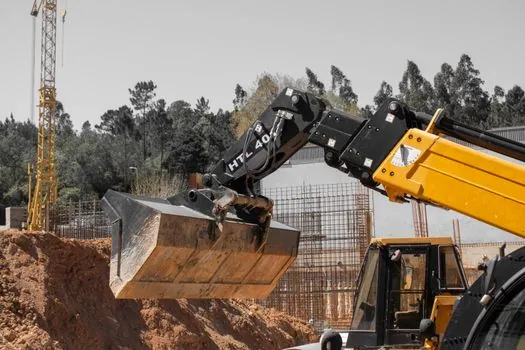
Counterweighting is especially relevant with buckets, forks, and brush cutters because their mass and working position act at the front of the machine [S2]. A heavier bucket may improve resistance to forward tipping while simultaneously increasing axle loads and reducing available machine mass for other duties.
For forks or pallet handling, load moment depends on the distance from the front axle to the load center. For buckets, include bucket mass, payload, cutting resistance, lift height, and the machine’s lift path. These variables explain why the same counterweight kit can produce different operating results on different skid steer models.
Installation, Compatibility, and Verification
Counterweight kits are machine-specific and commonly use a full bolt pattern matched to the loader frame or existing brackets [S2]. Examples in the research included Bobcat and John Deere storage boxes, a New Holland LS150 suitcase-weight arrangement, an L170 with two 52 lb weights per side, and an L190 installation with three weights per side [S2][S3].
Do not assume that a kit from a larger model fits a smaller machine. Confirm model, serial range, attachment interface, rear bracket load path, clearance, and whether the installation point adds useful ballast moment [S2][S3]. A full-width kit with low-mounted mass can behave differently from two narrow suitcase weights mounted high or close to the axle.
Verification should include a low-speed static lift, slow lift through the working range, a turn test at the intended radius, and inspection of fasteners, welds, tires, and axle loading. If the load produces noticeable chassis lift or excessive articulation, remove ballast and revise the load plan rather than adding more weight [S1][S3].
Specification Decision and Maintenance Limits
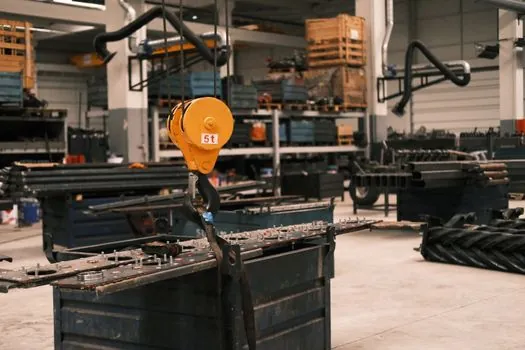
Specify a counterweight kit when the attachment combination creates a measured stability deficit and the OEM or kit documentation confirms model compatibility. Document ballast mass, mounting location, attachment mass, payload, load center, and test radius. Do not list the added mass as increased rated capacity unless the machine manufacturer formally revises the rating. [S2]
Steel storage kits must tolerate vibration, impact, and outdoor exposure; typical construction uses heavy-gauge steel with a wear-resistant base and full bolt-pattern mounting [S2]. Maintenance should include periodic fastener torque checks, weld inspection, corrosion treatment, and confirmation that storage latches prevent tools or chains from shifting.
The almost 1:1 added-weight-to-lift estimate, the 500 lb addition in the cited example, and the 100 lb suitcase weights are useful planning references, but none proves a new rated capacity [S1][S3]. The trackable decision is the manufacturer’s approved ballast configuration and the resulting load chart for the exact attachment, radius, and lift path.