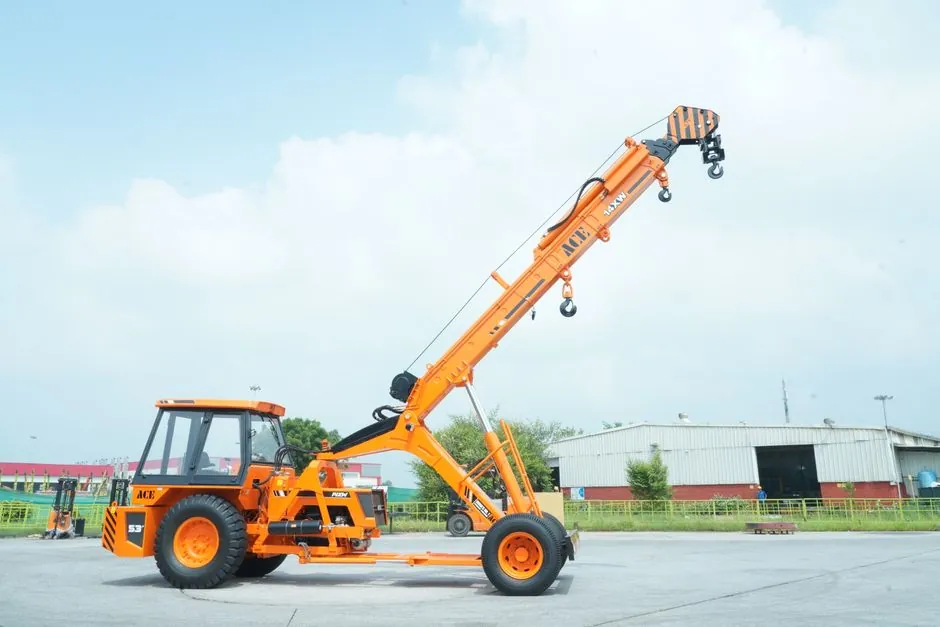
A lattice boom can lift more than a telescopic boom at the same working radius, provided the crane, configuration, counterweight, and duty cycle are comparable.
The decision depends on structural efficiency, setup time, mobility, and the rated load chart for the exact radius, boom angle, and configuration.
What the Equal-Radius Comparison Actually Measures
A capacity comparison at an identical radius isolates boom geometry from obvious differences in crane size. A lattice boom uses an open steel truss to resist bending with less structural weight than a closed telescopic section of equivalent strength [S1][S4]. That lower boom weight can leave more of the crane’s theoretical capacity available for the suspended load at long radius.
The result is not an unlimited or universal advantage. Capacity still changes with boom length, boom angle, jib use, line pull, rigging, ground conditions, counterweight, and the crane model’s load chart. A large telescopic machine can therefore outperform a small lattice machine at the same radius, while a smaller lattice crawler may outperform a particular telescopic boom at long reach [S2][S4].
For engineering decisions, use a load chart rather than crane class. The governing values are rated gross load, net capacity after deductions, maximum radius, minimum radius, and any boom or jib combination restrictions published for that machine.
Why the Lattice Structure Gains Capacity
Lattice booms are built from high-strength steel tubes or structural sections connected as triangular truss modules. The triangular framework provides rigidity and bending resistance while removing much of the material used in a solid or closed box section [S1][S5].
Three configuration details determine whether that structural efficiency becomes usable lifting capacity. First, lattice sections are pin-connected and assembled to a chosen length before the lift. Second, luffing mechanisms or boom-hoist systems control boom angle and working radius. Third, the hook block and multi-part wire-rope reeving transfer the load through the boom, while the counterweight balances the crane [S5].
By comparison, a telescopic boom consists of nested closed steel sections moved hydraulically. The operator can change its length from the cab without physically adding boom sections, but the heavier section geometry creates a lower maximum-capacity ceiling for the largest conventional machines [S2][S4]. Published fleet examples place the strongest conventional lattice crawler crane at up to 3,000 tonnes, or 3,300 USt, against 1,200 tonnes, or 1,500 USt, for the strongest telescopic mobile crane cited [S2].
Setup Speed and Mobility Reverse the Decision
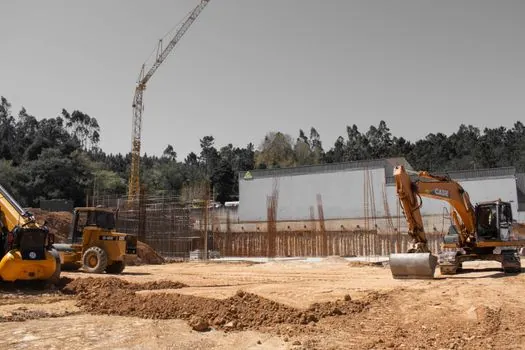
Telescopic mobile cranes generally set up faster than lattice boom cranes because they self-erect with a smaller footprint and lower counterweight requirements. A lattice crawler may need extensive boom assembly, counterweight placement, and site preparation before the same lift can begin [S4].
Mobile crane classes illustrate the distinction. All-terrain, rough-terrain, hydraulic truck, and boom-truck cranes generally use telescopic booms for road travel, confined access, and faster relocations. Crawler cranes are available with either telescopic or lattice construction, so the carrier alone does not identify the boom system [S2].
On a job measured in days, faster mobilization can outweigh the extra capacity available from a lattice boom [S2]. A telescopic boom also avoids the inventory and labor required to add or remove pinned lattice sections. Conversely, a crawler crane spreads its weight across tracks, reducing reliance on outriggers and supporting long-duration heavy lifts where stability and capacity dominate [S1].
Lattice and Telescopic Options Compared
Lattice and telescopic designs differ more clearly when compared by structural behavior, adjustment method, capacity ceiling, and site logistics. The useful comparison is not simply “stronger versus weaker,” because machine size and configuration can reverse the outcome. [S2]
Crawler carrier selection can also be narrowed with the crawler vs tower crane heavy-lift selection guide, but a tower crane is a different lifting system and should not be used as a direct boom-type substitute.
Where Each Design Fits
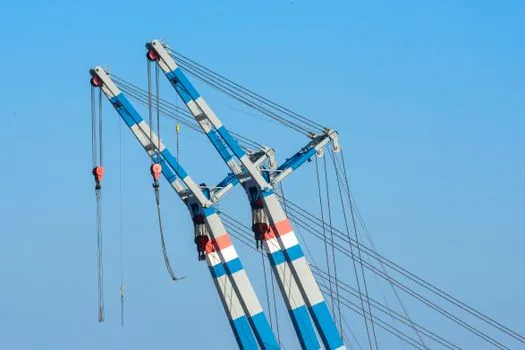
Lattice booms suit infrastructure, wind-farm, petrochemical-plant, bridge, nuclear-power, mining, and other heavy industrial lifts where long reach, high capacity, or long-duration operation justifies dedicated assembly [S1][S5]. Their open truss also permits configurations such as jib extensions, luffing jibs, and heavy-lift attachments [S5].
Telescopic booms suit short-duration work, multiple lifts, mobile installations, and sites where setup area or access is constrained. Telescopic booms are used on mobile cranes, while crawler cranes can be equipped with either telescopic or lattice booms.
The designs are not universally suitable for one another. A telescopic crane may be less suitable where the required lift needs the capacity advantage of a long lattice boom, while a lattice crawler may be operationally excessive when the work can be completed with a mobile telescopic crane [S2][S4]. A hydraulic crawler’s telescopic boom can retract, whereas a heavy-duty lattice crawler boom cannot retract in the same way [S7].
Load-Chart, Sourcing, and Safety Checks
OSHA 29 CFR 1926 Subpart CC covers mobile cranes incorporating either a latticed boom or a hydraulic telescopic boom and separately identifies crawler and wheel-mounted mobile-crane classes [S2]. For powered industrial trucks, including rough-terrain and boom-truck applications, OSHA 29 CFR 1910.180 addresses overhead-crane and hoisting hazards; the general industry rule cited for telescopic and lattice mobile cranes is 1910.180 [S3].
Do not transfer a load chart between cranes merely because both booms cover the same radius. Request the manufacturer’s chart for the proposed crane, exact boom configuration, main rope or pendant arrangement, jib, counterweight, and lift radius. Confirm allowable line pull, rigging configuration, multiple-part reeving, wind limits, ground-bearing assumptions, and setup geometry before procurement.
For crane qualification, operator certification, inspection, and lift-planning controls, align the work with OSHA 29 CFR 1926 Subpart CC and the applicable ASME B30.5 lifting-device requirements identified in the technical guidance [S2][S3]. These controls govern the planned lift; neither boom design removes the need to verify the actual load chart and site conditions.
Track the selected crane’s published rated capacity at the planned radius against the gross load, including rigging. If the margin is inadequate, compare a larger lattice configuration, a different crane model, a revised lift geometry, or a telescopic crane only after checking its own chart.