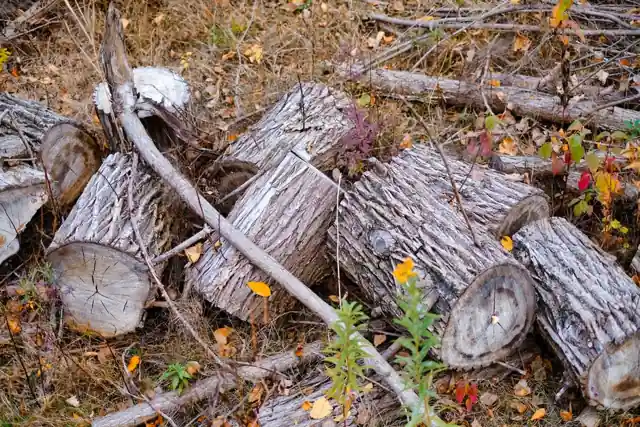
A professional forestry mulching setup typically needs 25–45+ GPM of auxiliary hydraulic flow, while heavy-duty high-flow attachments may specify 30–50+ GPM [S1][S4][S6].
Flow must be matched to the mulcher motor, operating pressure, engine horsepower, cutting width, and vegetation diameter rather than treated as a single skid-steer specification [S1][S4].
Standard Flow Versus High Flow for Forestry Mulching
Standard-flow skid steers typically provide 15–25 GPM [S5].
High-flow configurations generally extend from roughly 26–45+ GPM [S5], while heavy forestry-class attachments are often grouped at 30–50+ GPM [S1][S6]. The practical distinction is not simply a higher flow rating: the carrier must supply enough flow at the pressure required by the attachment motor.
A skid steer loader with standard flow remains suitable for a 12–25 GPM brush mulcher handling grass, vines, weeds, and small saplings. A forestry drum mulcher may operate from 17–45+ GPM, while a disc mulcher is normally matched to approximately 27–45 GPM [S4].
That range is not a universal approval. The attachment manufacturer’s specified GPM and PSI take precedence, because the motor may be configured for different flow rates and the machine must maintain the intended rotor speed [S4].
Choosing Between Drum, Disc, and Brush Mulchers
Brush mulchers commonly require 12–25 GPM, forestry drum mulchers generally span 17–45+ GPM, and disc mulchers typically require 27–45 GPM [S4].
For vegetation management rather than heavy tree work, a lower-flow attachment reduces the need for a high-flow carrier without removing the required clearing function [S4]. For dense woodland, hardwood saplings, or mature brush, flow alone will not compensate for inadequate engine power, relief pressure, cooling capacity, or attachment width [S1][S5].
Engine Power, Pressure, and Working Capacity
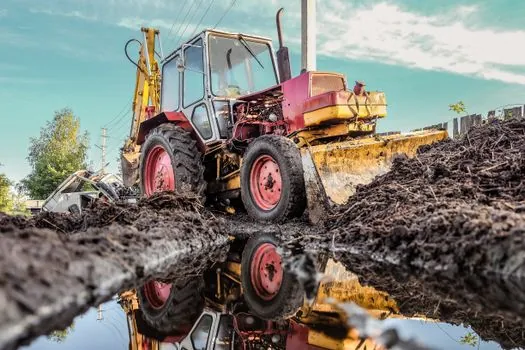
Forestry attachment guidance associates high-flow machines with at least a 70 hp engine at the minimum, making engine output a separate acceptance criterion rather than a substitute for GPM [S7].
Hydraulic power depends on both flow and pressure. A high-GPM carrier with insufficient pressure cannot support the expected cutting force, while adequate pressure with low flow may leave the drum or disc below its intended rotational speed [S4]. One operating guide recommends working at 500 psi below the machine’s maximum hydraulic relief setting [S8].
Matching Mulcher Width and Engine Class
Mulcher widths commonly fall into 50–60 inch, 60–72 inch, and 72–80 inch classes, with larger units clearing more ground per pass but demanding greater engine and hydraulic capacity [S1].
Most skid steers work best with 60–72 inch forestry mulchers, while larger high-flow machines may operate 72–80 inch attachments for heavy land clearing and thicker trees [S1]. An oversized drum operating below its required flow can lose drum speed and produce poor cutting performance or overheating [S5].
Most skid steers work best with 60–72 inch mulchers, while larger high-flow machines can run 72–80 inch attachments for heavy land clearing and thicker trees [S1]. The attachment width must remain compatible with the carrier’s rated operating mass and stability limits, not just its nominal horsepower.
Where Standard and High Flow Machines Fit
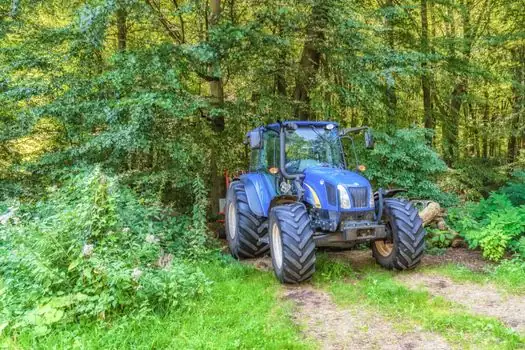
Standard-flow machines are the practical choice for brush cutting, vegetation maintenance, overgrown fields, and small saplings, where 12–25 GPM can meet the attachment requirement [S4].
High-flow machines are appropriate for dense vegetation, small trees, aggressive land clearing, and larger forestry drums or discs requiring approximately 27–50+ GPM [S1][S4][S6]. Standard-flow categories described for lighter maintenance commonly cover 16–30 GPM, while serious clearing duties are associated with 32–50+ GPM [S6].
The operating limit is the attachment’s rated GPM and PSI. A 30 GPM carrier cannot satisfy a 45 GPM motor, and a carrier with 45 GPM does not prove compatibility if its relief pressure is too low or its engine cannot maintain the required hydraulic power [S4].
Verification Checklist for Attachment Compatibility
Compatibility verification should begin with the mulcher model’s specified GPM, PSI, motor displacement, cutting width, and minimum carrier horsepower, then compare those values with the skid steer’s auxiliary circuit [S1][S4].
Check whether the machine is actually configured for high flow rather than relying on a marketing designation. Published ranges span 12–45+ GPM across mulcher classes, but the manufacturer’s attachment requirement remains controlling [S4]. Confirm that the auxiliary circuit can sustain the stated flow at the required pressure and that the operator can remain below maximum relief pressure, with 500 psi below that maximum serving as a published operating guideline [S8].
Then verify cooling, hydraulic hose and fitting compatibility, attachment weight, carrier stability, and the manufacturer’s operating restrictions. A 60–72 inch mulcher is a general fit for many standard machines, but moving into the 72–80 inch class requires a high-flow platform and adequate power [S1].
The decisive procurement record is the attachment’s GPM and PSI requirement matched to verified carrier output. For dense forestry work, 30–50+ GPM is the defensible target band, while standard-flow equipment should be limited to attachments whose published requirements fall within its measured output [S1][S6].