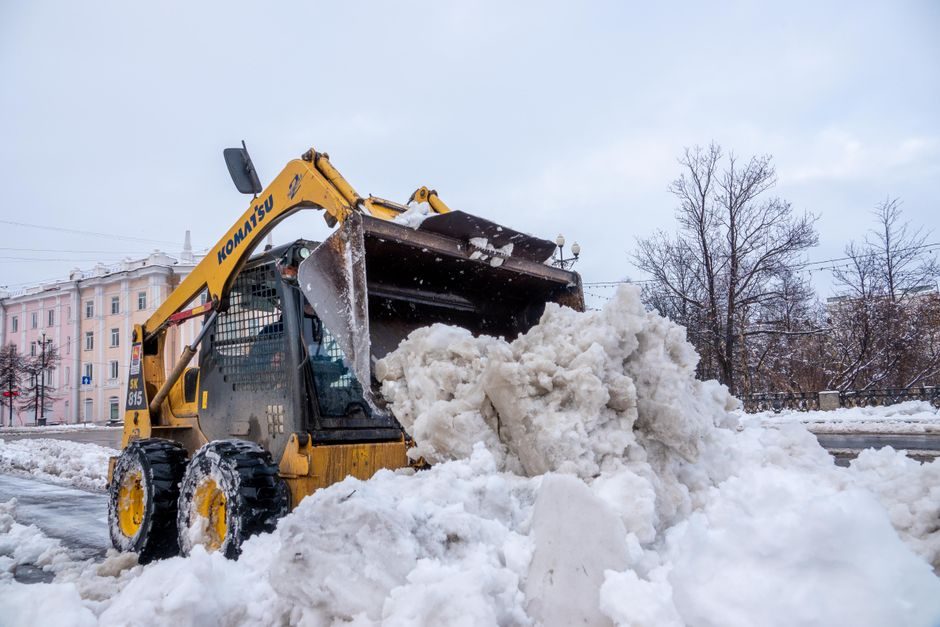
Floor condition is the first filter when matching a skid steer loader to a job: a 1,000 kg rated machine on 10×16.5 standard pneumatic tires delivers roughly 35–45 kPa contact pressure on a hard slab, but that same footprint sinks 25–100 mm into unprepared soft soil, ruling out wheeled units on landscaping, mud, or freshly graded ground [S1][S2].
Manufacturer product lines published in June 2026 split cleanly into two families: wheeled machines in the 0.5–1.2 ton operating-weight band (typical OEM code: JC120) and compact tracked units around 1.0 ton (typical code: TS100), with 30+ matched attachments including backhoe loader, breakers, augers, sweepers, and pallet forks [S4]. The decision is rarely the engine; it is the interface between the chassis and the floor.
Contact Pressure and Substrate Bearing Capacity
Skid steer ground pressure is governed by operating weight divided by tire or track contact patch; typical wheeled machines with 10×16.5 or 12×16.5 tires sit in the 30–60 kPa range on flat ground, while rubber-track compact loaders drop to 18–30 kPa — close to a standing adult's footprint [S1][S4]. Concrete slabs (typically rated 20–25 MPa) and finished asphalt easily accept either, but wet clay (bearing capacity often below 50 kPa) and loose aggregate drive the spec toward tracked units or a tire-pressure cut to 80–100 kPa.
The practical threshold: if the substrate is finished indoor slab, polished concrete, or cured asphalt, wheeled skid steers with standard pneumatic tires are the cost-effective default; for sand, topsoil, mud, or freshly laid gravel, a tracked model is the correct spec, not an option.
Tire Versus Track: A Criteria Comparison
On four decision criteria, the two configurations diverge predictably: (1) Ground pressure — wheeled 30–60 kPa, tracked 18–30 kPa; (2) Puncture/abrasion risk — pneumatic tires vulnerable on rebar-strewn demolition sites, rubber tracks tolerant of the same; (3) Surface finish — pneumatic and foam-filled tires are mandated on finished indoor floors to prevent marking, tracks preferred on graded earth; (4) Travel speed on hard ground — wheeled units typically reach 12–18 km/h, tracked units 6–10 km/h [S1][S4]. The wider attachment compatibility list (backhoe, breaker, dozer blade, auger, sweeper, pallet fork) is identical between the two families, so the undercarriage is the only real variable when the work itself is fixed [S4].
Operating Capacity, Tipping Load, and Floor Safety Margin
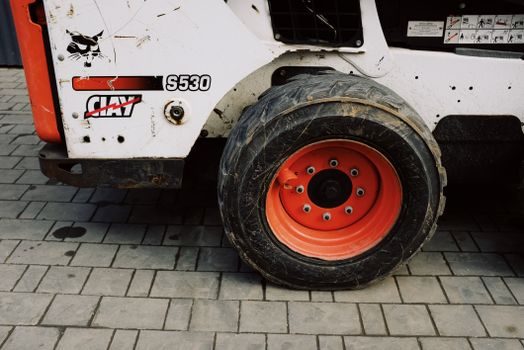
A 1.0 ton class ROC machine with a 600 kg attachment load applies roughly 16 kN at the bucket tip at full lift — enough to crack an unreinforced slab thinner than 100 mm, and a hard constraint in indoor renovation work [S3]. Indoor concrete slabs are commonly 100–150 mm thick with 25 MPa compressive strength, sufficient for most sub-ton skid steers, but a quick load calc against slab thickness is worth documenting before mobilisation.
For demolition on suspended slabs, contractor-grade guidance pushes the spec toward the smaller 0.5 ton mini skid steer class (ROC ~250–450 kg), where 10×16.5 non-marking tires and a 25–30 kW engine keep the combined static and dynamic load well below 5 kN per wheel [S1][S2]. That same rule is why OEM attachment lists emphasise hydraulic breakers and trenchers in the 100–200 kg class for the tracked TS100 — the undercarriage and the boom share the same load budget [S4].
Surface-Specific Compatibility Matrix
Finished concrete and epoxy-coated warehouse floors: wheeled, non-marking or foam-filled tires only; track machines require a rubber insert to avoid scarring polished surfaces. Turf and landscape: tracked units preferred; if wheeled, drop tire pressure 15–20 % below road spec. Sand, gravel, mud: tracked mandatory; wheeled machines will dig in within 10–30 minutes of continuous work. Snow and ice: studded or tire-chain options appear in OEM accessory lists for both families, but tracked machines float on top of unpacked snow near the 25–30 kPa footprint line [S1][S3][S4].
This is also where the OEM customisation angle meets real spec risk. Manufacturers routinely offer tailored mechanical packages — alternative hydraulic flows (60–90 L/min), auxiliary circuits, and chassis widths down to ~900 mm for confined indoor access — but the undercarriage and tire spec are still the primary floor-driven variable, not the hydraulic curve [S1][S2].
Limitations and Common Mis-Spec Patterns
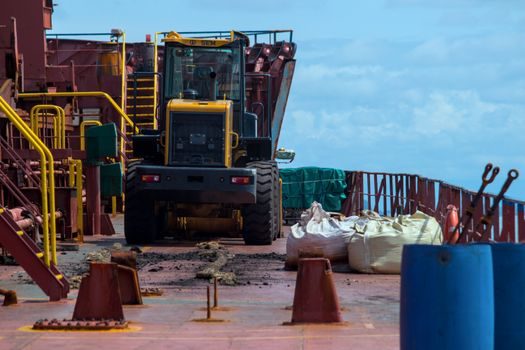
Three failure modes repeat across job sites: (a) wheeled skid steer dispatched onto a freshly graded sub-base, recovered only by a track machine; (b) foam-filled tires specified to avoid flats but trading away 30–40 % of ride cushioning, accelerating operator fatigue on broken ground; (c) tracked units run on finished indoor epoxy, leaving rubber drag marks that require re-coating — the floor grinder becomes a downstream line item. The fix is a written floor-survey step before machine selection, not after. [S1]
Aggregate cost of mis-spec, including recovery towing, downtime, and surface repair, regularly runs 1.5–3× the daily rental of the correct machine, based on contractor field reporting compiled across June 2026 OEM and dealer pages [S3]. Floor-survey lead time of 30–60 minutes at the walk-down is the cheapest line item in the whole equipment plan.
Standards, Sourcing Signals, and Trackable Updates
The governing performance spec is ISO 14397-1 for rated operating capacity and tipping load procedures on earth-moving machinery; safety frames reference ISO 12117.
Related reading on adjacent equipment decisions: Power Trowel Buying Guide 2026: Rotor Size, Engine Tier and Sourcing Levers covers the finishing side of the same slab, and Dock Leveler Selection Criteria 2026: Capacity, Lip, Drive and Duty Cycle applies a similar substrate-to-spec logic to a different machine class. Next verifiable node: ISO 14397 revision activity and any 2026 H2 OEM bulletin on non-marking tire SKU additions.