
A 2026 smart camera selection hinges on three numbers: sensor resolution (4 MP vs 8 MP is now the entry-mid split), power path (PoE 802.3af vs Wi-Fi 2.4/5 GHz), and AI location (on-device NPU vs cloud inferencing), each of which drives both unit cost and recurring fees.
PCMag's 2026 vlogging and home-security camera test slate, published 2026-06-29, and SmartReview's 2026 home-surveillance roundup dated 2026-08-05 both treat resolution, low-light lux rating, and weather rating (IP65 minimum for outdoor) as the gating spec trio, with AI features as a separate decision layer [S3][S7]. The same buying logic applies whether the unit is a consumer doorbell, an action camera for content creators, or a machine-vision smart camera on a line.
Resolution, Frame Rate, and Sensor Class
4 MP (2560 x 1440) is the new baseline for indoor consumer smart cameras, while 8 MP (3840 x 2160, marketed as 4K) is the mainstream ceiling for outdoor perimeter and entry-level professional video [S3]. PCMag's 2026 tested list explicitly groups models into 1080p, 4K, and 360-degree categories rather than by brand, which signals where the market has settled [S3].
Frame rate matters more than pixel count for moving subjects: 30 fps remains the vlogging and home-security default, while 60 fps enters the spec sheet for action cameras and any camera expected to capture license plates or fast line motion [S1]. For industrial-grade imaging, the spec language shifts toward smart camera modules, where GigE Vision and USB3 Vision interfaces replace consumer Wi-Fi and the sensor-to-lens mount (C/CS) becomes a separate line item.
Power and Network: PoE, Wi-Fi, and Battery
PoE (Power over Ethernet, IEEE 802.3af delivers 15.4 W, 802.3at delivers 30 W per port) is the default for any permanently installed outdoor or commercial smart camera, because a single Cat5e/Cat6 run handles both data and power and removes the need for a nearby outlet [S4]. Consumer indoor units mostly ship on Wi-Fi 2.4 GHz for range or 5 GHz for bandwidth, with battery-powered doorbells using 18650 Li-ion packs rated for 3 to 6 months per charge under typical trigger counts [S3].
For higher-data industrial deployments, the industrial camera tier uses GigE Vision (1 Gbps up to 100 m on Cat6) or 10 GigE Vision for multi-camera lines, with PoE+ or dedicated 24 VDC supplies. Bandwidth math is straightforward: an 8 MP stream at 30 fps in H.265 consumes roughly 4 to 8 Mbps, while MJPEG can push 40 to 60 Mbps, which dictates whether NVR storage or SD-card edge storage is the right recording path [S3].
AI: On-Device NPU vs Cloud Analytics
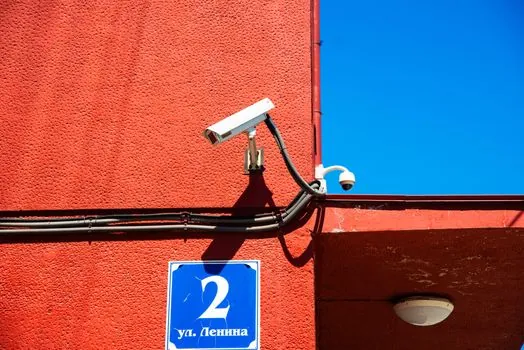
On-device AI (an NPU or DSP running person/vehicle/package detection locally) has moved from premium to mainstream in 2026, with PCMag noting it as a standard differentiator across tested home-security models rather than a flagship extra [S3]. Cloud AI remains the path for richer analytics, longer retention, and cross-camera search, but it adds a monthly fee that typically runs 3 to 15 USD per camera.
The tradeoff is concrete: on-device analytics work during internet outages and avoid per-camera fees, but they cap recognition classes to a few dozen labels. Cloud analytics can scale to custom labels and large-scale search, at the cost of bandwidth and subscription lock-in. UK AI-CCTV specialists upgrading legacy systems to "smart" systems specifically cite a tenfold functionality increase from adding AI analytics, per SmartCamera's 2026-08-06 service description, which matches the typical pre/post uplift when a 1080p passive camera is replaced with an AI-enabled 4 MP unit [S4].
Field of View, Optics, and Low-Light Performance
Field of view (FoV) is the second-most-skipped spec after bitrate. A 110 to 130 degree horizontal FoV is the consumer sweet spot for whole-room or porch coverage, while 180 to 360 degree models use a fisheye or dual-lens stitch and trade edge sharpness for coverage area [S3]. For machine-vision duty, a fixed-focal industrial lens (8 mm, 12 mm, 16 mm, 25 mm) is chosen by working distance and sensor size, not by a marketing "wide-angle" claim.
Low-light performance is driven by sensor pixel size, lens aperture (f/1.6 vs f/2.0 is a one-stop difference), and IR illumination range. PCMag's 2026 test notes that color night vision using a starlight sensor (typical sensitivity below 0.01 lux) is now common above the entry tier, while budget models still default to black-and-white IR at 850 nm with a 10 m range [S3]. For an outdoor perimeter unit, an IP66 or IP67 rating plus an operating temperature of minus 20 to 50 degrees Celsius is the de facto minimum in 2026 spec sheets.
Comparison: Consumer, Prosumer, and Machine-Vision Smart Cameras
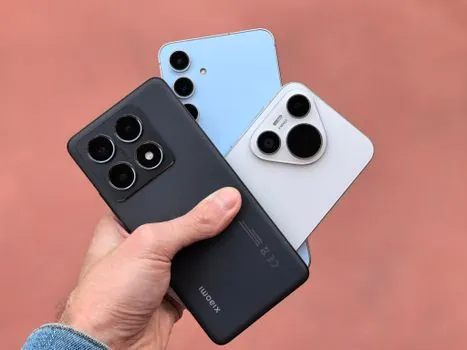
Three decision criteria separate the 2026 tiers cleanly: resolution plus frame rate, AI location, and interface type. Entry consumer (indoor doorbell, baby monitor, pet cam) clusters at 4 MP / 30 fps, on-device AI, Wi-Fi, and H.265 to SD card. Prosumer (perimeter, small business) moves to 8 MP / 30 fps, hybrid on-device plus optional cloud AI, PoE, and NVR recording. Machine-vision (line inspection, robotics) steps to 5 MP to 20 MP global-shutter sensors at 60 to 160 fps, PC-based or edge-GPU AI, and GigE Vision or USB3 Vision over Cat6/USB3 cabling [S3].
For machine-vision buyers the spec map is covered in the dedicated machine vision system buying guide 2026, which lines the same resolution/frame-rate/interface axes against vendor selection criteria. Cost benchmarks for the same tier sit in the machine vision system price and cost guide 2026, where component and integrator totals are broken out by resolution class and interface type.
Who Should NOT Buy a Cloud-Locked Smart Camera
If the deployment is a fixed outdoor perimeter, a workshop, or a remote site without reliable upstream bandwidth, a cloud-locked camera is the wrong pick: recording halts when the link drops, AI features stall, and the recurring fee compounds across every camera on site. A PoE camera with on-device analytics plus a local NVR is the correct architecture for any of those cases, and the per-camera total cost of ownership over 36 months is typically lower once subscription math is included [S3][S4].
Cloud-only also conflicts with most EU and UK GDPR/UK-GDPR expectations for footage of identifiable people without a documented lawful basis, which is one reason UK AI-CCTV installers position edge AI plus on-premise recording as the default retrofit, not the premium option [S4]. For U.S. consumers the concern is usually practical (outages, fees) rather than regulatory, but the architectural answer is the same.
Standards, Storage, and Sourcing Checklist
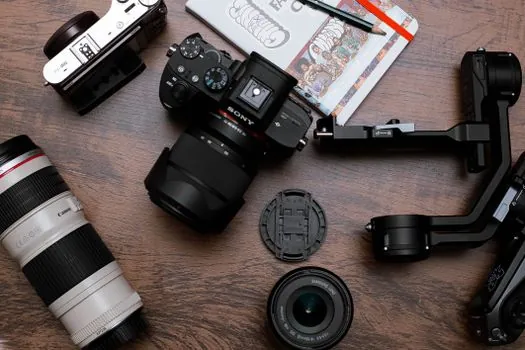
Three standards govern the wired interface layer and are worth confirming on any 2026 spec sheet: IEEE 802.3af/at for PoE, ONVIF Profile S or T for IP-camera interoperability with third-party NVRs, and IEEE 802.11ax (Wi-Fi 6) where wireless is required. Cloud platforms cite their own retention SLAs (commonly 7, 14, or 30 days) and end-to-end encryption claims, but the on-camera storage path should be SD card or NVR regardless, as a fallback. [S3]
Sourcing checklist for 2026 procurement: (1) confirm sensor resolution and frame rate from a lab test, not marketing copy; (2) confirm PoE class or battery Wh rating and stated operating temperature range; (3) confirm AI model list (person, vehicle, package, animal, face) and whether inference is on-device; (4) confirm ONVIF conformance and RTSP availability for NVR integration; (5) confirm warranty terms (24 months is the 2026 norm for consumer, 36 months for prosumer) [S3][S7].
Trackable signals for the rest of 2026: the PCMag 2026 vlogging-camera test slate was last refreshed 2026-06-29, and the SmartReview 2026 home-security roundup was updated 2026-08-05; both are worth re-checking before any bulk purchase because model turnover in this category runs on a roughly six-month cadence [S3][S7].
Spec-level background on the components involved: linear guide.