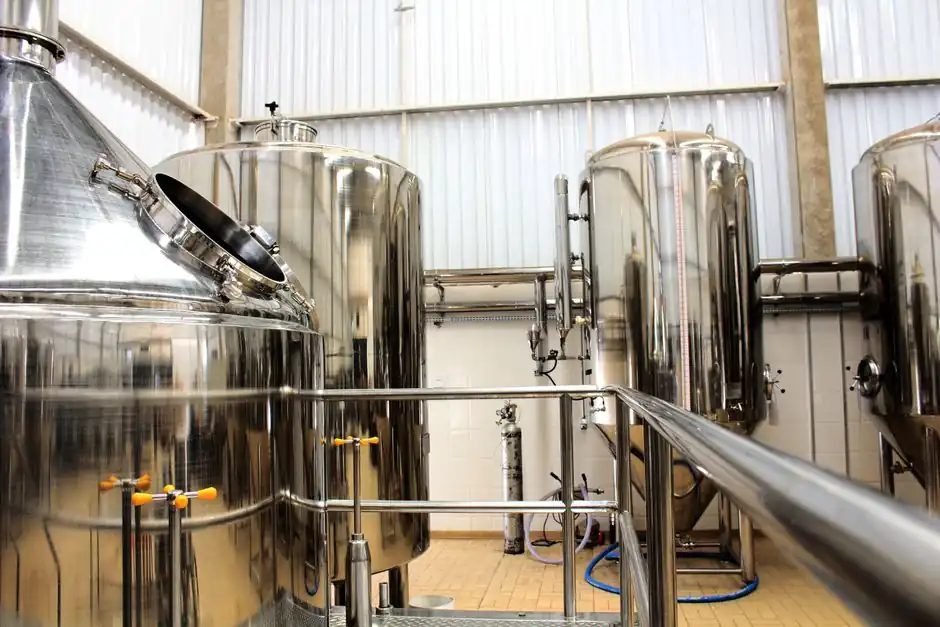
More than 80% of the equipment in a lithium-ion cell factory, including planetary mixers, coating heads, calenders, and formation cyclers, can be re-used for sodium-ion production with only process-side changes, not hardware swaps [S2].
TOB NEW ENERGY, CATL-aligned material suppliers, and the EU-funded EPISODE consortium all point to the same inflection point: cathode precursor synthesis, hard-carbon anode production, NaPF6 electrolyte, and cell-assembly equipment are now commercially available off the shelf for GWh-class sodium-ion lines [S2][S10].
Where Sodium-Ion Equipment Sits Today: Energy Density, Cycle Life, Cost
Layered-oxide sodium-ion cathodes now deliver 3,000 to 5,000 cycles at full-cell energy density of 140 to 160 Wh/kg, compared with LFP at 160 to 180 Wh/kg and NMC at 200 to 260 Wh/kg [S2]. Hard-carbon anodes, still the dominant anode chemistry, have moved first-cycle coulombic efficiency from roughly 70% to 85–90%, against graphite's 90%+ [S2]. Those numbers place sodium-ion directly against LFP for stationary storage, two-wheelers, low-speed EVs, and backup power, where cost per kilowatt-hour, not specific energy, drives the spec [S2][S5].
CATL and Hyperstrong signed a strategic agreement covering 60 GWh of sodium-ion capacity over three years, the largest single sodium-ion energy storage order on record, while China identifies sodium-ion as a priority direction in its 2025–2035 New Energy Storage Technology Development Roadmap [S5]. On the cost side, sodium-ion lines are tracking toward parity with LFP in energy storage and agricultural-tractor packs, with raw-material supply structurally diversified away from the lithium triangle and Western Australia [S2][S9].
From Slurry to Formation: The Process Sequence and Its Equipment
Sodium-ion cell production follows the same five stages used in lithium-ion: slurry mixing, electrode coating and drying, calendering, cell assembly (stacking or winding with separator), electrolyte filling, and formation cycling [S1][S4]. A factory converting from lithium-ion typically retains the planetary mixer, comma-bar coater, drying oven, calender press, laser cutter, stacking/winding machine, vacuum filler, and formation cabinet, and re-tunes recipe parameters, not the hardware itself [S1][S2].
At electrode prep, the planetary mixer, twin-screw disperser, and de-aerator feed a slot-die or comma-bar coater that lays the slurry onto aluminum foil (cathode) or copper foil (anode), with solvent recovery on the dryer exhaust [S1][S4]. Calendering presses the dried electrode to a target compaction density; the calender load setpoint and line speed change because hard carbon and Prussian-blue or layered-oxide powders compact differently from graphite and NMC, but the press itself is reused [S1]. In dry-room cell assembly, Z-fold stacking or jelly-roll winding, laser tab welding, and vacuum electrolyte filling with NaPF6 in carbonate solvent round out the front end [S1][S2].
What Breaks When You Switch the Chemistry: Process-Side, Not Hardware-Side
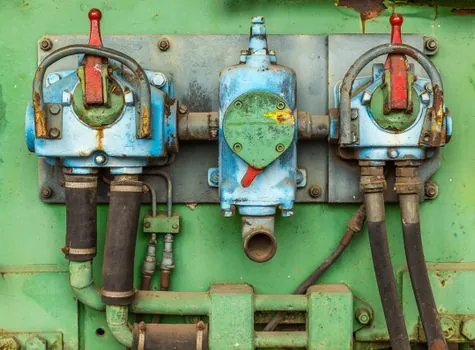
Layered-oxide cathodes and hard-carbon anodes are both moisture-sensitive and CO2-sensitive; layered oxides in particular pick up surface carbonates that poison capacity if the dry-room dew point is allowed to drift [S5]. Powder resistivity and compaction-density screening of incoming material is therefore a hard prerequisite, not an option, for any line running layered-oxide sodium-ion cathodes [S5]. The dry-grinding step upstream of slurry mixing has also been singled out as a bottleneck: Epic Powder's 2026 review notes that mass-production sodium-ion is forcing a step-change in dry-grinding equipment for hard-carbon anode and Prussian-blue cathode precursors [S6].
Formation cycling carries its own delta. Sodium-ion cells build a different solid-electrolyte interphase (SEI) on hard carbon, so the formation protocol uses lower C-rates and longer hold steps than a lithium-ion recipe [S5]. Aging time, the weeks-long storage period for self-discharge screening, is comparable to lithium-ion practice [S4]. The result: a sodium-ion formation line in 2026 typically hits ~70% production yield against >95% for mature lithium-ion, with the gap concentrated in moisture control, SEI uniformity, and electrode flexibility defects [S5].
Four-Level Characterization: What Every Sodium-Ion Line Must Test
At the particle level, single-particle crushing strength quantifies mechanical differences between layered-oxide cathode and hard-carbon anode raw materials and predicts fracture risk during slurry mixing and calendering [S5]. At the powder level, powder resistivity plus compaction density screens for moisture and CO2 degradation in layered oxides and verifies carbonization uniformity in hard carbon [S5]. At the electrode level, electronic conductivity (BER), ionic conductivity plus tortuosity (EIC), and electrode flexibility (BEF) testing pin down process defects in slurry preparation, coating, and calendering [S5].
At the cell level, in-situ swelling, in-situ gassing (GVM and MSG), and electrochemical methods (EIS, CV, GITT) capture the dynamic responses that drive cycle life, rate capability, and safety [S5]. This four-level protocol is the practical answer to the sodium-ion yield gap, and it runs on the same cycler, EIS workstation, and dilatometry hardware that a lithium-ion R&D lab already owns, with new fixturing and software for sodium-ion-specific pressure and voltage windows [S5].
Cathode, Anode, Electrolyte: Material Family vs. Equipment Choice
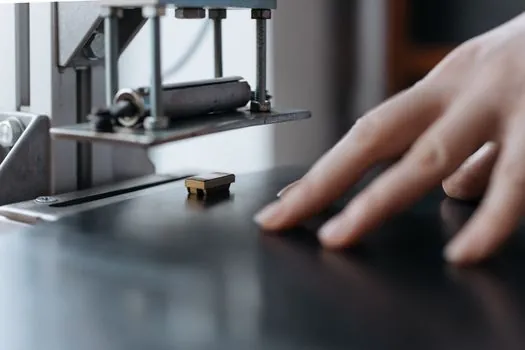
Sodium-ion cathode materials fall into four families: layered transition-metal oxides, polyanionic compounds (phosphates, sulfates), Prussian blue analogs, and conversion-type chemistries still in research [S7]. Each family stresses the equipment differently: layered oxides need tight moisture control and high-energy mixing, polyanionic compounds are tolerant of ambient air but abrasive on calender rolls, and Prussian blue analogs demand low-shear mixing to preserve the crystal framework [S5][S7]. Hard carbon dominates the anode, with first-cycle coulombic efficiency now 85–90% on commercial grades and pre-lithiation doping used on premium cells to recover the rest [S2].
On the electrolyte side, NaPF6 salt dissolved in carbonate solvents (EC, PC, DMC) is the established analog of LiPF6 in lithium-ion, and a 2026 EU EPISODE project is specifically chartered to develop a non-lithium electrolyte supply chain with attractive energy density using abundant, low-cost materials [S10]. For procurement, the equipment-relevant deltas are the salt-handling dry room, the NaPF6 storage dew point, and the electrolyte filling vacuum level, none of which require new line hardware, but all of which require explicit specification [S2][S10].
Industrial Rollout: Spain, China, and the GWh Pipeline
In April 2026, a new partnership was announced to advance sodium-ion manufacturing in Spain, adding a European node to a supply chain that is otherwise anchored in China [S8]. EPISODE, a Horizon Europe-funded consortium, is the explicit vehicle for that European non-lithium battery build, with the project ID 101191867 and a stated mission to deliver attractive energy density from abundant, low-cost materials [S10].
On the demand side, sodium-ion is being industrialized into energy storage, two-wheelers, low-speed EVs, start-up power, construction machinery, and agricultural tractors, with the latter two already tracking cost parity with LFP at pack level [S5][S9]. The 60 GWh CATL-Hyperstrong storage order and a broader 70% growth, 54 GW pipeline signal that capacity planning is now a GWh-scale problem, not a pilot-line problem [S5][S9]. For procurement, that means specifying sodium-ion-ready planetary mixers, dry-room dew-point controls, and calender load ranges explicitly, rather than ordering a generic lithium-ion line and hoping it adapts [S1][S2].
Who Sodium-Ion Equipment Is For, and Who Should Still Buy Lithium-Ion
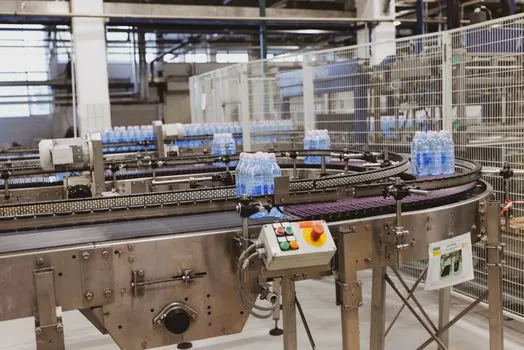
Sodium-ion is the right pick for stationary storage, agricultural and construction machinery, two-wheelers, low-speed EVs, and any application where cost per kWh and supply-chain de-risking outrank specific energy [S2][S5][S9]. It is the wrong pick for passenger-EV traction packs above 160 Wh/kg, consumer electronics where volumetric energy density dominates, and any product designed around an existing 250+ Wh/kg lithium-ion pack footprint [S2].
For a converter running an existing lithium-ion line, the practical entry is to pilot one sodium-ion product on a dedicated assembly bay, characterize yield and SEI behavior with the four-level test stack, and only then commit capex to a GWh-scale line [S5]. The capital cost of a sodium-ion greenfield line is close to a lithium-ion line once you exclude the lithium-specific linear guide and stacking upgrades, but the working capital tied up in precursor and electrolyte inventory is materially lower because sodium precursors are commodity chemicals, not battery-grade lithium salts [S1][S2].
Track the next node at the EPISODE consortium's first pilot-output milestone and at the next quarterly disclosure from CATL-Hyperstrong on the 60 GWh storage order; both will set the floor on sodium-ion capex through 2027 [S5][S10].
For component-level specifications, see crossed roller guide.
Related analysis: Mining Concrete Mixer Truck Selection: 2026 Spec Map.