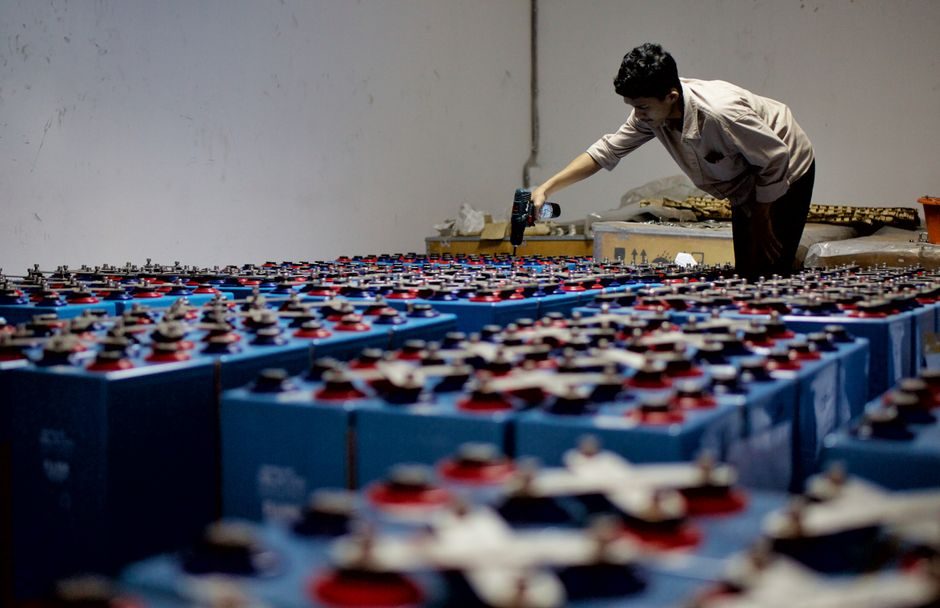
EAST Group (stock code 300376) listed a sodium-ion battery cabinet and an Intel-Na sodium-ion battery module on its product pages dated 2026-06-08 and 2026-06-09, both marketed for UPS backup and data-center power chains, signalling that sodium-ion is now in commercial SKU form, not just pilot [S1][S4].
The cabinet integrates PACK-level fire suppression as standard with optional cabinet-level fire suppression, supports modular hot-swap of faulty modules without system outage, and pairs with UPS systems in the 6 kVA to 40 kVA range via the same vendor's "All-in-one Sodium-ion Battery UPS" product family [S1]. The Intel-Na module targets flexible configuration across UPS battery voltage levels, adding overvoltage, undervoltage, overcurrent, short-circuit and high/low-temperature protection, plus real-time cell self-equalization and fault self-recovery [S4].
Where sodium-ion fits in the 2026 cell supply chain
Stationary backup and low-rate cycling are the first commercial beachhead for sodium-ion cells in 2026, not passenger-EV drivetrains, based on the cell-pack and UPS product lines EAST has released this year [S1][S4].
The sodium-ion Battery Cabinet product page states the chemistry does not smoke, catch fire or explode under the same abuse conditions that propagate thermal runaway in lithium-ion modules, a critical differentiator for data-center dc power supply rooms and unattended edge sites where suppression gas is hard to maintain [S1]. Modular hot-swap means a single failed module can be ejected from the rack while the rest of the string continues to deliver UPS hold-up time, an architecture borrowed from the same vendor's EA660 modular UPS family (20-200 kVA through 400-1200 kVA) that uses lithium iron phosphate in higher-power SKUs [S1]. For the data-center side, this sodium-ion cabinet can drop into the DC bus as a battery-fronted switching power supply backup, reducing the room's reliance on diesel generator run-time during prolonged mains events.
EV-scale cell economics: what the 2026 numbers say
Asia Pacific dominates with a 2025 baseline of USD 43.54 billion growing to USD 138.18 billion by 2035 (12.2% CAGR), driven by cell capacity localisation in China, South Korea and Japan [S2]. The same report flags sodium-ion for affordable EV platforms as an explicit growth opportunity, but it sits inside the broader lithium-dominated share, meaning the sodium-ion EV opportunity is incremental, not substitution, in the 2026-2030 window [S2]. This matters for procurement: a buyer who treats sodium-ion as a lithium replacement at gigawatt-hour scale in 2026 is over-specifying, while a buyer who treats it as a stationary-storage and entry-mobility play is on the realistic side of the supply curve.
Cell-level performance: 247 Wh/kg and 34,748 W/kg in lab
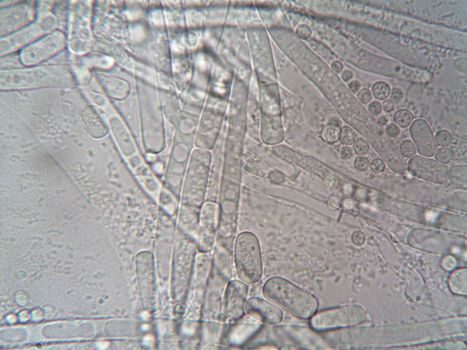
A KAIST team led by Professor Jeung Ku Kang reported a hybrid sodium-ion cell with 247 Wh/kg gravimetric energy density and 34,748 W/kg power density, holding 100% coulombic efficiency over 5,000 charge-discharge cycles in lab conditions [S3].
The architecture pairs an iron-based metal-organic framework (MOF) / graphene oxide anode, processed into ultrafine iron sulfide doped with carbon/graphene (FS/C/G), against a ZIF-derived three-dimensional porous oxygen-doped carbon cathode (ZDPC) with both micro- and mesoporosity [S3]. The 34,748 W/kg figure is roughly two orders of magnitude above conventional Li-ion reaction power, which is the property that lets a sub-second "refuel" charge profile be projected at lab scale, though no mass-production line has publicly hit that number as of 2026-07-11 [S3]. The 247 Wh/kg cell-level energy density remains below NMC lithium-ion cells in mass production (typically 250-300 Wh/kg pack-level), so the realistic 2026 deployment is high-power, moderate-energy applications, not long-range EV packs [S2][S3].
Comparison: where each chemistry actually wins in 2026
Selection rule of thumb for a 2026 specifier: NMC Li-ion for high-energy EV packs, LFP for high-cycle stationary storage, sodium-ion for safety-critical UPS and entry micro-EVs, with cost per kWh (delivered) and cycle life at the operating DoD as the two main axes [S1][S2][S3].
On energy density, mass-produced Li-ion NMC leads at 250-300 Wh/kg pack-level, the KAIST lab sodium-ion cell reaches 247 Wh/kg, and LFP typically sits 160-180 Wh/kg — sodium-ion currently only matches NMC at lab scale [S2][S3]. On safety abuse tolerance, sodium-ion wins outright: EAST states the cabinet-level pack does not smoke, catch fire or explode under conditions that would propagate in lithium-ion, and that is an electrical-room decision criterion, not a marketing line [S1]. On raw-material supply chain resilience, sodium-ion avoids lithium, cobalt and nickel — three of the most concentrated critical-mineral supply chains in 2026 — and trades them for sodium carbonate (soda ash), Prussian-blue analogues and hard-carbon anode precursors, which is why both the stationary storage and the entry-level EV use case are gated on supply chain mapping [S1][S2]. On cost trajectory, the sodium-ion EV cell cost curve is still pre-mass-market in 2026, so a procurement team should benchmark LFP for stationary UPS and reserve sodium-ion for installations where abuse tolerance or cold-temperature operation (sodium-ion cells are typically rated for −20 °C discharge in vendor datasheets) is non-negotiable.
Use cases that are real vs ones that are still lab

Real in 2026: sodium-ion UPS cabinets and modules integrated with EAST's EA-series modular UPS family, sodium-ion automotive start and start-stop batteries (conventional and alpine-region SKUs), and 2.5 MW / 5-10 MWh utility storage pilots [S1][S4].
Still lab: sub-second "refuel" charging cells at the 34,748 W/kg level, sodium-ion passenger-EV packs at >200 Wh/kg with >4,000 cycle life in series production, and gigawatt-hour-scale cell lines for sodium-ion drivetrain packs comparable to the lithium-ion ramp of 2018-2022 [S2][S3]. The vendor's own product taxonomy confirms this: under the "Sodium-ion Battery" category, the live SKUs are automotive start, automotive start-stop (conventional and alpine), Intel-Na battery module, high-rate sodium-ion cell, and the cabinet, with no sodium-ion EV-traction pack listed as of 2026-07-11 [S1][S4].
Procurement trackable signals for Q3-Q4 2026
Two signals will move the supply chain story forward: EAST's delivery of the sodium-ion cabinet in volume to data-center customers (the same channel currently buying its EA660 400-1200 kVA modular UPS frames and feeding the dc power supply bus), and a major cell maker filing a sodium-ion cell capacity expansion above the 5 GWh/year line — both are public, dated, and verifiable on company filings through the 2026-09 quarterly window [S1][S4].
For component-level specifications, see chain conveyor.
For related coverage, see Aluminum Extrusion Pricing and Cost Guide 2026.