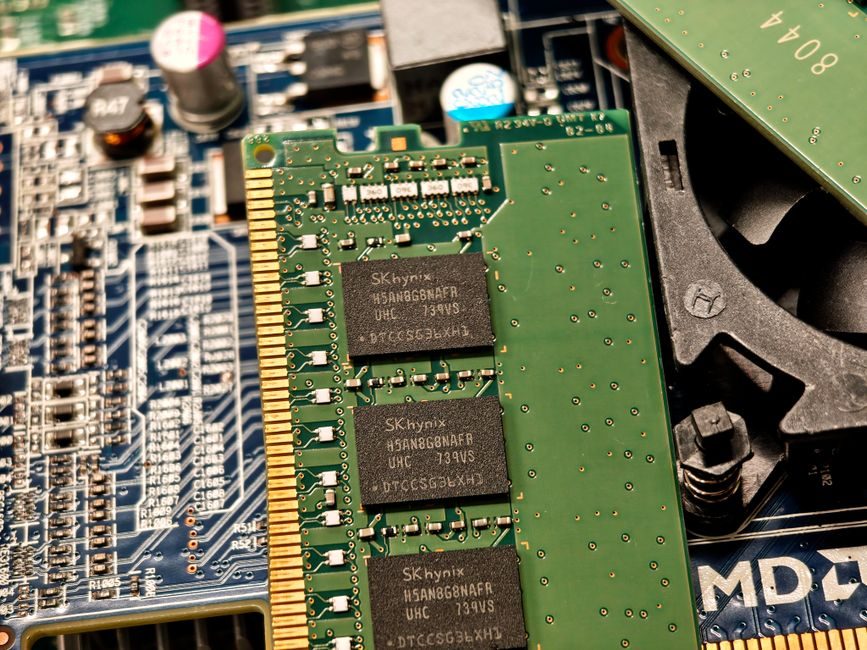
The single most important fact for a 2026 CPU buyer is that the Chinese CPU market is no longer a single shelf: it is a bifurcated supply line, with domestic chiplet-built x86 server parts (Zhaoxin Kaisheng KH-50000, 96 cores, 384 MB L3, 12-channel DDR5-5200, 128 PCIe 5.0 + 16 PCIe 4.0 lanes, LGA package 72 x 76 mm) sitting alongside re-exported Intel Core Ultra 200 / AMD Ryzen 9000 tray stock [S3].
Volume buyers should expect a separate compliance lane for each: domestic parts fall under CCC and PRC cryptography review, while imported tray CPU allocations are gated by US EAR ECCN 3A991 and the October 2022 / October 2023 / October 2024 advanced-compute update rules referenced in mainstream export-control commentary [S3].
Three supply lanes, three spec sheets
Lane A is the domestic x86 server lane built around the Zhaoxin "Century Avenue" KH-50000 family, which uses 13 chiplets per package to scale from 72 cores / 72 threads at 2.6 GHz base to 96 cores / 96 threads at 2.0-2.2 GHz base with a 3.0 GHz boost, 384 MB shared L3, 12-channel DDR5-5200, and 12 SATA 3.2 ports plus 4 USB 3.2 Gen 2 ports on an LGA socket measuring 72 x 76 mm [S3]. Two-package motherboards therefore expose up to 384 cores, putting the part in the same rack-density band as AMD EPYC 9004/9005 and Intel Xeon Scalable, although Tom's Hardware notes TDP has not been disclosed by the vendor [S3].
Lane B is the import-and-distribute lane: Shenzhen Huaqiangbei, Shanghai Zhenhua Road, and Beijing Zhongguancun distributors move boxed Intel Core Ultra 200 (LGA1851) and Ryzen 9000 (AM5) inventory originally allocated to Dell, HPE, Lenovo, and ASUS system builders. Lane C is the OEM tray lane, where 30% T/T deposit + 70% against bill of lading terms remain the norm, as documented for general China-sourcing workflows [S1].
Who this lane is for, and who it is not
The domestic x86 lane fits Chinese-locale data-center builds, government and education tenders, and industrial-control rack nodes (such as pressure sensor aggregation back-ends) that already run Kylin or UOS — anywhere the buyer is willing to accept a no-public-TDP part in exchange for chiplet-derived core density and a 12-channel DDR5 memory subsystem [S3]. It is the wrong pick for a buyer whose workload is licensed against Intel SGX / AMD SEV, because Zhaoxin's Century Avenue extensions to those instruction-set features are not documented in vendor public material [S3].
The boxed-retail lane fits small-run industrial PCs, test stands, and HMI builds (often paired with flow meter front-ends) where the engineering team needs a verified thermal envelope — Intel Core Ultra 5 typically lands 80-100 W below a comparable Core i5 under load, with a 7 °C lower sustained-load temperature, while a Ryzen 5 9600X still draws about 90 W less than the matching Core Ultra 5 at the same workload and runs roughly 13 °C cooler [S2]. That efficiency delta is what shrinks the heatsink from a 360 mm AIO down to a tower cooler, and it is also why AMD's mid-range parts remain the lower-TCO pick in 24/7 industrial fleets [S2].
Selection criteria: TDP envelope, lane count, and platform runway
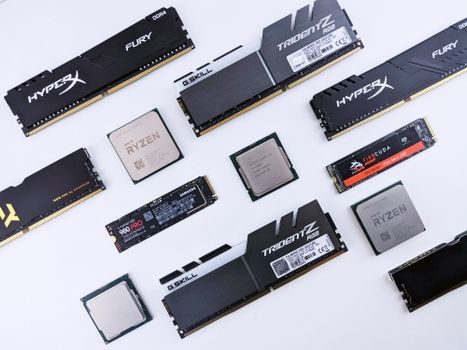
Three criteria decide the SKU more often than benchmark scores do. First, the TDP envelope: Intel publishes Processor Base Power (PL1) and Maximum Turbo Power (PL2) separately, and on aggressive motherboards real load can run 200 W above the boxed-cooler rating, which is the root cause of the >90 °C sustained temps seen on 14th-gen Core i5-14600K parts [S2]. Second, the platform runway: LGA1851 (Core Ultra 200) and AM5 (Ryzen 7000/9000) both have a stated multi-generation socket roadmap, whereas a Zhaoxin LGA part currently has a one-generation public datasheet track record and no disclosed TDP, so its roadmap risk sits with the buyer [S2][S3].
Third, lane and memory bandwidth: the KH-50000 ships 128 PCIe 5.0 + 16 PCIe 4.0 lanes plus 12-channel DDR5-5200, which is a deliberate overshoot for NVMe-dense AI-inference nodes, while a desktop Core Ultra 9 or Ryzen 9 9900X tops out at consumer dual-channel DDR5 and a fraction of the PCIe budget [S3]. A spec-first comparison:
Part / Cores / Base GHz / L3 MB / Mem channels / PCIe 5.0 lanes / TDP — KH-50000 / 96 / 2.0-2.2 / 384 / 12 / 128 / undisclosed; KH-50000 / 72 / 2.6 / 384 / 12 / 128 / undisclosed [S3]; Core Ultra 9 (Arrow Lake) / 24 / varies / 36 / 2 / 20 / lower than prior i9 by ~70 W [S2]; Ryzen 9 9900X / 12 / varies / 64 / 2 / 24 / ~127 W below matching Core Ultra 9 [S2].
Compliance, payment, and freight: the operational layer
Beyond the silicon, the 2026 China CPU buy is dominated by paperwork. UK buyers import under commodity-code-based duty plus 20% VAT, with the bill of lading triggering the final 30% supplier payment on the standard 30/70 T/T split [S1]. Standard freight is FOB Chinese port (lower cost, retained buyer control), with CIF and ex-works available for door-to-door or buyer-pickup alternatives respectively, and LCL groupage used for sub-container CPU volumes [S1].
For US and EU end-customers, the binding gate is US export control: the October 2022, October 2023, and October 2024 BIS advanced-compute rules restrict tray-channel AI accelerators and high-core-count server CPUs above defined performance thresholds, and resellers have been observed pulling such parts rather than ship them to restricted destinations. Buyers who need certainty should request an ECCN 3A991 or 4A003 classification on the commercial invoice, and a written re-export clause, before the 30% deposit clears.
Quality gates that actually catch defects
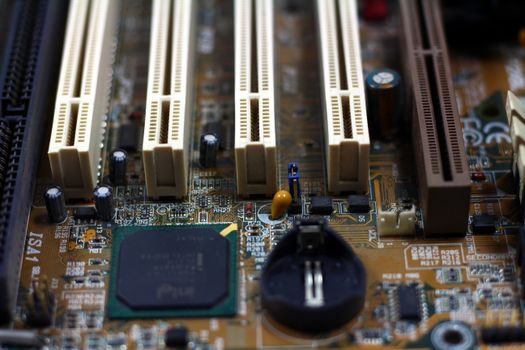
The cheapest way to lose money on a China CPU PO is to skip the lot-acceptance protocol. The brief that goes to the factory should be more than a part number: it should pin stepping / microcode revision, tray vs boxed, country of die diffusion (Taiwan for most Intel/AMD, mainland China for Zhaoxin), packaging ESD spec (typically JEDEC JEP-157 for tray handling), and a 0.5-1% AQL sample on a burn-in profile that runs AVX-512 or equivalent stress for 8 h minimum [S3][S5].
Multiple verified suppliers for the same SKU is the most cited risk-mitigation move in mainstream 2026 sourcing guides, and it is doubly true for CPUs because a single batch can be skewed to a single stepping that later turns out to have a known erratum [S4]. Independent third-party pre-shipment inspection is the only reliable way to read the laser-etched top marking against the order, since lot-code forgery on heatspeaders is a recurring complaint in Shenzhen trading-hub audit reports.
Failure modes and limits to plan for
Three failure modes dominate returns. First, BIOS/firmware drift: a Zhaoxin KH-50000 requires a Century Avenue-aware BIOS and a SMBIOS table that the OS image recognises; mismatched firmware is the leading cause of "dead on arrival" motherboards in domestic-lane builds [S3]. Second, undisclosed TDP: with no published TDP on the 96-core KH-50000, a 1U chassis on linear guide rails spec'd for 2 x 96-core parts can be undersized for the actual socket power, and Tom's Hardware explicitly flags this gap [S3].
Third, AMD-vs-Intel efficiency drift under sustained load: Zen 4 to Zen 5 dropped comparable SKUs by roughly 18 °C, while Intel's 13th-to-15th-gen gains were real but smaller, so a fleet that spec'd 14th-gen Intel in 2024 may be running 5-8 °C hotter than the new Core Ultra equivalent under the same workload [S2]. The mitigation is the same as it has been for a decade: cap PL2 in BIOS, use Intel XTU or Ryzen Master to flatten the power curve, and accept a 5-10% benchmark loss in exchange for 70-200 W of steady-state draw [S2].
Trackable signals for the next sourcing cycle
Three signals to watch: a published TDP figure for the KH-50000 (or its 384-core two-socket variant) from Zhaoxin, which would unlock Western OEM validation; the next BIS advanced-compute rule revision, which historically runs on an October cadence; and any ECCN 3A991 or 4A003 reclassification of high-core-count server SKUs that would shift the tray-channel supply curve for Shenzhen distributors [S3]. Until those land, treat the 96-core domestic lane as a strategic option and the boxed Intel/AMD lane as the default workhorse, with the deposit held until the bill-of-lading paperwork matches the laser-etched top marking line by line.
For related coverage, see Precision AC Manufacturing: Five-Band Process Map for Data-Center and Lab Units.