
Sodium-ion (Na-ion) cells reuse roughly 80–90% of an existing Li-ion cylindrical or prismatic pilot line, swapping the graphite anode for hard carbon, the lithium-bearing cathode precursor for a sodium transition-metal oxide or Prussian-blue analogue, and the LiPF6 salt for NaPF6 or NaClO4 in a carbonate solvent [S1][S3]. The same constraint that drives the chemistry change — sodium's inability to intercalate into ordered graphite — also forces a different anode thermal profile, with hard carbon typically pyrolysed at 1000–1400 °C from biomass or resin precursors [S1].
Process engineers reading this should treat Na-ion as a Li-ion line with three material deltas, not a new factory. The same dry-room dew point of −40 °C, same electrode loading window of 15–25 mg/cm² per side, and same formation cycling protocol (SEI formation at C/20, then ageing at 25 °C and 45 °C) carry across with only chemistry-specific tweaks [S3]. Where the line genuinely diverges is in cathode calcination atmosphere, anode precursor sourcing, and electrolyte salt handling, as detailed in the sections below.
Raw materials and the hard-carbon anode process step
Hard carbon is the industrial default Na-ion anode because the larger Na+ ion (1.02 Å ionic radius vs 0.76 Å for Li+) cannot fit between graphene planes in the way lithium intercalates into graphite [S1][S2]. Pilot suppliers use biomass-derived precursors — coconut shell, lignin, sucrose — carbonised at 800–1400 °C, then milled to a D50 of 5–15 µm before slurry mixing with CMC/SBR binder in water [S1].
The anode slurry solids loading runs 40–50 wt%, lower than graphite anode pastes on Li-ion lines, because hard carbon's higher surface area demands more binder per unit active mass [S1]. Drying oven setpoints stay inside the 80–120 °C band used for graphite; the post-dry calendering line is identical, with electrode density targeted at 1.2–1.4 g/cm³ vs 1.5–1.7 g/cm³ for graphite anodes. Anode-side process control mirrors the flow meter discipline used elsewhere on the line, where every coating-zone parameter — web tension, oven zone temperature, line speed — has a tolerance band logged against defect rates.
Cathode chemistry and precursor selection
Three cathode families dominate 2026 Na-ion pilot output: layered transition-metal oxides (NaxNi1/3Mn1/3Co1/3O2 and the cheaper Mn-only variants), Prussian-blue analogues (NaxM[Fe(CN)6]y with M = Mn or Fe), and polyanionic phosphates such as Na3V2(PO4)3 [S2]. Sodium manganese oxide is the historic reference chemistry — the asymmetric hybrid supercapacitor commercialised by Aquion Energy from 2013 used exactly this cathode against an activated-carbon anode in aqueous electrolyte [S1].
Precursor cost is the largest single line item: materials account for roughly 70% of cell cost, with cathode active material typically 25–35% of that [S2]. For a typical 50 Ah prismatic Na-ion cell, the cathode paste uses PVDF binder in NMP (versus water-based CMC for hard-carbon anode), coated on aluminium foil at 100–150 g/m² loading, dried to <2% residual NMP, and calendered to 3.0–3.4 g/cm³. The cathode calcination step is chemistry-specific: layered oxides are fired at 700–900 °C in air; Prussian-blue analogues are dehydrated at 150–200 °C under vacuum to remove lattice water, which is critical because bound water poisons the SEI [S2][S3].
Electrolyte and separator — where Na-ion truly diverges from Li-ion
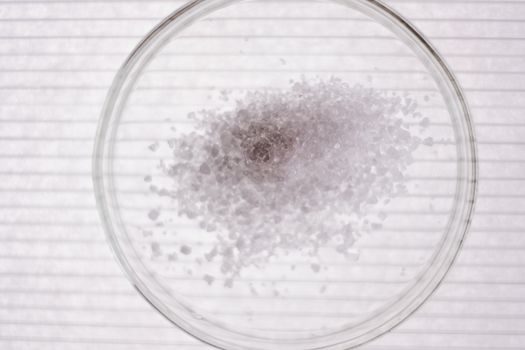
Electrolyte performance requirements are chemically identical to Li-ion — chemical stability vs both electrodes, electrochemical stability across the operating voltage window, thermal stability, ionic conduction, electronic insulation, and low toxicity [S3]. The salt, however, changes: NaPF6 or NaClO4 dissolved at 0.8–1.2 M in ethylene carbonate / propylene carbonate / dimethyl carbonate blends, with fluoroethylene carbonate (FEC) additive at 2–5 vol% as the standard SEI-forming additive [S3].
Five electrolyte families are documented for Na-ion: organic liquid, ionic liquid, polymer, inorganic solid, and aqueous [S3]. The aqueous route is the low-cost outlier — the Aquion design ran aqueous Na-ion electrolyte at ambient conditions and was the chemistry that first reached multi-kWh production in 2013 [S1]. Most 2026 production intent, however, is non-aqueous because the wider electrochemical window (2.5–4.0 V vs aqueous 1.2 V) triples the cell's energy density. Separators stay as polyethylene or polypropylene microporous film, 15–25 µm, with the same wetting behaviour as Li-ion; glass-fibre separators are restricted to aqueous and high-temperature test formats [S3].
Coating, drying, calendering — shared with Li-ion, but with tighter moisture control
Electrode coating on a Na-ion line is the same comma-bar or slot-die process used for Li-ion, with web speed typically 30–80 m/min on a 600–1200 mm wide coating head. The critical process deltas are sodium-specific: NaPF6 hydrolyses more aggressively than LiPF6 above 200 ppm moisture, so dry-room dew point is commonly held at −50 °C or tighter, vs −40 °C as a Li-ion baseline [S3].
Inline mass loading is measured by X-ray fluorescence (XRF) for coating weight and by a beta-backscatter gauge for areal density; both are standard Li-ion instruments reused directly. The calendering line applies 20–60 tonnes of linear load to reach the electrode porosity target of 25–35% — tight enough to suppress cycle-life decay from contact loss, loose enough to keep Na+ diffusion paths open. Cathode and anode compaction ratios are validated against a pressure transmitter reading the calender roll hydraulic pressure, with a documented alarm band and rejection threshold.
Cell assembly, formation and ageing protocols
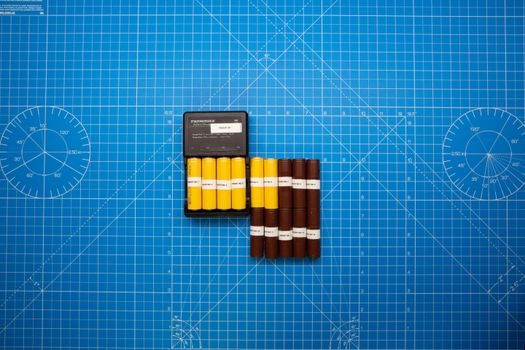
Assembly steps — stacking or winding, tab welding, pouch/cylindrical sealing, electrolyte filling — match Li-ion tooling. For cylindrical 18650/21700 Na-ion cells, winding tension, mandrel diameter, and can-seal laser parameters transfer unchanged; for prismatic, the stacking alignment tolerance of ±0.3 mm and the hot-press lamination temperature of 70–90 °C are reused as-is. Electrolyte filling under vacuum, followed by a pre-seal rest of 12–24 h for wetting, is identical procedure [S3].
Formation cycling is the final sodium-specific step: cells are charged to 50% state-of-charge at C/20 to grow the SEI, rested 12 h, cycled 3–5 formation cycles at C/10 between 2.0 V and 4.0 V (or 1.5–4.2 V for full cells), then aged 7–28 days at 25 °C and 45 °C for capacity sorting [S3]. Hard-carbon anodes tend to form a thicker SEI than graphite, and the FEC additive is what enables a stable passivation layer; without it, first-cycle Coulombic efficiency drops from 88–92% to 75–80% [S3]. Production intent through 2026 is around 90% first-cycle efficiency, 80% capacity retention at 1000 cycles at 1C, and gravimetric energy of 100–160 Wh/kg at the cell level [S2][S3].
Quality control, standards and where the line still bleeds money
Quality control reuses Li-ion metrology: in-line coat-weight gauges, laser caliper for thickness, optical defect inspection, and end-of-line formation cyclers with DCIR measurement at 50% SOC. Cell-level standards are still maturing — IEC 62619 (industrial Li-ion) is currently the closest generic safety reference, with Na-ion-specific IEC work in draft as of 2025; pack-level shipping is governed by UN 38.3 transport testing. [S1]
Cost remains the central process-engineering problem. The BatPaC-modelled analysis published in 2018 still anchors most 2026 sourcing discussions: at small production volumes, Na-ion packs cost 5–15% more than equivalent LiFePO4 packs because of the cathode precursor supply chain; at nameplate scale above ~10 GWh/year, the cost crossover arrives as Na-ion slides to 10–20% below LFP [S6]. The 2016 Helmholtz/Ulm life-cycle assessment found Na-ion's climate-change impact within ±10% of Li-ion, with manufacturing energy the dominant term in both [S5]. For process engineers sizing a new line, the design choices that move the cost needle are hard-carbon precursor sourcing, cathode calcination atmosphere control, and the size of the dry room — all of which are capex items, not opex, and all of which are addressed with equipment that overlaps with the multifunction process calibrator and instrumentation used on any modern battery pilot line.
Trackable signals for the next sourcing cycle: nameplate Na-ion capacity announced in mainland China tier-1 cell makers (CATL, BYD, Eve Energy, Highstar) — see the manufacturer's 18650/21700 catalogue references published 10 June 2026 — and the publication date of the first IEC Na-ion-specific safety standard, which will set the qualification protocol that tier-1 OEMs and industrial valve specifiers will adopt in 2027 plant builds.
For related coverage, see Lithium Battery QA Stack 2026: Standards, Cell Testing and Supplier Tier Signals.