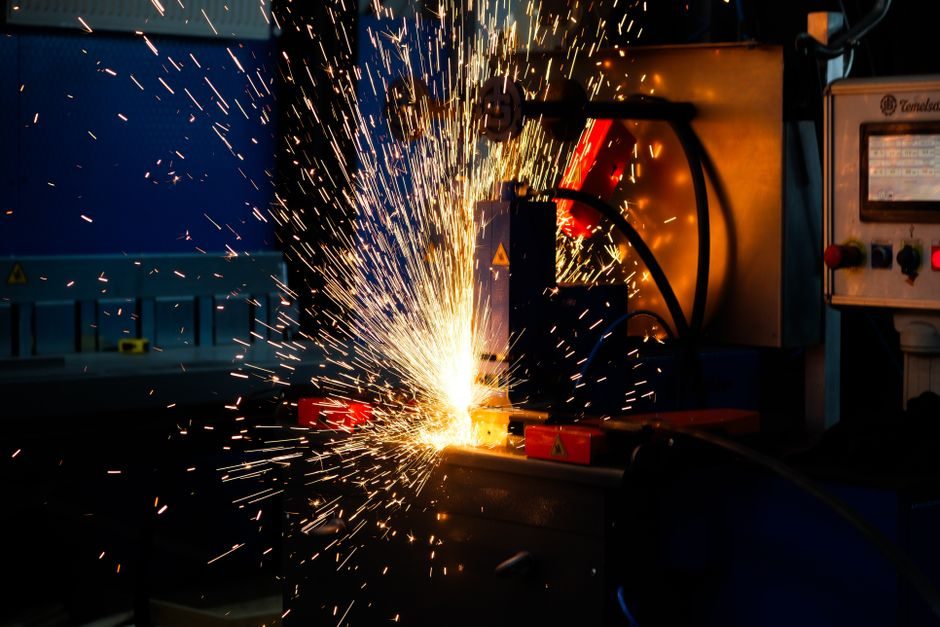
Cell-to-pack battery production lines entering service in 2026 are running on modular automation platforms that pair CE-certified laser and transistor spot welders with 100 V / 120 A integrated battery testers and 18650 sorting modules, with Xiamen WinAck's product catalogue (Automatic Battery Insulation Cushion Machine, CNC two-head Spot Welder, 100 V 120 A Comprehensive Tester) defining a typical small-format cylindrical pack work cell as of 10 July 2026 [S3].
Process-engineering scope now spans four layers: cell selection and BMS co-design, mechanical pack design, automated welding and testing stations, and digital-twin commissioning in MATLAB/Simulink via MathWorks' Simscape Battery, which auto-generates pack models from cell-level data and 3-D layout [S5][S6]. For OEMs evaluating new lines, the decision is no longer whether to automate but which combination of mechanical, electrical, and software modules shortens time-to-mass-production without inflating scrap rates on the first 10,000 units.
Cell-to-Pack Line Architecture: Sorting, Welding, Aging and PCM Test Stations
A 2026-vintage 18650 lithium pack line breaks into seven canonical stations: cell sorting, insulation cushioning, paper/label sticking, spot or laser welding, protection-board (PCM) test, charge-discharge aging, and final pack EOL test, with WinAck listing each as a discrete machine in its production-line family [S3]. Battery Sorting Machines with paper-sticking and donut-label heads feed directly into Manual 18650 Spot Welders, CNC two-head Automatic Spot Welders, or Battery Laser Welding Machines depending on bus-bar current rating and pack energy density [S3].
Transistor spot welding remains the default for nickel-strip joining on sub-20 Ah packs, while fiber-laser welding is now the preferred route for aluminum bus-bars and copper-aluminum transitions above ~100 A continuous, based on the equipment suppliers' published application ranges [S3]. Closed-loop QA closes the line through 100 V / 120 A Battery Comprehensive Testers for 18650 packs and Lithium Battery Charge/Discharge Capacity Tester Analyzers (Aging Testing Machines), with separate PCM Tester equipment for protection-board verification before final assembly [S3], supported by inline smart camera inspection of label and weld-bead geometry between sorting and welding stations.
Standards Stack: ISO 9001/13485, CE, and the Cell-to-Pack Audit Trail
Quality-system scaffolding for medical and industrial battery packs runs through ISO 9001 (general QMS), ISO 14001 (environmental), ISO 45001 (occupational H&S), and ISO 13485:2016 for medical-device packs, with Gushine's Zhuhai operations holding all four certifications as of 24 June 2026 [S1]. WinAck's assembly machinery carries European CE safety certification, a hard requirement for cells or pack equipment crossing into EU automotive, medical, and industrial-handheld markets [S3].
For the digital layer, Simscape Battery provides MATLAB objects and methods that automate Simscape model generation from cell specification data, supporting customised modelling resolution and downstream Simulink library export for HIL and SIL virtual commissioning [S6]. This lets a process engineer validate BMS logic, thermal propagation, and fault responses before cells touch a fixture, compressing physical commissioning windows on first-of-kind pack programs [S6]. The implicit audit trail is then a chain of design inputs (cell datasheet + topology) → Simscape model → station-level OEE data → PCM and aging logs, each gated by an ISO 9001 control point [S1][S6].
Equipment Comparison: Spot Weld vs Laser Weld vs Aging Cabinet Across Pack Formats
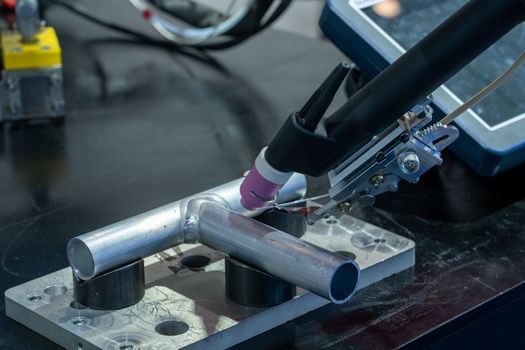
Pack designers choosing between joining and finishing technologies in mid-2026 can line up the three dominant options against four decision criteria drawn from WinAck's published catalogue and typical 18650 cylindrical-line practice [S3]:
Manual 18650 Spot Welder: low capex, single-cell throughput, suited for prototype runs below ~500 cells/shift; CE-marked but operator-skill-bound. CNC Automatic Spot Welder with two welding heads: medium-volume production, repeatable nickel-strip joining on 18650/21700 formats, integrated into the Battery Pack Assembly Production Line [S3]. Battery Laser Welding Machine: highest capex, required for aluminum and Cu-Al dissimilar joints in high-current bus-bars and pouch/prismatic pack headers, minimal heat-affected zone on adjacent cells [S3].
For end-of-line validation, the Lithium Battery Charge and Discharge Capacity Tester Analyzer (Aging Testing Machine) handles multi-cycle formation and capacity grading on cylindrical cells, while the 100 V / 120 A Battery Comprehensive Tester executes the pack-level EOL suite for 18650-format packs [S3]. Choose spot welding for prototype-to-low-volume cylindrical packs where nickel strip geometry is stable; switch to laser for prismatic, pouch, or any bus-bar joint above the ~100 A continuous threshold the equipment is rated for; and always pair either joining method with a dedicated PCM Tester station so the protection board is verified as a sub-assembly before pack closure [S3].
Vendor Tiers and Sourcing Logic: From EMS-Style ODMs to Modular Automation OEMs
The supplier base divides cleanly into three tiers in 2026. Tier 1 covers full-stack custom pack ODMs such as Gushine, founded 2011, with 33,000 m² in Zhuhai plus 13,000 m² Vietnam Phase I, running cell selection, BMS development, mechanical design, testing, validation, and mass production under one roof, including a Vietnam MOUNTAIN Series for next-generation motorcycle batteries [S1]. Tier 1 vendors target regulated end-markets (medical under ISO 13485:2016, military-grade industrial handhelds, AGV/AMR/service-robot light-duty packs) and absorb the BMS design liability [S1][S5].
Tier 2 is the EMS-style OEM/ODM segment represented on platforms like Made-in-China by suppliers such as Nds Battery Pack, where filters split buyers by certification (ISO 9001, QC 080000, SA 8000, QHSE), R&D capacity (OEM, ODM, Own Brand), and revenue band (under 1 M USD to 50 M USD), suiting buyers prioritising cost over full-stack engineering [S2]. Tier 3 is the capital-equipment layer: WinAck for pack-assembly machines, and Bosch Rexroth for the underlying material-flow and high-speed processing platform that an integrator wraps a cell-to-pack line around, with their published positioning emphasising modularity, scalability, and data-driven production for energy-efficient processes [S3][S4]. Engineering buyers in 2026 are increasingly matching the tier to use case rather than chasing single-vendor full-stack offers, especially where pack volumes do not justify a 33,000 m² Zhuhai-scale commitment [S1].
Process Selection by Application: Handhelds, Medical, Robotics, and Two-Wheelers

For two-way radios, portable printers, and barcode scanners, the priority is high-energy-density 18650 packs with conservative C-rates and a BMS tuned for long standby, falling inside Gushine's industrial-handheld product family [S1]. For medical portable equipment, ISO 13485:2016 certification is non-negotiable, and the line must demonstrate traceability from cell lot to finished pack, with formation cycling done in an aging cabinet with pressure transmitter logging of sealed-cell swelling before shipment [S1][S3].
For cleaning robots, AGVs/AMRs, and service robots, the application favours lightweight packs with high cycle life, often 10S-ish 18650 or 21700 configurations, paired with low-temperature or waterproof enclosures where required; WinAck's sorting and welding machines handle the cell-format mix common in this segment [S1][S3]. For next-generation motorcycle batteries, Gushine's Vietnam MOUNTAIN Series signals a dedicated two-wheeler line, with pack design typically shifting toward higher C-rate discharge and vibration-resistant mechanical packaging [S1]. Underneath all of these, the Simscape Battery virtual-commissioning loop from MathWorks lets a process engineer rebalance cell-count and topology decisions against BMS logic before locking the physical line, an approach particularly valuable when a single line must serve three or four of these application families in parallel [S6].
Failure Modes and Constraints: Welding Defects, BMS Gaps, and Line Ramp Risk
The three highest-impact failure modes in a 2026 cell-to-pack line are welding defects, BMS/pack mismatch, and line ramp scrap. Welding defects (cold joints, burn-through, weak Cu-Al bonds) are mitigated by CNC two-head spot welders for consistency and by reserving laser welding for dissimilar-metal joints where spot welding cannot meet pull-strength specs [S3]. BMS/pack mismatch, where a protection board passes its own PCM test but trips early in the finished pack, is caught only by a pack-level Comprehensive Tester at 100 V / 120 A, not by the PCM Tester alone [S3].
Line-ramp scrap on the first 10,000 units is a known cost driver; the Bosch Rexroth automation platform is positioned around "ready-to-use solutions for intelligent material flow, high-speed processing and precise assembly operations" to compress this ramp, with explicit emphasis on modular scalability and data-driven, energy-efficient production, including flow meter feedback on the cooling-water loop that serves the aging cabinets [S4]. Simscape Battery virtual commissioning addresses the same risk from the design side by running thousands of fault and aging scenarios in simulation before the first prototype is welded, an approach that pairs naturally with a tier-1 ODM's cell-to-pack workflow [S1][S6]. Industrial buyers comparing vendors should request first-article and 1k-unit yield data, not just catalogue specs, before committing to a new line architecture [S3][S4].
Trackable Signals: Modular Platforms, Vietnam Pack Output, and Virtual-to-Physical Hand-off
Three signals are worth monitoring through the rest of 2026. First, Bosch Rexroth's modular automation platform for battery production, with its open control architecture and material-flow focus, is a leading indicator of where tier-1 European line builders will converge on standards for data-driven, energy-efficient processes [S4]. Second, Gushine's 13,000 m² Vietnam Phase I footprint and MOUNTAIN Series launch will be a useful read on whether two-wheeler and small-format pack production is shifting outside mainland China for tariff and lead-time reasons [S1]. Third, MathWorks' continued investment in Simscape Battery auto-generation from cell specifications is the cleanest signal of how fast the industry moves from physical-first to virtual-first pack commissioning, a transition that reshapes both engineering headcount and time-to-mass-production economics [S6]. Readers designing a new pack line in mid-2026 should benchmark any vendor shortlist against WinAck's station-level equipment map, Gushine's certification scope, and a Simscape Battery-front-end design workflow [S3][S1][S6].
For related process-engineering context on flexible production architecture and additive-manufacturing sourcing, see Industry 4.0 in Lithium: IIoT, AI and Flexible Production Architecture and Robotics OEM vs ODM: How Manufacturing Models Decide Cost, IP and Lead Time, while the deeper cell-to-pack flow and QA stack is mapped in Battery Pack Manufacturing Process: Cell-to-Pack Flow, Module Topology and QA Stack.