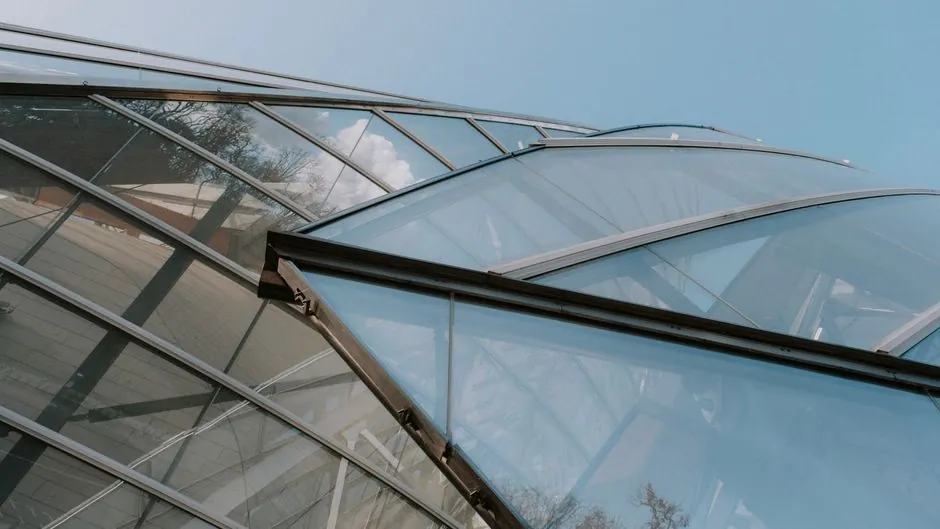
Cover glass for crystalline-silicon modules is a low-iron tempered patterned product sold in two thicknesses, 3.2 mm for the front sheet and 2.0 mm for the back sheet, with anti-reflective (ARC) coating raising transmittance from roughly 91% to about 92% [S7].
China runs the upstream stack: about 97% of silicon wafers, roughly 80% of finished modules, and the two largest PV glass producers by output capacity all sit inside the country, with the top players running bases in Guangdong, Jiangsu and Anhui [S2][S7]. For buyers writing a 2026 procurement plan, that means solar cover glass is sourced almost exclusively from a handful of Chinese lines whose output shapes global module cost.
What solar cover glass actually is, and what spec to write
The standard PV cover is a soda-lime low-iron float glass, rolled with a pyramidal pattern to scatter light into the cell, then tempered for hail impact resistance per IEC 61215 and UL 61730 module-level testing [S4]. Front-sheet thickness is 3.2 mm for framed modules; the 2.0 mm back sheet is common in glass-glass bifacial construction where front and rear glass are symmetric [S7].
Suppliers who cannot produce lot-traceable certificates for each of those five values are the ones to drop from the longlist first.
How solar glass differs from architectural and float glass
Solar cover glass is a distinct product line from the clear float glass used in windows and storefronts, even though both start from the same float process. A deeper dive on sight glass for process vessels shows the optical-glass family runs to different specs entirely, but the principle is the same: tighter Fe2O3 controls raise transmittance. PV glass is intentionally tinted green at much lower iron levels than commodity clear float, which targets visible-light transmittance in the high 80s rather than the low 90s [S3][S7].
Pattern rolling is also different. Where optical glass families serve imaging and laser paths and glass quartz handles UV and high-temperature envelopes, PV patterned glass is engineered for one job only: trapping light inside the EVA/cell/EVA laminate.
Tier-1 PV lines vs Tier-2 lines: where the order actually goes

Unlike modules, where LONGi, Jinko, Trina and Canadian Solar anchor a recognized bankability list, the PV cover-glass market is concentrated in two to three Chinese producers and a longer Tier-2 tail that the top-10 supplier rankings put in Guangdong, Hebei, Anhui and Jiangsu [S7]. The Tier-1 lines run 1,000+ tonnes/day furnaces dedicated to solar cover; the Tier-2 lines run mixed float furnaces with a patterned solar campaign a few times per year.
For an importer ordering 10–30 containers per year, the practical comparison is:
<strong>Tier-1 lines:</strong> consistent ARC, monthly EN 12150-1 fragmentation data, 3.2 mm and 2.0 mm available off the line, MOQ one full 20-ft mixed pallet, lead time 25–35 days ex-works, higher per-m2 price, strong export documentation. <strong>Tier-2 lines:</strong> 10–15% lower per-m2 price, but pattern roughness drifts between campaigns, ARC optional, MOQ 2–3 containers of one spec, lead time 40–60 days, and certificates often only available at the order level, not the lot level [S7]. For projects locked to a 2026 commissioning window, Tier-1 is the lower-risk path; for spot orders where spec is flexible, Tier-2 pricing wins on cost.
Certifications and paperwork that actually clear customs
Solar cover glass does not need a TÜV or IEC certificate in the same way a module does, but the buyer still needs three documents: an EN 12150-1 tempered-glass fragmentation report (issue date within 12 months), a transmittance curve measured on a spectrophotometer with reference to ISO 9050, and a factory ISO 9001 quality-management certificate with the PV-glass line explicitly listed in scope [S3][S4].
For North American projects, the cover glass typically ships under a CCC mark for the Chinese domestic market and a CE mark for European destinations; for U.S. utility-scale, the glass is generally accepted under the module-level UL 61730 rather than a glass-only listing. Customs detentions driven by forged module papers in 2025 ran around 61% of all solar-import seizures, and the same forgery pattern shows up on glass mill certificates, so the same verification habit applies: cross-check the certificate number against the issuing body's online database before the deposit clears [S2].
Logistics, packaging and the soda-ash supply risk for 2026

Solar cover glass is heavy, roughly 8 kg/m2 for 3.2 mm and 5 kg/m2 for 2.0 mm, and fragile at the corners. The operational pattern mirrors what a solar glass procurement: spec map, soda ash sourcing, and 2026 supply risks overview lays out: end-capper paper, vertical A-frame racks, and 20-ft containers loaded to roughly 24–26 tonnes, never laid flat, with desiccant inside the wooden crating to keep moisture away from the ARC coating during the 25–35 day ocean transit [S3][S5].
Soda ash is the upstream choke point in 2026. Float-glass lines consume roughly 0.18 tonnes of soda ash per tonne of glass, and a Chinese output squeeze on synthetic soda ash cascades directly into PV-glass furnace scheduling. Buyers writing a sourcing solar cells from China: 2026 spec, cert, and supplier map plan should treat soda-ash availability as a parallel risk to cell supply, not a separate problem, and lock in 3.2 mm cover glass at least 60 days before the cells arrive at the laminator [S2][S7].
Sourcing workflow that works in 2026
The 2026 sequence that holds up: build a longlist of 8–10 PV-glass lines, drop any that will not name their soda-ash source or share a recent EN 12150-1 report, run a pre-shipment inspection on the first two containers to check pattern uniformity and ARC adhesion with the crosshatch test, and pay 30% T/T deposit against a proforma invoice that lists pattern type, transmittance, fragmentation, and packaging spec line by line [S3][S4][S6].
For buyers also specifying module-level electronics, a sourcing solar inverters from China: spec, cert, and supplier map plan should run on the same supplier-vetting schedule so that cover glass, cells, and inverters arrive at the project site from factories that have cleared the same quality gate. Two trackable signals to watch into late 2026: whether soda-ash supply normalises by Q4, which would relax PV-glass lead times back toward 25 days, and whether the larger PV lines start locking ARC coating into the per-m2 base price rather than billing it as an upgrade, which would shift the Tier-1 vs Tier-2 cost gap another 5–8% [S2][S7].