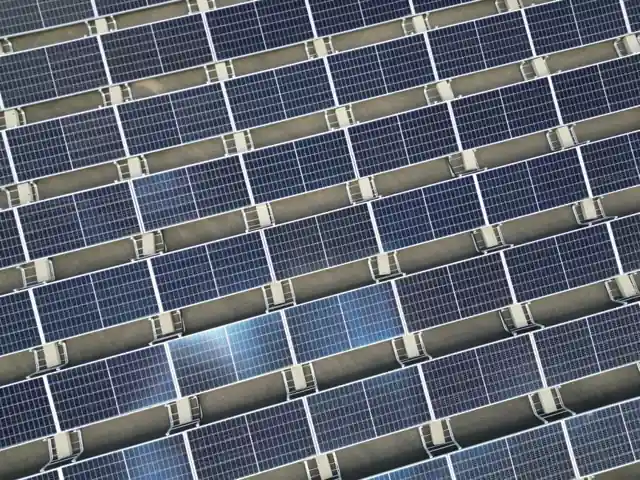
Solar cover glass is a 3.2 mm tempered soda-lime float product, with iron oxide content held below 200 ppm to keep the active transmittance above 91% in the 400–1100 nm PV band [S1]. Procurement decisions for the next 18 months are dominated by two variables: the iron and impurity ceiling in the soda ash feedstock, and the regional availability of low-iron silica sand with Fe2O3 under 100 ppm.
The US solar photovoltaic glass market was valued at USD 322 million in 2023 and is forecast to reach USD 831.1 million by 2028, a 20.9% CAGR driven by Inflation Reduction Act incentives, the Investment Tax Credit, and BIPV demand [S2]. Global supply remains concentrated in China for both the float lines and the upstream soda ash that feeds them.
What "Solar-Grade" Glass Actually Requires
Solar-grade glass is defined by the impurities in the soda-lime melt, not by the panel colour: Fe2O3 must stay below 200 ppm to keep luminous transmittance above 91%, and antimony and cerium levels are tracked because they shift light transmission and self-cleaning behaviour [S1]. Soda ash (Na2CO3) is the dominant flux and the single largest controllable impurity vector, so a specification of 99.2% minimum Na2CO3 with iron under 35 ppm is now standard for premium cover-glass lines.
Thickness drives both weight and yield: 3.2 mm is the mainstream balance between mechanical survival under 5400 Pa wind load and the 2.5–2.7 W/m²·K heat loss in a typical 25-year rooftop exposure. Thinner 2.0 mm glass is gaining share in bifacial modules where each face must stay under 2 kg/m² to keep cell-to-glass lamination stresses below the delamination threshold.
Soda Ash Sourcing and Why China Still Sets the Price
China supplies the bulk of global solar-grade soda ash because natural trona deposits there combine low iron content with low-cost decahydrate processing; the alternative, synthetic Solvay-process soda ash, typically runs 80–150 ppm Fe2O3 and forces glassmakers into costly refining [S1]. For a 1 GW module line, a buyer should expect 14,000–18,000 t/year of soda ash consumption depending on cullet ratio.
Regional logistics are the second lever. [S1] frames Chinese soda ash as the global hub on the strength of port throughput at Tianjin and Qingdao and on rail-to-border corridors into Central Asia; for US buyers, this means lead times of 25–40 days versus 7–15 days for domestic trona derivatives, and exposure to soda ash price spikes of 30–60% during winter heating-season tightness. Buyers building new US capacity should expect a 0.5–1.5% landed-cost penalty on soda ash relative to legacy Chinese lines until domestic refining scales.
Float-Glass Substrate: Coated, Patterned, and Anti-Reflective
Anti-reflective (AR) coating is a magnesium fluoride / porous silica layer applied by sol-gel or sputtering that lifts transmittance by 1.5–2.5 percentage points; some premium lines push above 94% total transmittance by stacking a double AR layer over a 0.5–1.0° textured surface [S2]. Tempering follows, raising the compressive stress to 700–900 MPa at the surface and keeping the central tension under 40 MPa, the standard module-maker acceptance line.
Anti-soiling coatings, typically TiO2-based and applied after tempering, are now a procurement checkbox on utility-scale projects, where monthly soiling losses of 1.5–2.5% on uncoated glass are a measurable LCOE penalty. link to related process control piece (process-control language aside, the same AR + anti-soiling stack is now under spec for solar cover and high-end architectural glazing alike).
How Solar Glass Compares to Other Flat-Glass Procurement
Procurement teams that also buy flat glass for BIPV facades and interior fit-out will recognise the same float line; the decision rule is whether the application can absorb the cost premium. The table below lines up three common glass categories on the criteria that drive a buy decision. [S2]
Solar cover glass vs. low-iron architectural float vs. standard clear float: solar cover glass targets 91–94% transmittance, Fe2O3 under 200 ppm, and post-temper CS 700–900 MPa at 3.2 mm; low-iron architectural float targets 88–90% transmittance at 4–8 mm with similar Fe2O3 control but lower mechanical spec; standard clear float lands at 82–85% transmittance with Fe2O3 in the 600–1000 ppm range, a material that is unfit for cover-glass duty and must be rejected at incoming QA. The 3–4× cost premium over clear float is the smallest line item in module BOM (typically 6–9% of total), but it is the single largest source of warranty claims if cracked.
Supply Chain Risks and Compliance Landmines in 2026
Procurement contracts that ignore these clauses routinely see 8–12% effective cost penalties once auditors reconcile the bill of materials.
Buyers who want to avoid 2026 bottlenecks should track three signals: published float-line capacity additions in the US Sun Belt (Arizona, Texas, Ohio) for cover-glass commissioning dates; soda ash freight indices out of Tianjin and Qingdao, where spot spikes of 30–60% have appeared in recent winter quarters; and module-maker qualification lists, which are typically 6–9 months long and decide which glass suppliers can ship into 2027 utility-scale projects. For an engineering reader who also buys into hydrogen and process-plant procurement, the supply-chain discipline transfers directly, as green hydrogen buyers face a similar feedstock-plus-offtake squeeze on electrolyser-grade chemicals, and the same dual-sourcing + long-term contract pattern keeps emerging.
Action Checklist for 2026 Procurement
For US utility-scale projects, source at least one domestic float line for IRA bonus-credit eligibility and reserve a Chinese or Indian line as a competitive second source, keeping dual-qualification alive across 6–9 month module-maker audits. Track float-line commissioning announcements and soda ash freight indices monthly; both have moved the cover-glass spot price by 10–25% in a single quarter and will do it again before 2027. [S2]
Closing node: for 2026 Q4 sourcing, the most trackable signals are US Sun-Belt float-line commissioning dates and the soda ash spot index at Tianjin; both are publicly posted and will dictate whether the next contract should be signed at fixed price or with an indexed clause.
Spec-level background on the components involved: linear guide, crossed roller guide, and glass fiber.