
Three-phase hybrid solar inverters in the 5–10 kW band with 450–650 V DC MPPT inputs and built-in BMS handshakes dominated the 2026-07 OEM catalog refresh, with the 10 kW 48 V three-phase unit offering 650 V DC dual PV input as the new upper datum [S2].
At the same time, smart-manufacturing scope inside the inverter line has migrated upstream into the DC-sides string hardware — combiner and monitoring enclosures now ship IP65/66 with pluggable BU-40/3 surge arresters and BR-30 touch-safe fuses with LED indicators, a spec sheet pattern replicated across multiple 2026-07 vendor catalogs [S1][S2].
Power Band Architecture: From 1.2 kVA Off-Grid to 10 kW Three-Phase Hybrid
Off-grid single-phase MPPT units cluster at 1.2 kVA / 12 V, 1.6 kVA / 24 V, 2 kVA / 12 V, 3.2 kVA / 24 V with 20–150 V DC and 30–150 V DC PV input windows, all using 80 A MPPT chargers and pure-sine output at 50/60 Hz [S2]. Hybrid three-phase units sit a step above at 5 kW / 48 V, 6 kW / 48 V, and 10 kW / 48 V, with PV input windows stretched to 60–500 V DC (6 kW) and 450–650 V DC (10 kW), parallel-function kits fitted, and dual AC outputs on the 6 kW class for grid + load separation [S2]. MPPT charging current scales from 80 A on the 1.2–3.2 kVA off-grid models to 100 A on the 3.5 kW 24 V hybrid and 120 A on the 6 kW hybrid, an internal signal that 2026 production boards are being laid out for >100 A continuous battery-side current rather than the 60 A benchmark common in 2022 designs [S2].
Storage Pairing: LiFePO4 Drops From Accessory to Default Stack
Wall-mount and rack-mount LiFePO4 packs now ship at 25.6 V / 48 V nominal, 100–280 Ah, in 5 kWh and 10 kWh capacities with Grade-A EVE prismatic cells, EU and PL stock positions, and built-in BMS — the wall-mount 51.2 V 200 Ah (≈10 kWh) unit is the volume pack that most hybrid 5–6 kW inverter SKUs are quoted against [S2]. Lower-voltage mobile-class packs ship at 12 V / 24 V and 50–300 Ah, with 12 V 100 Ah and 24 V 200 Ah as the bestseller SKUs that pair with 1.2–3.2 kVA off-grid inverters [S2]. The 5 kWh portable-class 220 V integrated power-storage unit (PSU) is positioned for emergency / outdoor backup rather than PV pairing, indicating the vendor matrix is now split into three explicit stacks: residential hybrid PV+storage, off-grid PV+storage, and standalone mobile UPS [S2].
String Hardware: IP65/66 Enclosures as the Smart-Manufacturing Anchor
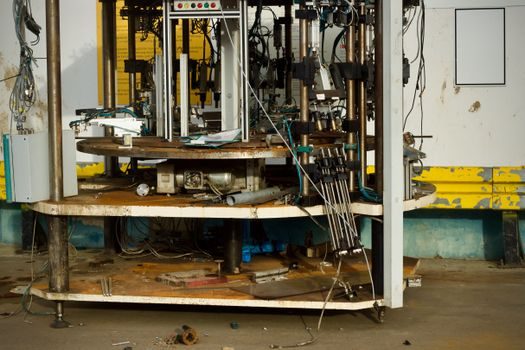
Combiner-box engineering in 2026 reads as a smart-manufacturing deliverable rather than a passive metalwork job: enclosures are sized for thermal headroom (larger internal volume "for better cooling of internal components"), moulded in flame-retardant UV-resistant thermoplastics, and rated IP65/66 for dust and water-jet ingress [S1]. DC-side protection is standardised around a 1500 V DC series isolator switch as the upper-limit switching device, a pluggable BU-40/3 surge protector for lightning, BR-30 touch-safe fuse holders with LED trip indication for over-current, and BD/BB1 series breakers for short-circuit clearing [S1]. For factory QA, this is a spec pattern that maps directly to audit checklists: 1500 V DC max switching, IP66 enclosure, pluggable SPD with replaceable cartridge, and resettable / LED-indicated fuse path are all individually verifiable on the line [S1].
Efficiency Benchmarks: 96.7% Single-Stage as the Reference Datum
The single-stage MOSFET-bridge model published in the Simulink reference design reports 96.737% conversion efficiency at 342 V DC link, 20.05 A AC RMS, 1000 W/m² irradiance and 20 °C cell temperature — a single-cycle AC sweep with explicit component-level loss attribution: 18.37 W / 17.67 W / 14.42 W / 13.53 W across the four MOSFETs (MOS1–MOS4), 3.44 W / 3.13 W / 1.81 W / 1.51 W across the four freewheeling diodes, and 0.4 W in the CL filter capacitor, totalling ≈73.3 W of loss against ≈2250 W of DC input [S3]. Two independent efficiency paths — the AC-out/DC-in ratio over one AC cycle, and a Simscape loss-summary utility — reconcile to within numerical-integration tolerance, which is the kind of cross-check that 2026 inverter bench-test cells can be written against [S3]. Real OEM datasheets on the 5–10 kW hybrid SKUs still rarely publish loss breakdowns below 95%, so the 96.7% figure should be read as an upper-bound engineering target rather than a fleet-wide fleet average [S3].
Smart-Manufacturing Floor: Quality Systems and R&D Anchors
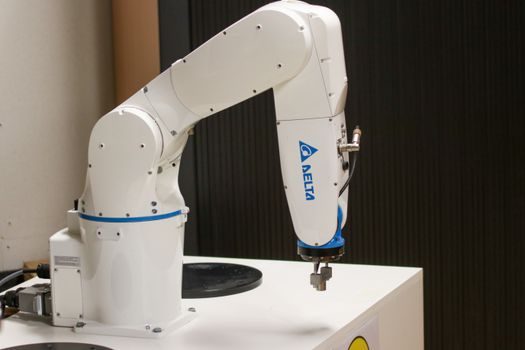
The 2026 vendor-manufacturer matrix on the Made-in-China OEM/ODM index for inverters is filtered by ISO 9001:2015 and ISO 14001:2015 management certifications plus ANSI/ESD controls, with OEM, ODM and own-brand R&D routes listed as distinct service bands and headcount buckets running from 501–1000 staff up through the 5–10 M USD annual-revenue tier [S8]. One of the 2026-07 OEM vendor pages states the staffing split directly: 20 R&D / tooling engineers, 300 specialised manufacturing workers, and 20 in-house tooling designers, which is the kind of ratio auditors look for to confirm that design intent is not being outsourced to a contract mould shop [S2]. The Murata Industrial-Revolution-4.0 framing — certified LoRaWAN modules on Everynet, Wi-Fi/Bluetooth and Cellular Cat-M1/NB-IoT AWS-qualified modules for cloud telemetry — points to the comms stack that 2026 monitoring boxes and AC distribution boxes are increasingly expected to carry, rather than treating string monitoring as a wired-only function [S1][S5].
Selection Criteria: Matching Topology, Battery and Enclosure to Site
Residential three-phase sites with 5–10 kW peak demand and a 48 V battery bank map cleanly onto the 5 kW 48 V or 6 kW 48 V parallel-function hybrid inverter with a 5–10 kWh wall-mount LiFePO4 pack and a 1500 V DC IP66 string combiner, with the 10 kW 650 V DC dual-MPPT three-phase unit covering larger three-phase homes and small commercial roofs above 8 kW [S2]. Off-grid cabins and telecom-edge sites pair the 1.2–3.2 kVA / 12–24 V inverter with a 12 V or 24 V 50–200 Ah LiFePO4 pack and a smaller 2–4 string combiner, while the 220 V / 5 kWh portable PSU is the right pick for outdoor / emergency backup, not for PV duty cycling [S2]. Industrial-1 MW+ sites — the kind of build that the MAC India reference portfolio counts in 3000+ MW executed and 150000+ combiner units installed — should be specified against the 1500 V DC isolator + IP66 + pluggable SPD checklist, with the LoRaWAN or Cat-M1 module chosen for monitoring rather than a 4G-only path [S1]. A useful cross-check for the comparison: the Simulink single-stage reference, which provides explicit per-MOSFET loss data via Simscape logging of individual component dissipation, is a credible model for the 5–10 kW hybrid SKUs documented in vendor catalogs, but it is a single-stage benchmark and does not represent the two-stage topology used in most hybrid inverters that have to step between a 48 V battery bus and a high-voltage DC-link [S2][S3].
Limitations, Failure Modes and Engineering Watch-Points

The 1500 V DC isolator rating and IP66 enclosure on the combiner box are necessary but not sufficient: the pluggable BU-40/3 surge protector must be specified for the right DC voltage class, because 1500 V DC SPD cartridges are not interchangeable with 1000 V DC units, and the BR-30 fuse holder LED trip indicator assumes the fuse is in a visible service position, which a tightly packed IP66 wall-mount layout can defeat [S1]. Off-grid MPPT windows below 150 V DC cannot accept longer high-voltage strings without going into Voc-clipping at low temperature, so 24 V 3.2 kVA units with 30–150 V DC MPPT should be limited to 2-series panel configurations in cold climates, while the 60–500 V DC MPPT on the 6 kW hybrid tolerates much longer string runs [S2]. Wall-mount LiFePO4 packs quoted at "EU stock" and "PL stock" should be verified for UN 38.3 transport certification and for cell-grade documentation (Grade A EVE cell declaration is the spec, not the marketing line), and the 12 V / 24 V mobile-class packs should be checked for low-temperature charge cut-off because LiFePO4 at <0 °C without a heater will plate lithium and fail within a few hundred cycles [S2]. The 96.7% efficiency datum is for a single-cycle 20 °C simulation; real 2026 fleet efficiency is derated by thermal, MPPT-tracking and partial-load losses, and a vendor quoting 96%+ at "nominal" conditions is not the same as 96% across a full daily load curve [S3].
Standards, Sourcing and Trackable 2026 Signals
The two management-system standards that recur across 2026-07 inverter OEM/ODM catalogs are ISO 9001:2015 for quality and ISO 14001:2015 for environmental, with ANSI/ESD listed as a complementary in-line static-control certification on the Made-in-China OEM filter page [S8]. For smart-manufacturing comms, the Murata 4.0 stack (Wi-Fi/Bluetooth plus Cellular Cat-M1/NB-IoT on AWS-qualified modules, plus certified LoRaWAN modules on Everynet Indonesia) is the most explicit industrial-IoT reference in the 2026-07 research set, and is a sensible proxy for what 2026 monitoring-box OEMs are expected to support [S5].
For component-level specifications, see additive manufacturing material, smart camera, and smart meter.
For related coverage, see Battery Pack Smart Manufacturing: Cell-to-Pack Automation, Welding Specs and Virtual.