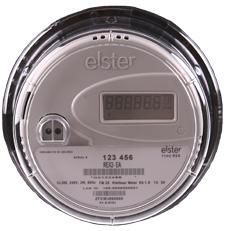
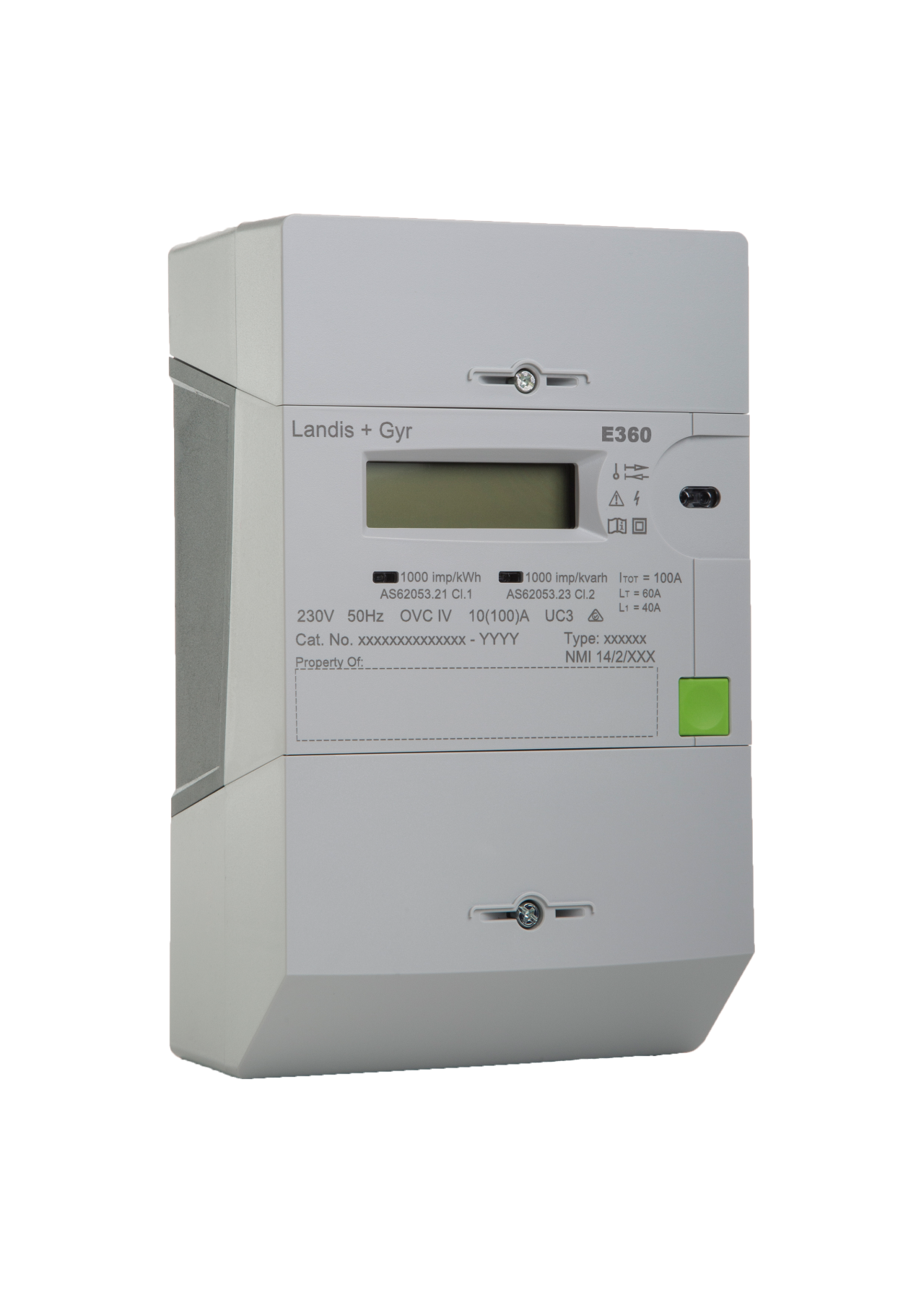
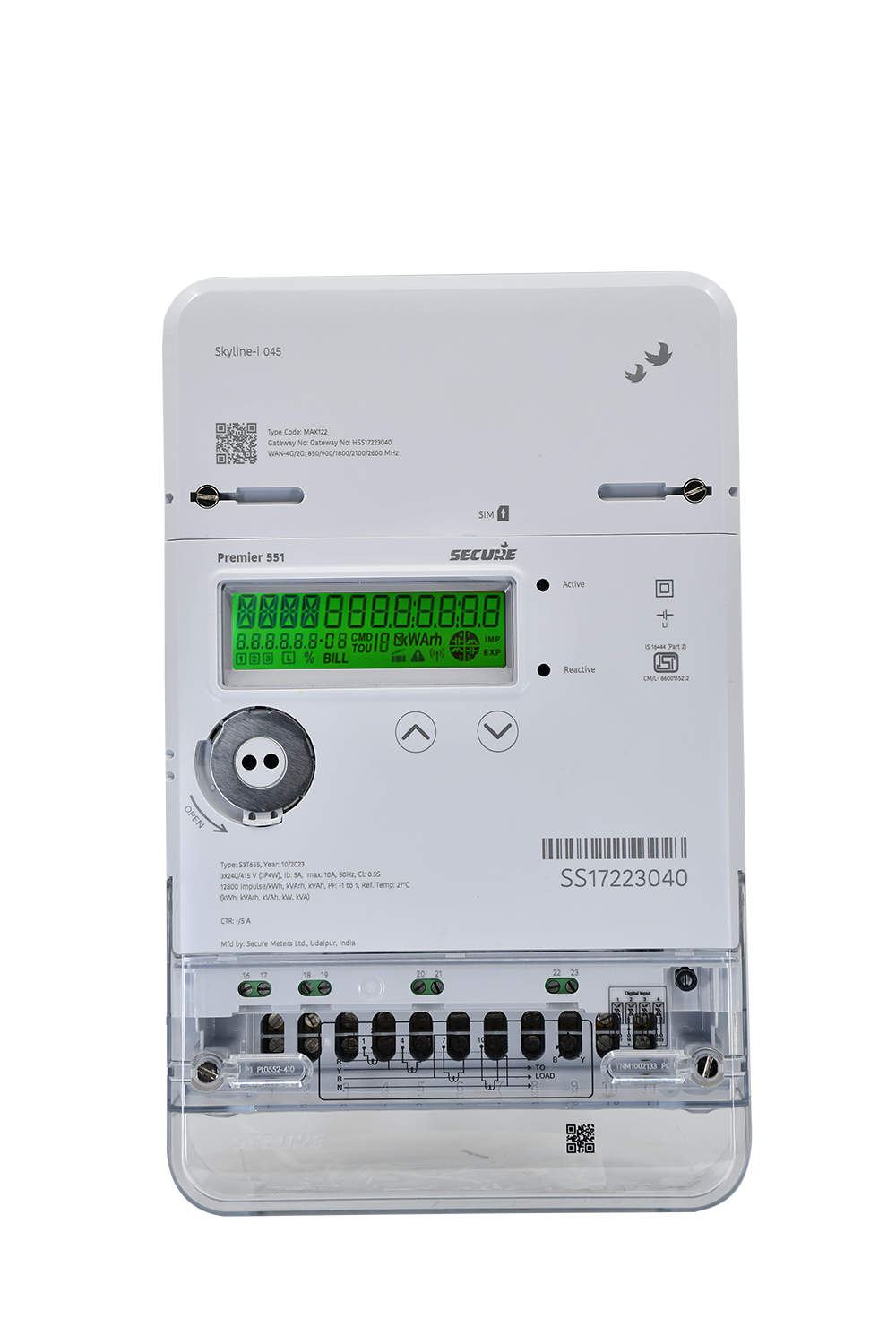
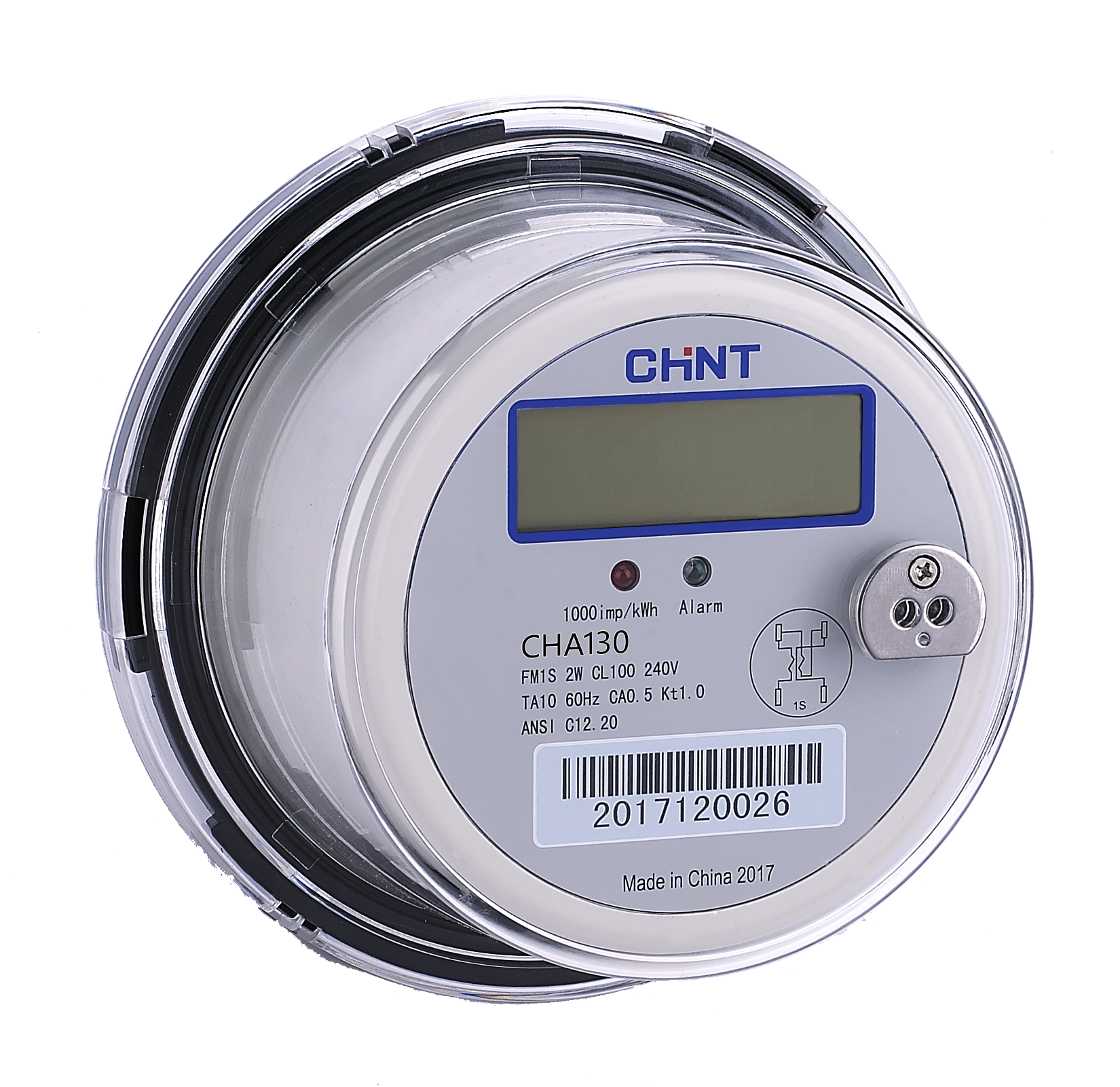
A smart meter is an electronic utility meter that records consumption at short intervals and communicates that data both ways with the supplier. Most often the term refers to an electricity meter, but gas, water, and district-heating variants share the same architecture. Unlike a one-way Automatic Meter Reading (AMR) device, a smart meter operates inside an Advanced Metering Infrastructure (AMI) and can receive commands such as remote disconnect, tariff updates, and firmware upgrades.
This guide treats the meter as a complete measurement and communication system: the metering front end that turns voltage and current into energy, the embedded processor that builds load profiles and detects tampering, and the communication stack (PLC, RF mesh, or cellular) that links it to the utility head-end. Every parameter below references public IEC 62052, IEC 62053, IEC 62056 (DLMS/COSEM), ANSI C12, and EU MID (2014/32/EU) documentation.
This guide is aimed at utility procurement engineers, distribution planners, and OEM design engineers. It covers 6 chapters from AMI system architecture, meter classification, communication technologies, the metering front-end chipset, and spec-sheet decoding, to selection decisions, with 7 selection FAQs and manufacturer comparisons. All parameters reference IEC 62052-11, IEC 62053-21 / 22 / 23, IEC 62056 (DLMS/COSEM), ANSI C12.1 / C12.19 / C12.22, and EU Directive 2014/32/EU (MID) public standards.
Chapter 1 / 06
What is a Smart Meter
A smart meter is an electronic device that measures energy consumption and the supporting electrical quantities, such as voltage, current, and power factor, then communicates that information in both directions between the customer premises and the supplier. While the phrase usually describes an electricity meter, the same principle and much of the same communication infrastructure apply to gas, water, and district-heating meters. What separates a smart meter from earlier instruments is not the display but two things: an embedded microprocessor that stores interval data locally, and a two-way communication link that lets the utility both read the meter and send commands to it.
The smart meter is the field endpoint of an Advanced Metering Infrastructure (AMI). AMI is the full system that measures, collects, analyzes, and helps control energy distribution and usage, comprising the meters, the communication network, data concentrators or collectors, and a back-office head-end system with a meter data management (MDM) platform. AMI differs from older Automatic Meter Reading (AMR) in exactly this point: AMR transmits the register one way to a drive-by or walk-by reader, whereas AMI supports scheduled or on-demand two-way exchange, enabling remote disconnect and reconnect, time-of-use tariffs, outage notification, and over-the-air firmware updates.
Functionally, a smart electricity meter performs four jobs. First, it meters active and reactive energy continuously and accumulates them in tamper-protected registers. Second, it records interval load profiles, commonly at a 15 or 30 minute period, and stores them in non-volatile memory until the network retrieves them. Third, it monitors power-quality and event data such as voltage sags, outages, reverse energy flow, and tamper alarms with time stamps. Fourth, it executes utility commands through its disconnect relay and configuration interface. These four roles distinguish a billing-grade smart meter from a simple sub-meter or a clamp-on energy monitor.
The lineage runs from the electromechanical induction (Ferraris) disc meter that dominated the twentieth century, through solid-state static meters that replaced the spinning disc with a metering integrated circuit in the 1990s, to networked smart meters from the 2000s onward. The move to static metering was what made interval recording and remote communication feasible, because a digital register and a microprocessor could be embedded directly behind the measurement front end. Large national rollouts, driven by efficiency and demand-management goals, turned the smart meter from a niche commercial device into mass consumer infrastructure.
In scale terms, smart metering is one of the largest deployed industrial IoT categories in the world, spanning hundreds of millions of installed endpoints across electricity, gas, water, and heat. Independent market analyses size the smart meter market in the tens of billions of US dollars, with strong continued growth and a market led by a handful of established meter makers. For a procurement engineer, the practical consequence of that scale is interoperability: large fleets must speak common data models and communication standards so that meters from different vendors can coexist on one head-end.
Chapter 2 / 06
Smart Meter Types and Classification
Smart meters are classified along several independent axes: the utility measured (electricity, gas, water, heat), the supply configuration (single-phase or three-phase), the connection method (directly connected or current-transformer operated), and the commercial mode (credit or prepayment). Picking the wrong axis early is the most common specification error, because each axis forces hardware choices that cannot be changed later in the field. The table below summarizes the core electricity meter types and where each is used.
Single-phase versus three-phase. Single-phase meters serve most residential supplies, where the load is modest and connected line to neutral. Three-phase meters serve commercial and industrial premises with balanced or unbalanced three-phase loads; they measure each phase independently and sum the energy, and they expose per-phase voltage, current, and power factor for power-quality monitoring. A four-wire three-phase meter also tracks the neutral, which is essential for both unbalanced-load accuracy and theft detection.
Directly connected versus current-transformer operated. A directly connected, or whole-current, meter carries the full load current through its own terminals and shunts. This is practical up to about 100 A, hence designations like 5(100) A, where 5 A is the reference current and 100 A is the maximum. Above that, conductor size and heat make direct connection impractical, so external current transformers step the primary current down to a standard 5 A or 1 A secondary that the meter measures. CT-operated meters require the CT ratio to be programmed in, and for revenue accuracy they are paired with metering-class instrument transformers; any error in the CT or its burden adds directly to the billed quantity.
Credit versus prepayment. A standard credit meter bills consumption in arrears. A prepayment meter draws down a stored credit balance and uses its internal disconnect relay to interrupt supply when credit is exhausted, with top-up by keypad token, smartphone app, or card. Because the disconnect relay is the same hardware used for remote connect and disconnect on credit smart meters, many modern meters can switch operating mode by configuration rather than by different hardware.
Multi-utility endpoints. Beyond electricity, gas and water meters add a smart communication module to a mechanical or ultrasonic flow element, and heat meters combine a flow sensor with paired temperature sensors. These devices often share the same AMI network as electricity meters and frequently use the same media-independent data model (DLMS/COSEM), which is why a single head-end can manage a mixed electricity, gas, and water fleet.
Chapter 3 / 06
Communication Technologies and Protocols
The communication layer is where AMI projects most often succeed or fail, because it must reach every endpoint reliably under real grid noise and terrain. Three physical media dominate: power-line communication (PLC), radio-frequency mesh (RF mesh), and public cellular. Above the physical layer, the application protocol is usually the open DLMS/COSEM standard or, in North America, the ANSI C12 suite. The table below compares the main physical-layer options on the metrics that decide a rollout.
Technology
Topology
Typical Data Rate
Best Fit
G3-PLC
Mesh over power line
up to ~35 kbps CENELEC
Dense urban, noisy grids
PRIME PLC
Tree over power line
up to ~141 kbps
Dense urban, cleaner grids
RF mesh (Wi-SUN)
Self-healing RF mesh
50 to 300+ kbps
Suburban, overhead lines
Cellular NB-IoT / LTE-M
Star to base station
low to mid kbps
Sparse, scattered points
LoRa / Zigbee
Star / mesh, license-free
0.3 to 250 kbps
Sub-metering, in-home (HAN)
Power-line communication. PLC reuses the existing distribution wiring as the data channel, with a data concentrator at the distribution transformer collecting from the meters below it, then backhauling over cellular or fiber. Two open PLC standards lead the market: G3-PLC, which uses a robust OFDM mesh well suited to noisy grids, and PRIME, which offers higher throughput on cleaner networks. PLC avoids any per-meter recurring connectivity fee, but its performance varies with grid impedance and noise, and a transformer change can re-route a meter to a different concentrator.
RF mesh. RF mesh meters relay packets for one another, forming a self-healing network that reaches a collector or gateway, which then backhauls to the head-end. Wi-SUN (built on IEEE 802.15.4g) is the dominant open RF-mesh profile for utilities. Mesh suits suburban and rural overhead networks where line-of-sight between meters is good, and it tolerates the loss of individual nodes by re-routing. Its weaknesses are dependence on node density and the planning effort to place collectors.
Cellular. Cellular gives each meter a direct link to the head-end with no concentrator or collector to plan, which is ideal for scattered, low-density, or remote points. Low-power wide-area cellular variants, NB-IoT and LTE-M, were designed for exactly this kind of low-data, long-life endpoint. The trade-offs are a recurring SIM and data subscription per meter and dependence on the mobile operator's coverage and network lifecycle. Many recent meters ship as hybrid PLC-plus-RF dual-mode devices so the network can switch medium per link to cover mixed terrain.
Application protocols. Above the physical layer, two ecosystems dominate. DLMS/COSEM, standardized as the IEC 62056 series, defines a media-independent object model in which every measured value, such as a register or a load-profile entry, carries a standard OBIS (Object Identification System) code, and DLMS defines the messaging to read those objects. Because the model is vendor-neutral, one head-end can read meters from many makers, which is why most European and many Asian tenders mandate a DLMS conformance certificate. North America historically uses the ANSI C12.19 table data model with C12.18 (optical), C12.21 (modem), and C12.22 (network) transport. Local in-home access uses a separate Home Area Network (HAN), exposed in some markets as a customer P1 or consumer-access port over Zigbee, M-Bus, or serial.
Security. Because meters control supply and carry billing data, the communication stack is secured. DLMS/COSEM provides authenticated and encrypted application messaging, commonly using AES-based ciphers, and meters cryptographically protect their event logs so a tamper record cannot be silently deleted. Procurement should treat the cybersecurity assessment as a hard requirement alongside metrological type approval, not an optional extra.
Chapter 4 / 06
Metering Front End and Standards
Behind every smart electricity meter is a metering front end that converts the instantaneous voltage and current waveforms into accurate active, reactive, and apparent energy. Understanding this front end explains where accuracy comes from and which standards govern it. The chain has four stages: input scaling, analog-to-digital conversion, digital signal processing, and metrology registers.
Input scaling. The voltage input is attenuated with a resistor divider, and the current input is sensed by a shunt resistor (common in single-phase meters), a current transformer, or a Rogowski coil (common in three-phase and CT-operated designs). Each sensor has its own linearity, phase shift, and temperature behavior, all of which the meter must compensate to hold its accuracy class.
Analog-to-digital conversion. Modern metering integrated circuits use second-order sigma-delta ADCs, one per channel, because they deliver the dynamic range needed to meter accurately from a few percent of rated current up to the maximum. A representative three-phase metering IC, for example, integrates several sigma-delta ADCs, a dedicated DSP, serial interfaces, and pulse outputs in a single chip. High dynamic range is what lets the same meter stay within class at both light residential load and full load.
Digital signal processing and metrology. The on-chip DSP multiplies the synchronized voltage and current samples to compute instantaneous power, then integrates power over time to yield energy, separating active, reactive, and apparent components and computing RMS voltage, RMS current, frequency, and power factor. These quantities feed the tamper-protected billing registers and the interval load-profile store. This is also where calibration coefficients, phase compensation, and creep suppression (preventing the meter from registering with no load) live.
The metrological framework is a layered set of IEC standards. The table below maps the core standards a buyer will see referenced on an electricity meter datasheet.
Standard
Scope
Key Designations
IEC 62052-11
General requirements, tests, conditions for AC meters
Type tests, environment
IEC 62053-21
Static active-energy, directly connected
Class 0.5, 1, 2
IEC 62053-22
Static active-energy, transformer operated
Class 0.1S, 0.2S, 0.5S
IEC 62053-23 / 24
Static reactive-energy meters
Class 2, 3 / 0.5S, 1S, 1
IEC 62056 (DLMS/COSEM)
Data model and communication
OBIS codes, app protocol
EU MID 2014/32/EU (MI-003)
Legal-metrology approval for billing (EU)
Class A, B, C
ANSI C12.1 / C12.20
Accuracy code and class (North America)
Class 0.2, 0.5
The S suffix in IEC 62053-22 (for example Class 0.2S and 0.5S) marks transformer-operated meters with tightened accuracy at low load currents, which matters because CT-fed substation meters often run far below rated current. The EU MID expresses the same idea in its own letters: MID Class B corresponds roughly to IEC Class 1 and is typical for residential billing, while MID Class C corresponds roughly to Class 0.5S for higher-grade metering. For any billing meter sold in the EU, MID approval under MI-003 is mandatory, not optional.
Chapter 5 / 06
Key Specification Parameters
A smart meter datasheet lists dozens of lines, but only a handful drive selection. The eight parameters below are the ones a procurement engineer should extract and compare across bids: accuracy class, reference and maximum current, nominal voltage and frequency, starting current, metering capability, communication and protocol, tamper and event set, and environmental and life ratings.
Accuracy class. This is the single most important metrological line. Read it together with the connection method: a directly connected residential meter is typically Class 1 (IEC 62053-21) or MID Class B, while a CT-operated substation meter is Class 0.5S or 0.2S (IEC 62053-22). The class number is the maximum permissible error in percent under reference conditions; the meter must also stay within wider limits at temperature extremes and at low load, which the type-test report documents.
Reference current, maximum current, and voltage. For whole-current meters, the designation 5(100) A means 5 A reference (the basis of accuracy) and 100 A maximum. CT meters are rated for a 5 A or 1 A secondary. Nominal voltage is commonly 230 V line-to-neutral (single-phase) or 400 V line-to-line (three-phase, four-wire) at 50 Hz, with 120 V and 60 Hz typical in North American markets. Confirm the meter's voltage and frequency match the local grid.
Starting current and creep. The starting current is the smallest current at which the meter begins to register, specified by the accuracy standard as a small fraction of reference current; below it the meter must not record, and at no load it must not creep. A low, well-controlled starting current improves billing fairness for light loads.
Metering capability. Confirm exactly which quantities are metered and stored: active import and export energy (bidirectional metering is essential where customers have solar), reactive energy by quadrant, maximum demand, per-phase RMS voltage and current, power factor, frequency, and the load-profile interval (commonly 15 or 30 minutes). Bidirectional, four-quadrant metering is now standard for prosumer support.
Communication and protocol. Specify the physical medium (PLC, RF mesh, or cellular) and the application protocol (DLMS/COSEM with a conformance certificate, or ANSI C12.19 / C12.22), plus any local HAN or P1 customer port. The protocol decision determines head-end interoperability across the fleet.
Tamper, events, and the disconnect relay. Review the event set: magnetic-field tamper, cover and terminal-cover open, reverse-energy flow, neutral-current mismatch (bypass), and last-gasp outage. Confirm the internal disconnect relay rating (it must switch full load current) and whether remote connect, disconnect, and prepayment modes are supported. The relay endurance, expressed in switching operations, matters for prepayment fleets.
Environmental and life ratings. Check the ingress-protection rating of the enclosure (IP54 is common for indoor meter boxes, with higher ratings for outdoor mounting), the operating temperature range, electromagnetic-compatibility compliance, and the design service life and battery life for the real-time clock and last-gasp circuit. Utility meters are typically specified for long field lives, so the clock battery and capacitor backup must outlast the metrology.
Chapter 6 / 06
Selection Decision Factors
To turn the preceding chapters into a specific model and a defensible tender, follow the decision sequence below. Most selection mistakes come not from one wrong answer but from deciding a later step before an earlier one is settled. These eight steps double as a fixed RFQ template.
Utility and supply configuration: Confirm the medium (electricity, gas, water, heat) and, for electricity, single-phase versus three-phase, four-wire. This is the first hardware fork and cannot be changed in the field.
Connection method and rating: Decide directly connected (for example 5(100) A) versus CT operated (5 A or 1 A secondary) from the load current. For CT meters, also specify the matching metering-class current transformers and program the CT ratio.
Accuracy class: Match the class to the application: Class 1 or MID Class B for residential billing, Class 0.5S or 0.2S for substation, grid-interface, and large industrial metering. Each accuracy tier raises cost and tightens the instrument-transformer requirements.
Metering scope: Specify import and export energy (bidirectional for solar prosumers), four-quadrant reactive energy, maximum demand, power-quality logging, and the load-profile interval. Do not pay for quantities the billing and grid teams will never use.
Communication strategy: Choose the physical medium by density and terrain (PLC for dense urban, RF mesh for suburban overhead, cellular for sparse points, or hybrid dual-mode), and choose the application protocol (DLMS/COSEM or ANSI C12) for head-end interoperability across the whole fleet.
Type approval and certification: In the EU, require MID (2014/32/EU, MI-003) plus the relevant IEC 62052-11 and IEC 62053 type tests; in North America, ANSI C12.1 / C12.20 accuracy plus C12.19 / C12.22 communications. Verify the certificate, not just the datasheet claim.
Security and tamper: Require encrypted, authenticated DLMS/COSEM or ANSI C12.22 communications, signed event logs, and the tamper event set appropriate to local theft patterns. Treat the cybersecurity assessment as a mandatory deliverable.
Total cost of ownership (TCO): Add purchase price, installation labor, recurring connectivity cost (high for cellular, near-zero for PLC and RF mesh), head-end integration, and the cost of field visits over the meter's service life. A cheaper meter with poor communication reliability generates field visits that erase the saving.
One last and frequently overlooked dimension is manufacturer serviceability and fleet interoperability: head-end and MDM integration effort, availability of DLMS conformance certificates and OBIS code documentation, firmware upgradability over the air, and the maker's track record on long, large rollouts. Established suppliers, including Landis+Gyr, Itron, Honeywell (Elster Alpha and Orion families), Sagemcom, EDMI, Kamstrup, Iskraemeco, Siemens, Sensus (Xylem), ABB, and large Chinese makers such as Wasion, Hexing, Holley, and Clou, differ less on raw metering accuracy than on how cleanly their fleets integrate and stay supported over a decade in the field. For a multi-year rollout, that integration and support record is the decisive factor.
FAQ
What is the difference between a smart meter, an AMR meter, and a traditional meter?
A traditional meter (electromechanical or basic static) only displays a cumulative register that a person reads on site. An AMR (Automatic Meter Reading) meter adds one-way communication: it transmits its register reading to a drive-by or walk-by collector, but cannot receive commands. A smart meter sits inside an AMI (Advanced Metering Infrastructure) and supports two-way communication: it sends interval load profiles, voltage and power-quality data on schedule, and it receives commands such as remote disconnect, tariff changes, and firmware upgrades. The defining difference is the bidirectional link plus a local processor, not the display.
What do accuracy class designations like Class 1, Class 0.5S, and MID Class B or C mean?
Under IEC 62053-21, directly connected active-energy meters are rated Class 0.5, 1, or 2, where the number is the maximum permissible error in percent at reference conditions. Under IEC 62053-22, transformer-operated meters carry an S suffix (Class 0.1S, 0.2S, 0.5S) indicating tighter low-load accuracy when fed through current transformers. The European MID (Directive 2014/32/EU, annex MI-003) uses Class A, B, and C, where Class B corresponds roughly to IEC Class 1 and Class C to Class 0.5S. Residential billing typically uses Class 1 or MID Class B; substation and grid-interface metering uses Class 0.2S or 0.5S.
When do I need a directly connected meter versus a current-transformer (CT) meter?
Directly connected (whole-current) meters carry the full load current through the meter and are typically rated up to 100 A, designations such as 5(100) A, suitable for homes and small commercial loads. Above roughly 100 A, the conductor and meter terminals become impractical, so a CT-operated meter is used: external current transformers step the primary current down to a 5 A or 1 A secondary that the meter measures, designations such as 5 A or 1 A class. CT meters need the CT ratio programmed into the meter, and at high accuracy require Class 0.2S or 0.5S meters paired with matching instrument-transformer classes.
What is DLMS/COSEM and why does it matter for interoperability?
DLMS/COSEM is the open metering data model and application protocol standardized as the IEC 62056 series. COSEM defines an object model and OBIS (Object Identification System) codes that give every measured value a standard identifier, while DLMS defines the messaging used to read those objects over PLC, cellular, or Ethernet. Because the data model is media-independent and vendor-neutral, a head-end system can read meters from different makers without custom drivers, which is why most European and many Asian utility tenders mandate DLMS/COSEM. North America historically uses the ANSI C12.19 table model with C12.18, C12.21, and C12.22 transport instead.
Which communication technology should an AMI rollout use: PLC, RF mesh, or cellular?
There is no single best choice; selection follows density and topology. Power-line communication (G3-PLC or PRIME) reuses the existing distribution wiring and suits dense urban grids with a transformer-level data concentrator, but performance varies with grid noise. RF mesh (often Wi-SUN, IEEE 802.15.4g) suits suburban and rural overhead networks where meters relay for each other. Cellular (NB-IoT or LTE-M) gives each meter a direct link to the head-end without a concentrator, ideal for sparse or scattered points, at the cost of recurring SIM and data fees. Many modern deployments use hybrid PLC-plus-RF dual-mode meters to cover mixed terrain.
How do smart meters detect tampering and theft?
Smart meters log dated tamper events that the head-end can audit remotely. Common detections include: strong external magnetic fields, sensed by a Hall-effect or reed sensor, used to saturate transformers in older meters; terminal cover and main cover opening, via mechanical switches; reverse energy flow, where current direction implies the meter has been inverted; neutral-current mismatch, where line and neutral currents disagree, indicating a bypass; and load-disconnect or last-gasp events. Modern designs also compare per-phase and neutral measurements continuously, and cryptographically sign event logs so a tamper record cannot be silently erased.
What is a prepayment meter and how does the HAN or P1 port work?
A prepayment (pay-as-you-go) meter draws down a credit balance and uses its internal disconnect relay to cut supply when credit runs out; the customer tops up by keypad token, app, or card. The relay is the same hardware used for remote connect and disconnect in standard smart meters. The Home Area Network (HAN), exposed in some markets as a consumer P1 or customer-access port, lets an in-home display or energy-management device read near-real-time consumption locally over Zigbee, M-Bus, or a serial P1 interface, without going through the utility head-end. This local channel is what enables time-of-use feedback and home automation.
Smart Meter Manufacturers
Source-backed product routes. Open a company dossier for procurement scope and cited evidence.