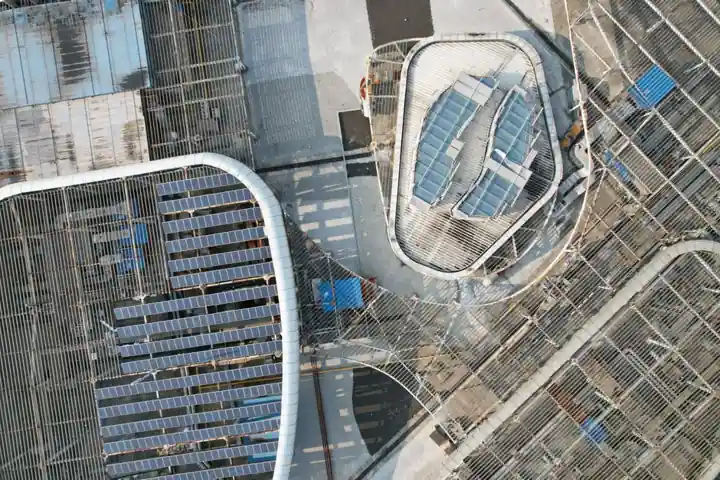
Solar module production line capacity is now packaged in well-defined commercial tiers spanning roughly 60MW to 1.2GW, with machinery investment ranging from USD 1.7M for semi-automatic 60MW builds [S4] to multi-million-dollar turnkey gigawatt factories consuming 2.4-3.0MW of total power [S2].
For new regional PV module factories entering the market in 2026, a single 300-500MW core line on M10 (182mm) and G12 (210mm) wafers has become the recommended entry capacity, balancing ROI against room to replicate lines as demand grows, with line utilization designed at 85% and a cell-stringing cycle time of 0.5-0.6 seconds per cell [S3].
Capacity Tiers Compared: 60MW, 100MW, 150MW, 500MW, 1.2GW
The 60MW semi-automatic tier ships as the entry-level commercial configuration, supporting M6/M10/M12 cells with a 100W-720W module power range, 15-18 operators per shift, and a 2-3 year payback window on a USD 1.7M-1.8M investment [S4]. At the next rung, a 100MW reference line is designed around 1 shift of 8 hours over 300 days, covers a 450W-700W module window, requires at least 4000 sqm of building area at 4.2m minimum ceiling height, and runs 16 workers on a process that is roughly 90% automated [S5]. The 150MW automatic class scales the same architecture to a dual-shift ceiling of 300MW for a similar USD 1.7M-1.9M capex, with 1500-2500 sqm of factory footprint [S7], while a 500MW line jumps machinery investment to approximately USD 3-4M with over 4000 sqm of building, 12+ staff, and 96 panels per hour on 550W 144-cell M10 modules at 300KW peak and under 100KW average draw [S1]. A guide on solar cell manufacturing equipment in 2026 lines up these tiers against the upstream cell fab equipment they have to feed. At the top, the 1.2GW fully-automatic gigawatt line runs 288-336 panels per hour, holds a claimed production yield above 99.5%, and requires 10000-14000 sqm, 50-60 m³/h of cooling water circulation, and 5000-6000 L/min of compressed air at 0.6-0.8 MPa [S2].
Cell and Module Compatibility: PERC, TOPCon, HJT, IBC, BC up to 24BB
Mainstream cell compatibility has converged on mono PERC, TOPCon, and HJT across every tier, with G12 (210mm) rectangular wafers and multi-busbar ribbons now considered standard for new builds, as specified for South African PV lines based on M10 and G12 half-cell double-glass and single-glass modules [S3]. The 1.2GW gigawatt line explicitly supports PERC, TOPCon, and HJT cells in M6, M10, and M12 formats with multi-busbar configurations from 5BB through 24BB and module power from 450W up to 650W+ [S2], while a 500MW Abloomax reference also lists TOPCon, HJT, IBC, and PERC with a 20-bus-bar ceiling on modules from 410W to 600W [S1]. The 100MW reference keeps 5BB-20BB multi-busbar support and adds BC (back-contact) as an option to be evaluated alongside PERC, TOPCon, and HJT, on a module power window of 450W-700W [S5]. Across all tiers, the same half-cell, bifacial, glass-glass, and glass-backsheet module formats are quoted, with module dimensions stretching from 1640x992mm up to 2500x1400mm for the gigawatt class [S2].
Throughput, Takt Time, and Bottleneck Equipment
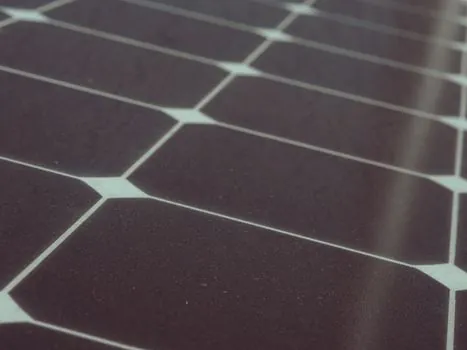
String welding is the universal bottleneck, and the dual-track or multi-track high-speed stringer on a 500MW South-Africa-class line is rated at 8000-10000 cell strings per hour, using non-contact infrared welding to reduce breakage [S3]. On the 1.2GW gigawatt line, the Tabber Stringer (model AM050FH high-speed MBB) is deployed as 8 units to handle 10-16BB cell stringing, paired with 4 DJ5-DJ11 series auto layup machines and 2 DH200-Y bussing machines for 10-20BB interconnection [S2]. Lamination cycle time is the second critical bottleneck, and a single 500MW reference specifies a fully automatic single or dual-chamber laminator with cycle time controlled within 12-15 minutes to keep bubble-free EVA/POE bonding between glass and backsheet [S3], while a 1.2GW line pairs 4 units of 2700x8700mm three-chamber laminators in parallel to sustain 288-336 panels per hour [S2]. Inline defect detection is mandatory at both ends of the line: 3-4 OPT-M960B 12-camera EL testers on the 1.2GW line [S2] plus an IV tester (XJCM-13A2615, 2-3 units) catch microcracks and verify Pmax, Isc, Voc, and Vm on the finished module [S3].
Factory Footprint, Utilities, and Power Budget
Floor space scales roughly with throughput, but the multipliers are not linear, since a 60MW semi-auto line needs 1000-1800 sqm of factory area plus 1500-2500 sqm of warehouse [S4], while a 100MW reference assumes at least 4000 sqm of total building and a 4.2m ceiling clearance [S5], and a 500MW line crosses 4000 sqm just for production plus offices [S1]. The 1.2GW class jumps to 10000-14000 sqm of combined production and warehouse, with a preferred column-free 6-8m ceiling to accommodate overhead conveyors and gantry layup stations [S2]. Power draw tracks module output: the 60MW semi-auto line budgets at least 250KW (with 146KW alone in its two OTCY-2666 laminators on Siemens PLC) [S4], the 100MW reference holds a 300KW peak [S5], the 500MW line peaks at 300KW with under 100KW average [S1], and the 1.2GW line requires 2.4-3.0MW of total power with MES/IoT integration for real-time energy optimization [S2]. Compressed air and cooling-water utility budgets scale similarly: 0.6-0.9 m³/min at 0.8-1.0 MPa for the 60MW line [S4], 400 L/min reference for 100MW [S5], and 5000-6000 L/min at 0.6-0.8 MPa plus 50-60 m³/h of recirculated cooling water for the gigawatt class [S2].
Investment, ROI, and Payback by Tier
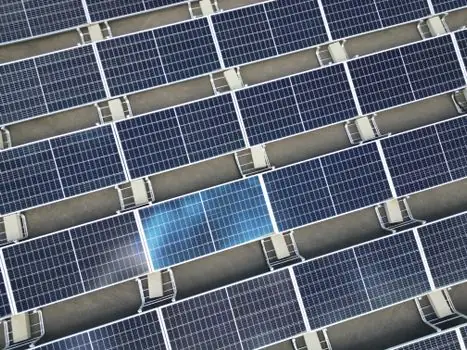
Capex per megawatt of annual capacity compresses dramatically as lines scale: a 60MW semi-auto reference at USD 1.7-1.8M implies roughly USD 28-30K per MW [S4], a 100MW line in the same USD 1.7-1.9M bracket (per 150MW class data) implies roughly USD 11-13K per MW before scope adjustment [S7], a 500MW turnkey at USD 3-4M of machinery only implies roughly USD 6-8K per MW [S1], and a 1.2GW fully-automatic gigawatt system reaches an approximate payback period of about 2 years on the OEM's stated location-dependent basis [S2]. The 60MW semi-auto class quotes a 2-3 year average payback at the lower automation level [S4], while 150MW lines can be modularly doubled to 300MW via dual-shift without purchasing additional core equipment, which is a useful hedge for buyers uncertain about near-term demand [S7]. Staffing also drops per MW as automation rises: 15-18 workers per shift at 60MW [S4], 16 workers for a 100MW line [S5], 12+ for 500MW [S1], and headcount held to a minimum on the 1.2GW line through full automation with 100+ auxiliary conveyor, buffer, and turning units replacing manual handling [S2].
Regional and New-Market Line Planning: South Africa Case
For a greenfield South African PV module factory, the published line design standardizes on a single 300-500MW core line, three shifts with 60-80 total staff, and a process flow from cell cleaning through laser scoring, string welding, robotic layout, EL testing, lamination, trimming, framing, junction-box welding, curing, final IV and EL, labeling, sorting, and packaging [S3]. The same source mandates M10 and G12 wafer support and 85% utilization as the planning baseline, and frames the configuration as a copy-paste template: a buyer can replicate the line to grow with the market rather than overbuild at day one [S3]. A related planning lens for solar inverter production line design covers the downstream balance-of-system side, where a module factory of this size would be paired with module-level power electronics lines. For buyers comparing whether to start at 60MW pilot or jump to 500MW commercial, the 100MW reference documentation explicitly recommends 1MW, 5MW, 10MW, or 30MW configurations for R&D, university, or pilot-line stages, and reserves 100MW and above for buyers with a clear production target [S5].
Standards, Quality Gates, and Process Control
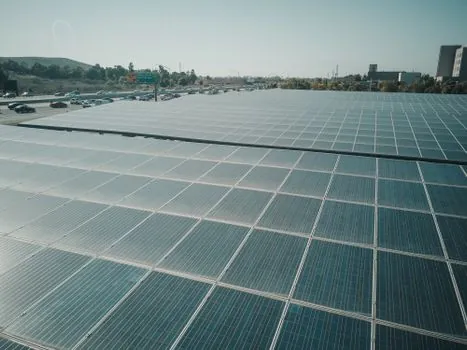
Quality control on these lines is built around three inline gates: a pre-lamination EL and visual inspection to catch defects before the module is sealed [S5], a lamination EL defect detector immediately after robotic layout to reject microcracked cells [S3], and a final IV + EL station before labeling and packaging [S3]. The 1.2GW line layers in integrated Hi-pot testing alongside EL and IV at multiple stages, with consistent production yield claimed above 99.5% and full MES/IoT data analytics on every panel [S2]. The 60MW semi-auto tier ships with a 12BB-compatible EL tester as a single unit and a single power tester rated up to 2500x1400mm, which is sufficient for module-level Pmax, Isc, Voc, and Vm verification on a smaller footprint [S4]. Process water is not required for the 100MW or 500MW module-assembly reference lines (water is consumed only in the upstream cell fab), which simplifies site permitting, especially in water-scarce regions [S1][S5].
Track the 1.2GW fully-automatic class as a 2026-2027 capacity indicator: if 100+ auxiliary units of conveyor and buffer hardware become a standard bill of materials rather than an option, and if the stated 99.5% yield holds across the first ten gigawatt lines delivered, expect a downward push on the USD-per-MW curve for any 300MW+ buyer. A secondary signal is the modular 150MW-to-300MW dual-shift upgrade path, which is currently the lowest-capex way to add MW without buying a second stringer, and will be the tell if demand softens before line duplication is committed [S2][S7].
The underlying component specifications are covered under load cell, load cell module, and pressure transmitter.