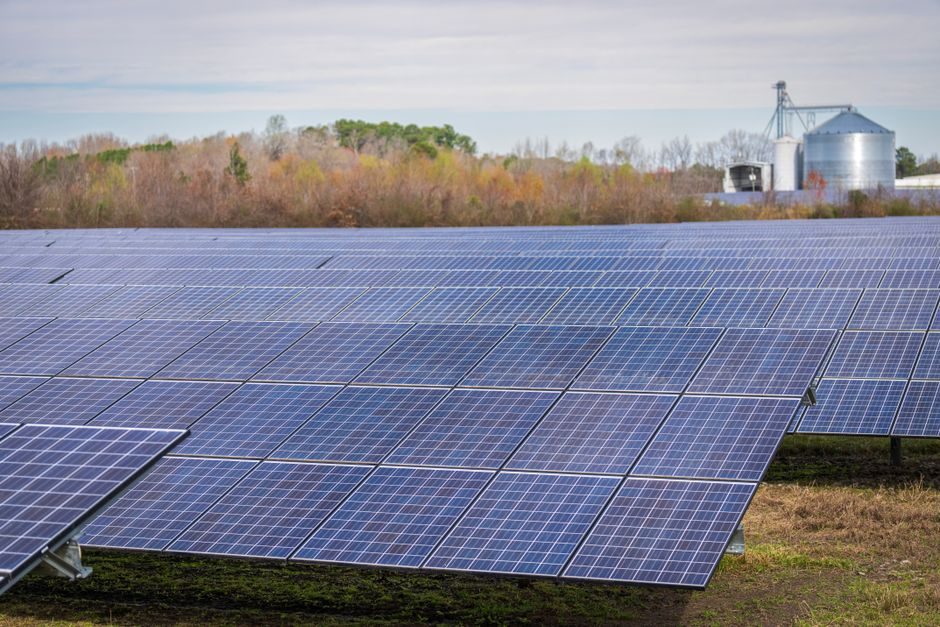
Solar panel quality is anchored in four document families — IEC 61215 (design qualification), IEC 61730 (safety), UL 61730 (North American safety), and ISO 9001 (factory QMS) — and every credible Tier-1 datasheet you read in 2026 will list the IEC 61215-1:2021 sequence as the baseline pass/fail gate [S3][S7].
The ENF Solar product directory, the largest public PV panel index, lists 91,900 panel SKUs across 67,000 manufacturers and tracks warranty length, cell technology, and cell size as filterable fields, which is the practical way sourcing engineers compare modules against IEC and UL test certificates [S3].
What "IEC-qualified" actually means: the 61215 + 61730 + UL 61730 stack
IEC 61215-1:2021 and IEC 61215-2:2021 define the design qualification and type approval sequence for crystalline-silicon terrestrial PV modules, and the suite includes the hot-spot endurance test, mechanical load test up to 5,400 Pa (depending on the mounting classification), hail impact with 25 mm ice balls at 23 m/s, and the 1,000-hour damp-heat test at 85 °C / 85 % RH [S3][S7]. IEC 61730-1 and -2 cover electrical safety (Class II / double-insulated), fire performance (Class A or C per UL 790), and the reverse-current overload test, while UL 61730-1/-2/-3 mirror this in the US and are mandatory for the US market under NEC 690. A panel that ships with both marks has passed roughly 25+ individual environmental and safety tests, and that datasheet footer is the first thing a bank will look at before financing a 50 MW project.
Factory-side quality: ISO 9001, IEC 62941, and the audit stack
On the manufacturing side, ISO 9001:2015 is the generic QMS certificate almost every Chinese and Indian Tier-1 supplier lists, but the photovoltaic-specific document is IEC 62941:2019, which adds PV-module-specific process controls — lamination recipe traceability, flash-test binning tolerance, EL inspection sampling plan, and junction-box torque records [S1]. A factory that holds IEC 62941 in addition to ISO 9001 has effectively published its in-line test procedure; a factory with only ISO 9001 has only published a quality manual, not a PV-specific process.
Third-party witnessed audits are split between TÜV Rheinland / TÜV SÜD (Germany) and UL / CSA (North America); the LuanSolar factory in China explicitly markets its panels as "ISO, TÜV, and CE certified" — that is the standard export-market trio expected by European EPCs [S1]. CE marking on a PV module rides on the EMC Directive 2014/30/EU and the Low Voltage Directive 2014/35/EU; PV-specific harmonised standards EN 61215 and EN 61730 are the cited routes to compliance. The ENF directory also surfaces a "Product Warranty" filter with three thresholds — at least 2 years (8,631 panels), at least 5 years (8,530 panels), and at least 10 years (8,089 panels) — which is the practical proxy for how many SKUs in the global market clear the Tier-1 bar [S3].
Cell-technology landscape: mono, TOPCon, HJT, and bifacial
Gamko Energy, a Jiangsu-based OEM/ODM supplier, publishes a 5 W to 800 W mono/poly range plus a bi-facial family, which is consistent with the bifurcation EPCs see in 2026: a 550–600 W TOPCon bifacial for utility-scale and a 380–440 W HJT or back-contact mono for rooftop commercial [S9]. Cell size is a separate filter and currently shows the 166 mm format (111 SKUs) coexisting with the legacy 156 mm (1,292 SKUs) and the older 125 mm (161 SKUs), and that 156 mm / 166 mm split is exactly the dimensional reason M6/M10/G12 wafer supply chains still have to run in parallel inside the same factory [S3].
Supplier capacity check: what factory numbers actually look like in 2026
The two Indian suppliers with the most explicit capacity disclosures are Australian Premium Solar (APS) and INA Solar (Insolation Energy). APS publishes 1.2 GW of total production capacity, 16,000+ commissioned projects, 10,000+ agricultural solar pump projects, and a 12-year company history with 17 years of cumulative group experience, and is listed on India's NSE [S5]. INA Solar publishes 7 GW of PV module capacity, 4.5 GW of solar cell capacity, 18,000 metric tonnes per annum of aluminium extrusion capacity for module frames, 100+ MW of IPP project ownership, 1,000+ channel partners, and a presence in 150+ Indian districts [S8]. For comparison, LuanSolar publishes a 50-country distribution footprint but no GW capacity number, and Solarwatt in Dresden is a roughly 460-employee German engineering brand with 25+ years of history and majority ownership by Stefan Quandt [S1][S6]. The capacity-vs-headcount gap (INA at 7 GW modules + 4.5 GW cells vs Solarwatt's ~460 staff) is the operational signature of a Tier-1 Asian cell+module integrated player vs a Tier-1 European premium brand — different markets, different scorecards.
Warranty, traceability, and the bankability pass-fail

ENF's 8,089 panels that clear the "at least 10 years" product-warranty filter are the universe a procurement officer should be drawing bids from, while the ~3,800 panels outside that filter are typically OEM/ODM or sub-100 W specialty product not designed for utility financing [S3].
For traceability, a bankable panel carries a serial number laser-engraved on the aluminium frame, an EL image archived against the serial, a flash-test report (Pmax, Voc, Isc, FF, efficiency) at STC 1,000 W/m², AM 1.5G, 25 °C, and a matching IV curve at NOCT 800 W/m², 20 °C ambient, 1 m/s wind, which is the minimum data set for the yield model in PVSyst or SAM. Suppliers shipping without per-module flash data and EL images on request should be treated as non-bankable regardless of how many IEC certificates they can list on the homepage.
How the main cell architectures compare on 2026 sourcing criteria
The -0.26 %/°C advantage HJT holds over PERC is roughly 2.5 percentage points of extra annual yield in a 35 °C-ambient desert plant, which is why utility-scale tenders in the Middle East and Rajasthan now score HJT above PERC even at a higher panel price.
The procurement decision reduces to: choose PERC where $/W dominates (residential rooftop, cost-engineered C&I); choose TOPCon where bifaciality and a small temperature-coefficient gain outweigh a 5–8 % cost premium (utility-scale, fixed-tilt ground mount); choose HJT where the PPA revenue model can monetise the higher kWh/kWp and the developer can absorb the cost premium (desert, agrivoltaic, bifacial single-axis trackers). For frameless or lightweight rooftop jobs, flexible and BIPV SKUs in the ENF directory remain a small but technically legitimate separate category with their own IEC 61215 and IEC 61730 test sequence on flexible substrates [S3].
Limits of the current standards — what IEC 61215 does not catch
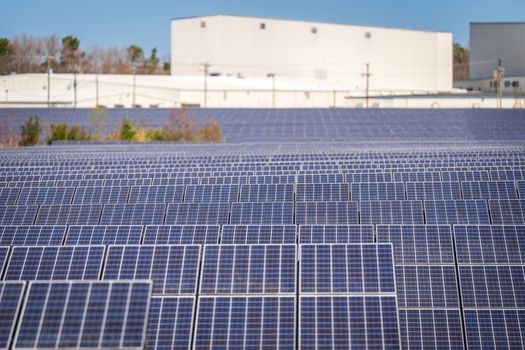
IEC 61215 is a design-qualification test, not a production-quality test, so a single panel from a 1 million-panel run can carry the IEC mark while the rest of the line drifts on lamination, encapsulant cure, or solder ribbon pull strength. That gap is exactly what IEC 62941 was written to close on the factory side, but adoption outside Tier-1 cell+module integrators is still patchy, and a sourcing manager should ask for the IEC 62941 certificate number, not just the ISO 9001 number, before releasing the deposit [S1][S3].
Another blind spot is dynamic mechanical load — the IEC 61215 mechanical load test is a single-shot 2,400 / 5,400 Pa sequence, but field data on tracker-driven wind resonance has shown fatigue failures on 182 mm and 210 mm modules that the static test never reproduces. Several EPCs now require the IEC TS 63209-1 extended-stress sequence as a contractual appendix, and a Tier-1 datasheet that lists "IEC TS 63209" alongside IEC 61215-1:2021 is signalling that it has done the additional testing.
Where to cross-check a factory's claims before signing
The TÜV Rheinland Certipedia and TÜV SÜD South Asia certification registers let you look up a certificate number and see whether the scope covers the exact module model on the datasheet, the manufacturing address, and the validity date — a factory that shows a valid ISO 9001 but an expired or scope-mismatched IEC 61215 certificate is a red flag regardless of how polished the marketing site is [S1]. The ENF Solar directory is the secondary cross-check for the model code, the cell technology family, the cell size, the power tolerance band, and the product warranty length [S3].
For the relevant spec sheets and selection criteria, see additive manufacturing material, air quality monitor, and power quality analyzer.
For related coverage, see EV OEM vs ODM Manufacturing: Spec Map for Sourcing Managers.