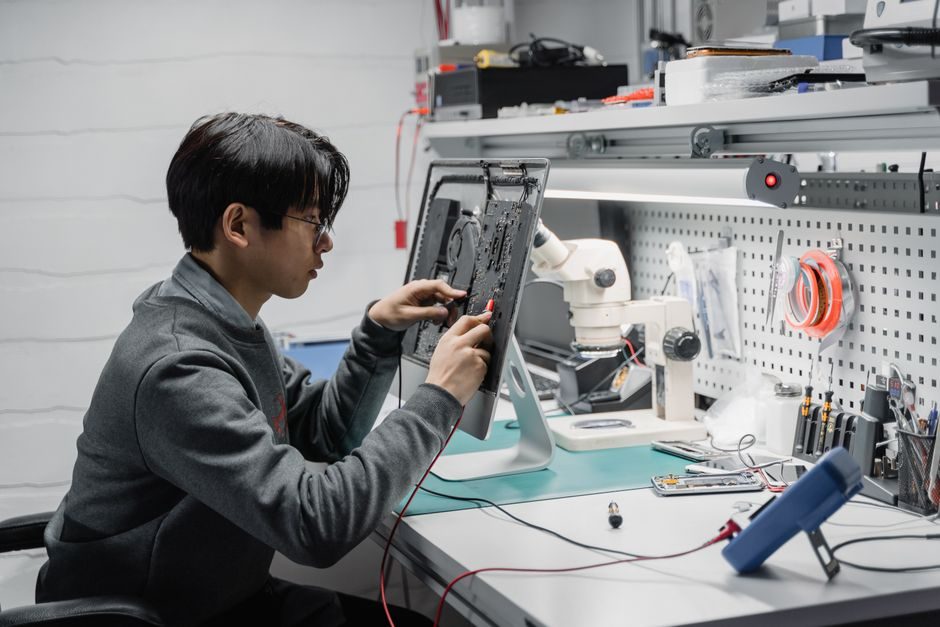
EV manufacturing splits cleanly along who owns the platform: branded OEMs control vehicle architecture, controller firmware, and type-approval documentation, while ODMs in Jiangsu, Hainan, Guizhou, and Hong Kong deliver turnkey chassis, BMS, and motor-controller kits for buyer-branded resale at MOQs from 1 to 100 pieces [S2][S3][S5][S7].
The practical difference is integration depth. An ODM owns the bill of materials, the wiring harness, and the controller calibration; an OEM owns the brand, the dealer network, and the after-sales warranty path. Buyers who need a road-legal L7e passenger EV pay a premium for OEM homologation; buyers sourcing golf carts, hospital logistics vehicles, or garbage-collection trucks routinely specify ODM because the regulatory bar is lower [S3][S6].
Decision Criteria: MOQ, Lead Time, and Homologation
MOQ is the first hard filter on the OEM/ODM choice. Halo Knight in Hong Kong lists the T107PRO 6000W dual-motor scooter at 100 pieces minimum at US$1,500/unit, while YULONG Electric Vehicles in Hainan quotes 1-piece MOQs on hospital logistics carts and 8-seat tuk-tuks [S3][S5]. For the buyer, a 100-piece MOQ locks in 4-6 months of working capital; a 1-piece MOQ lets the buyer prototype a brand before committing to tooling [S5].
Certifications carry equal weight. The Jiangsu electric-transportation cluster (Changzhou Merry Ebike and peers) runs Own Brand plus ODM plus OEM as parallel R&D capacities, and most hold ISO 9001:2015 plus ISO 14001:2015 for the factory system [S2][S8]. For an LSV or golf-cart build, the buyer still needs UN R100 (electric powertrain), UN R10 (EMC), and country-specific road-type approval before the first sale; ODM suppliers handle component-level CE/EN 15194 for e-bikes but rarely carry full vehicle homologation in-house [S2].
Vehicle-Class Comparison: Where OEM and ODM Actually Compete
Comparison across the four dominant low-speed EV classes shows where the two models diverge on cost, MOQ, and lead time. Source: Made-in-China supplier listings and the EV battery-cell assembly line reference build at Motion Index Drives [S1][S3][S5][S6][S7].
E-bikes and folding scooters sit firmly in the ODM zone. Halo Knight's 60V 38.4Ah dual-motor folding scooter hits 95 km/h with an 80 km range per charge, spec'd to a 100-piece MOQ at US$1,500 [S5]. Low-speed mini carts and sightseeing buses (Guizhou Zhonghui, 163 employees, 38 engineers) are ODM-friendly because the buyer-branded envelope is simple: chassis, body, 48-72V traction pack, and a Curtis or Zapi controller [S7][S4].
Special-purpose municipal and hospital vehicles are split. YULONG ships silent electric logistics carts and patrol vehicles as OEM/ODM from Hainan, and Wuhan-based garbage-truck builders (JAC, HOWO, Dongfeng chassis) list electric vacuum and dumper trucks at US$21,867-64,867 per piece with single-piece MOQ [S3][S6]. The price spread inside the garbage-truck band reflects chassis size, hydraulic tipping system, and tank volume, not ODM vs OEM [S6].
Passenger BEVs and PHEVs are OEM territory, not because the factories cannot build them, but because the buyer has to absorb the homologation, dealer, and recall liability. Electric Vehicle Controllers Ltd. (UK) and similar Tier-1 controller shops supply Zapi, Cableform, and MOSFET controllers into both OEM lines and ODM retrofits, with 0.16-5s switching windows and 100-500mm construction diameters for the rotary indexers used on the battery cell stacking line [S1][S4].
Controller and Battery Stack: The Sub-System Spec That Decides Both Models
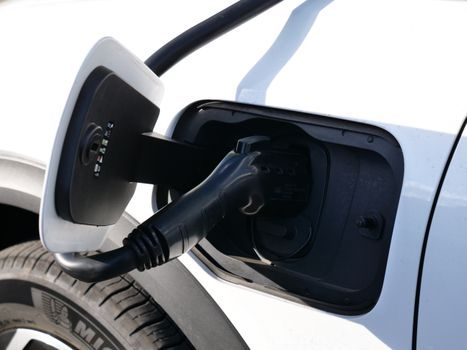
At the sub-assembly level, the OEM/ODM split dissolves. A cam indexer used on a German battery-cell assembly line runs a 0.25s index time for 36 degrees, with 10- or 6-station drums and position accuracy of ±0.05mm on the linear transfer system; that hardware is identical whether the final pack ships under an OEM VIN or an ODM buyer's label [S1]. LFA HSP linear transfer stages with 200kg total load and torque-motor servos are specced into cell-stacking, module-pack assembly, and optical/x-ray testing lines at the same OEMs and ODMs [S1].
For a deeper read on how that sub-system spec translates to the production line, see the EV Process Control and Instrumentation 2026 spec map and the EV Manufacturing Equipment Guide. Both walk through the cell, module, and pack-level instrumentation stack that any OEM or ODM line has to integrate [S1].
Supplier Profile: What a Sourcing Manager Verifies on Site
Three data points are non-negotiable during supplier qualification. First, headcount and engineering ratio: Guizhou Zhonghui lists 163 employees with 38 engineering and technical staff, roughly 23% engineering density, which is consistent with an ODM that owns its own chassis and controller calibration [S7]. Second, the management certification triplet: ISO 9001:2015 (quality), ISO 14001:2015 (environmental), and ISO 45001:2016 (occupational health) are the baseline filter on the Made-in-China electric-tricycle directory [S8]. Third, R&D capacity declaration: a factory that lists only "OEM" is contract-manufacturing only; "ODM" adds design input; "Own Brand" means the factory is also competing with the buyer in the same channel [S2][S3][S7][S8].
Failure Modes and Constraints Buyers Underestimate
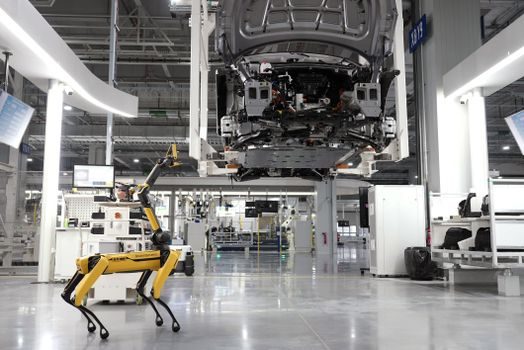
ODM lock-in is the recurring failure. When a Hong Kong ODM builds a 6000W dual-motor scooter on a proprietary controller harness, the buyer cannot swap the BMS, display, or throttle without rewriting the CAN-bus map, and the controller firmware often ships as a binary blob [S4][S5]. EV Controllers Ltd. and similar shops exist precisely because field retrofits of Zapi, Cableform, and aftermarket MOSFET controllers are a continuous revenue line, not a one-off service [S4].
Warranty escalation is the second trap. OEM-branded LSVs and golf carts carry a factory-backed parts and labour warranty that survives dealer turnover; ODM-branded units rely on the buyer to stock spares, because the ODM factory is not contractually obligated to maintain a 10-year parts tail [S3][S7]. For garbage-collection and municipal fleets, the buyer is functionally the OEM, which is why Wuhan builders quote single-piece MOQs and ship chassis cabs ready for upfitter integration [S6].
Selection Map: When to Pay for OEM vs When ODM Wins
For road-legal passenger BEVs and any vehicle sold under a dealer network with type approval, OEM is the only defensible model. The unit-cost premium buys VIN documentation, recall handling, and a service network, none of which an ODM can supply as a service [S2]. For e-bikes, folding scooters, golf carts, hospital logistics vehicles, and sightseeing buses, ODM is the right answer because the regulatory envelope is EN 15194 / CE / local LSV rules that the supplier already holds [S2][S3][S5][S7].
For special-purpose municipal trucks (garbage collection, vacuum sweeping, mini dumpers), the model is hybrid: an ODM chassis builder (Wuhan, JAC/HOWO/Dongfeng) plus a buyer-side upfitter, with the buyer holding the homologation and the ODM holding the chassis certification [S6]. The 2026 macro picture for the line-side equipment that feeds both models is laid out in the EV Industry 4.0 adoption map.
Track the next decision point by watching two signals: the UN R100 and UN R10 homologation certificates on Jiangsu ODM e-bike lines, and the rotary-indexer order book at Motion Index Drives, which feeds both OEM battery lines and ODM pack-assembly shops in parallel [S1][S2]. A drop in 10-station indexer orders would land before any production-volume print; a re-issue of an R10 EMC certificate for a Hong Kong dual-motor scooter is the canary for new SKU launches [S1][S5].
For the relevant spec sheets and selection criteria, see additive manufacturing material, agv robot, and electric actuator.