
Samsung SDI confirmed on 2 July 2026 that it is targeting mass production of all-solid-state batteries in the second half of 2027, with Kim Eun-ha, VP and head of its all-solid-state battery production development group, stating samples are in performance evaluation with multiple global customers [S1].
The same report notes CATL places its own solid-state technology at level 4 on a 9-level technology-readiness scale and does not see mass production and widespread adoption as realistic before 2030, a gap that defines what an SSB line must actually deliver in 2026 [S1].
Process Architecture: Three Stages, Three New Unit Operations
VDMA structures an all-solid-state battery cell build into electrode and electrolyte production, cell assembly, and cell finishing, the same top-level block diagram that any SSB line must accommodate on a greenfield site [S6].
Compared with liquid Li-ion, three core process deltas drive equipment selection: composite cathodes that mix solid electrolyte with active material, additional solid-electrolyte coating on the calendered cathode, and stacking-based cell assembly because oxide and sulfide solid electrolytes lack the toughness for winding [S3].
A 2025 review of full-cell fabrication notes cold pressing, hot pressing, cold isostatic pressing, and hot isostatic pressing are the dominant densification techniques used in published SSB cell builds, with the choice driven by cathode chemistry and target energy density [S5].
Solid-Electrolyte Film Forming: Wet, Dry, and Vapor Compared
Film forming is the core SSB unit operation, with three families in commercial evaluation: wet (solvent casting), dry (binder plus binder-fiber fibrillation then calendering), and vapor-phase methods such as chemical, physical, and electrochemical vapor deposition reserved for thin-film SSBs [S3].
The wet route supports polymer and composite electrolytes through mold-supported, positive-electrode-supported, and skeleton-supported variants, but incomplete solvent evaporation can reduce ionic conductivity and adds toxicology controls on the line [S3].
Dry film forming avoids solvent residue, yet the resulting electrolyte film runs thicker, which raises internal resistance and lowers cell-level energy density because the electrolyte itself carries no active material [S3].
LEAD's all-solid-state battery manufacturing solution explicitly bundles densification, electrode making, cell making, and formation and aging into one turnkey line, a vendor confirmation that these four blocks, not just three, are now the line-of-record for SSB builds [S4].
Densification, Stacking, and the Stacking-Only Cell Format
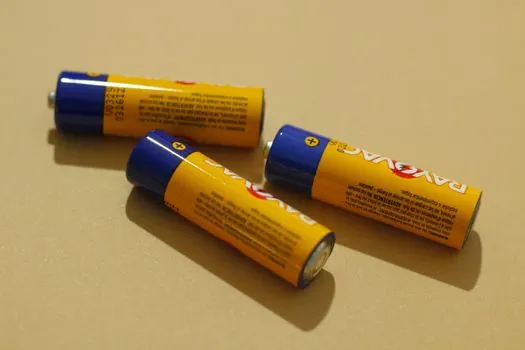
Because oxide and sulfide solid electrolytes fracture under the bending strains of jelly-roll winding, SSB cells are packaged almost exclusively by stacking, which directly couples the cell maker to a molding line discipline rather than a winder discipline [S3].
Hot isostatic pressing applies isostatic gas pressure at elevated temperature to close porosity at the cathode-electrolyte interface without crushing active material, and is the densification step most often cited for sulfide-based SSBs that cannot tolerate hot-pressing die-wall friction [S5].
For plants scaling this step, hot pressing and isostatic pressing equipment sit inside the same dry-room envelope as electrode making, which is why the automatic molding line integration pattern is appearing in 2026 SSB layouts rather than as a stand-alone press shop.
Throughput, Defect Modes, and What the Line Must Catch
Solid-electrolyte films that are too thin lose mechanical strength and short-circuit internally; films that are too thick raise internal resistance and bleed pack-level energy density, so inline thickness gauging is now a line-level acceptance criterion rather than a lab check [S3].
Cold pressing of stacked layers is sensitive to pressure uniformity, and any non-uniformity creates local delamination that surfaces only at formation, which is why SSB-specific conveyor sorting line configurations route every cell through X-ray or ultrasonic inspection before aging [S4].
Samsung SDI's October 2025 partnership with BMW and Solid Power fitted solid-state cells into BMW test vehicles to validate driving range, charging performance, longevity, and temperature stability, the same four test axes the formation and aging stage of the line must replicate at module rate [S1].
Who an SSB Line Is For, and Who Should Not Buy One Yet
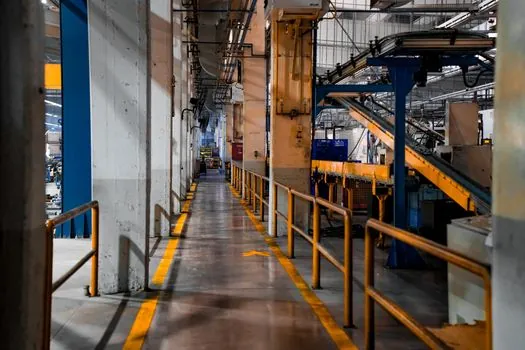
SSB lines in 2026 suit two buyer profiles: EV programmes that need energy density above roughly 350-400 Wh/kg at pack level and humanoid-robot programmes where the safety profile removes pack-level containment mass, both of which Samsung SDI's executive team named as the demand pull [S1].
SSB lines do not yet suit cost-driven energy-storage or entry-level EV programmes, because the wet film route's solvent controls, dry route's thicker electrolyte, and isostatic pressing all add capex and cycle time that the liquid Li-ion baseline still undercuts, a view consistent with CATL's pre-2030 caution [S1][S3].
Plants weighing hybrid options can study the solid-state battery Industry 4.0 adoption map, which tracks where semi-solid lines are already running at scale and where full SSB pilots remain the only option in 2026.
Standards, Sourcing, and Verifiable 2026 Signals
No single IEC or ISO standard yet defines an SSB production line, so equipment specs in 2026 are governed by general dry-room ISO 14644 classes, battery cell-level IEC 62133 and UN 38.3 transport rules, and customer-specific energy-density and safety acceptance protocols [S6].
For plants also selecting thermal-process kit, the line frequency furnace choice is increasingly specified for sulfide electrolyte sintering where mid-frequency induction would over-dry the green tape, a process coupling that 2026 line designers are flagging in RFQs.
Trackable signals to watch between now and H2 2027: Samsung SDI's customer sample evaluations converting to offtake agreements, CATL moving its 4-of-9 readiness score above level 6, and any third-party vendor (LEAD, Toshiba, Hangke, PNE) disclosing gigawatt-hour SSB line orders, each of which would reset the capex case for greenfield SSB plants [S1][S4].