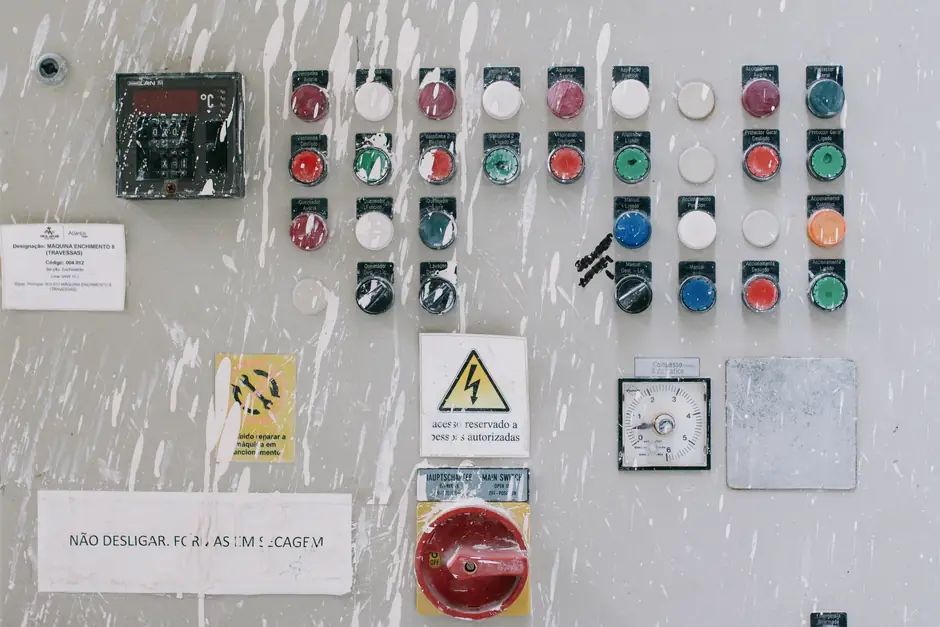
Semiconductor-based solid-state circuit breakers built on SiC and IGBT switching devices are used to interrupt faults in systems that demand microsecond-level fault interruption and software-defined control [S1].
Adoption spans 240–1500 VDC products, SiC and IGBT platforms, 13.8–34.5 kV solid-state transformers, and a projected USD 350 million SSCB market in 2026 [S1][S4][S5].
800 VDC Drives the First Commercial Wave
The addressable niche is clearest in data centers. The 800V DC circuit-breaker market was valued at USD 44.0 million in 2025 and is estimated at USD 68.0 million in 2026, with a forecast USD 2.11 billion market and 41.0% compound annual growth from 2026 to 2036 [S3].
Rack loads are pushing the protection problem beyond legacy electrical limits. NVIDIA stated that 54 V DC distribution reaches physical limits above 200 kW per rack, while 1 MW IT racks are planned from 2027 [S3]. The 800 VDC architecture converts 13.8 kV AC grid power at the facility perimeter, then distributes it through row-level busways [S3].
Protection must therefore cover converter outputs, busway feeders, tap-offs, rack inputs, batteries, and energy storage systems as one coordinated system [S3]. An air circuit breaker can provide conventional switching and isolation at appropriate points, but semiconductor breakers address the high-current DC fault-energy problem more directly [S3].
Interruption Speed Changes System Design
SolarEdge and Infineon describe their SSCB program as capable of interrupting DC faults within a few microseconds without mechanical contacts [S4].
DC has no natural current zero at which an arc can be extinguished in the same way as an AC circuit. Mechanical interruption faces arcing and speed constraints, while a semiconductor path can turn off current without separating physical contacts [S4].
Faster clearing limits let-through energy and can reduce the fault-withstand burden on adjacent equipment [S3]. That benefit matters when a fault feeds from converters, batteries, or multiple parallel sources with different current profiles, because protection coordination becomes more difficult when SSCBs operate substantially faster than fuses and conventional breakers [S3].
Mechanical, Solid-State and Hybrid Options Compared
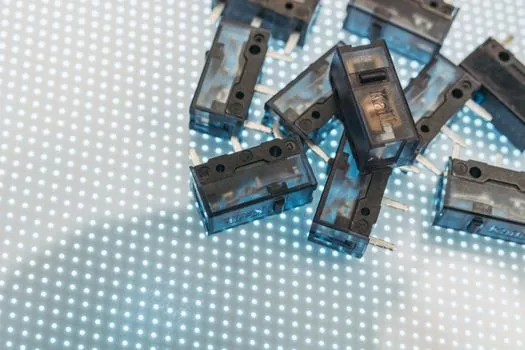
Mechanical DC breakers are expected to retain the largest share of the 800V data-center breaker market in 2026 because their continuous conduction losses are lower, their listing practices are established, their coordination methods are accepted, and their cost per protected circuit is lower [S3].
Solid-state breakers provide the fastest interruption and the highest forecast growth rate, but continuous current flows through semiconductor devices, producing higher on-state losses and heat than mechanical contacts [S3]. Their higher equipment cost, limited operating history, and coordination complexity remain material barriers [S3].
Device Architecture Drives Voltage, Loss and Certification
Silicon carbide and IGBT switching devices form the core of many SSCB approaches, while SiC JFETs and bidirectional GaN devices are being developed to improve conduction behavior and control [S1][S7]. SolarEdge is designing the SSCB architecture and using Infineon CoolSiC JFET devices within it [S4].
SolarEdge and Infineon are collaborating on solid-state circuit breaker technology for 800 VDC distribution in AI and hyperscale data centers [S4].
Device selection should also account for operating voltage, interrupting time, thermal performance, listing status, protection coordination, and fault-current withstand rather than treating semiconductor switching speed as the sole criterion [S3][S5].
Supplier Depth Expands Beyond Specialist Start-Ups
The 2026 guide profiles ten manufacturers most relevant to engineers and procurement teams evaluating solid-state circuit breaker suppliers, with HIITIO included as the reference point because of its focus on DC protection systems for the new-energy and data-center sectors [S1]. Their backgrounds span DC power devices, industrial distribution, low-voltage protection, residential SSCBs, and semiconductor components rather than a single uniform product category [S1].
HIITIO focuses on DC protection systems for the new-energy and data-center sectors [S1].
Procurement teams should compare verified DC interruption data and certification rather than relying on a general manufacturer ranking [S1].
Thermal Loss and DC Coordination Limit Broad Deployment
Continuous semiconductor conduction creates heat that restricts SSCB use in lower-criticality installations, while device cost remains above that of mechanical protection [S5]. A breaker specified for a 240–1000 VDC product still requires thermal analysis at the actual operating current rather than reliance on its maximum voltage rating [S1].
Operating experience is another constraint. Insurers and regulatory authorities may require additional evidence before approving large-scale deployments, and solid-state products operate differently from established electromechanical protection under long duty cycles and coordinated fault sequences [S3].
Fast switching does not eliminate selectivity engineering. Converters and batteries generate different fault-current profiles, so upstream and downstream devices must be tested as a system with the final source impedance, protection timing, conductor arrangement, and load behavior [S3].
Market Growth Is Strong but Estimates Vary

One 2026 estimate places the overall SSCB market at USD 350 million, rising to USD 470 million in 2027 and USD 1.92 billion by 2032, a 32.65% compound annual growth rate for 2027–2032 [S5]. Another forecast starts from USD 450.7 million in 2026 and reaches USD 2.8785 billion by 2036, a 23.4% compound annual rate [S8].
The market definition differs materially across studies, including device voltage, DC versus AC equipment, and the treatment of semiconductors or complete protection assemblies. Market numbers should therefore be used as directional estimates, not as a single engineering budget input [S5][S8].
The solid-state circuit breaker market is projected to grow from USD 0.35 billion in 2026 to USD 1.92 billion by 2032 at a CAGR of 32.65%, with Asia Pacific identified as the fastest-growing and largest market [S5].
Specification Checklist for 2026 Projects
Specify SSCBs where DC fault energy, selectivity, switching frequency, or space rules out conventional mechanical interruption. For example, the ABB 1000 V IEC 60947-2-certified product provides a defined sub-25-microsecond benchmark, while SolarEdge and Infineon target a few-microsecond interruption class [S3][S4].
Do not substitute an SSCB for a circuit breaker without checking the complete protection chain. The evaluation needs rated voltage and current, short-circuit interruption duty, let-through energy, thermal performance, communication requirements, listing status, and coordination with converters, batteries, fuses, and downstream equipment [S3][S5].
Track two practical signals through project procurement: whether proposed products have application-specific certification for the intended DC voltage, and whether the vendor supplies verified fault-clearing and selectivity data for the complete source-to-load architecture [S3][S4].