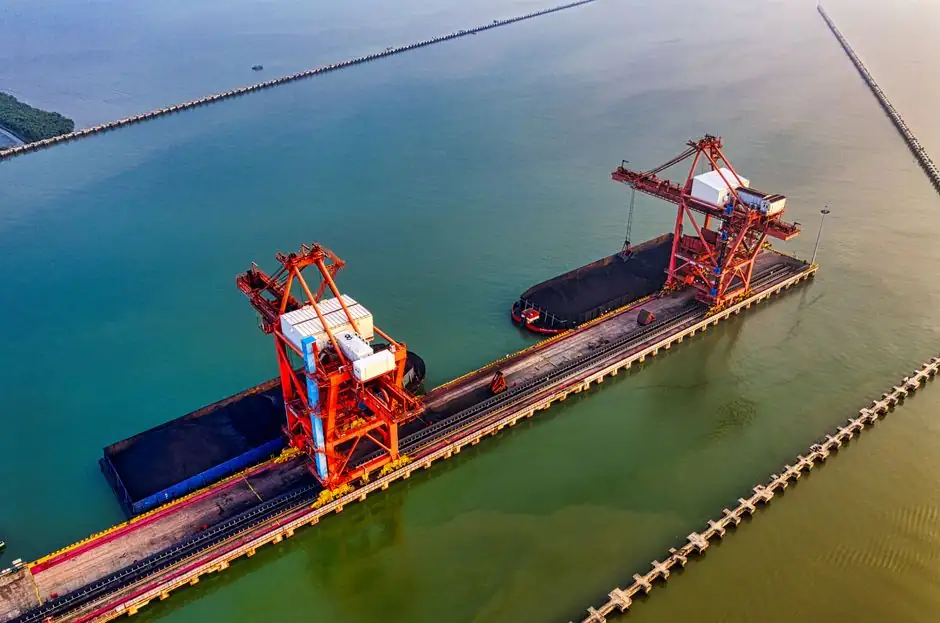
Port-logistics sorting systems sit on the inland edge of the container terminal, between the gatehouse, the CY (container yard), and onward rail/truck dispatch, and they are specified first by parcel mix, not by nameplate throughput.
Automatic sorters used in modern distribution-style ports are typically rated 6,000-12,000 boxes per hour, a band that has been the working reference since the second-generation units went into US and Japanese logistics centers [S3]. Modular diverter-based designs from vendors such as Flowsort now advertise up to 4,200 boxes per hour per induction line, with 36 induction lines on a single Chilean cherry-export installation [S1].
Definition and scope: what counts as a port-logistics sorter
A port-logistics sorter is the subsystem that separates inbound cartons, polybags, pallets, or break-bulk units after deconsolidation and before dispatch to consignee loading bays, and it must tolerate the dirty, mixed-SKU reality of a CY, not the clean SKU purity of an e-fulfilment DC. [S1]
For 2026 port-bid scopes, the relevant families are: (1) cross-belt sorters, with each carrier carrying one parcel and a perpendicular belt ejecting left or right; (2) tilt-tray sorters, with carriers that tip to discharge; (3) sliding-shoe sorters that push parcels off a main belt; and (4) the newer modular diverter modules, such as Flowsort's Eco Flow, Speed Flow, Multi Line Diverter, and X-Flow, which slot into an existing conveyor spine [S1]. The reference throughput band for fully automated sortation in a distribution-style port is 6,000-12,000 boxes/hour [S3].
Scope must also include the upstream induction (scanning, dimensioning, weighing) and the downstream chute network, since a sorter rated for 10,000 boxes/hour is throttled to 4,000 if the scanners cannot keep cadence.
Selection criteria: six engineering numbers that decide the build
Sortation throughput is governed by six measurable criteria: peak induction rate in boxes/hour, average parcel dimensions and weight, product mix ratio (parcels vs polybags vs totes), footprint envelope in metres, redirect accuracy target, and integrator commissioning window in weeks. [S1]
The first three are read off the consignee manifest mix; for export-heavy ports the parcel weight distribution is heavy-tailed, with single pieces above 30 kg showing up weekly. Footprint is often the gating constraint inside an existing CY shed, where modular retrofits win: Flowsort advertises that its modules fit existing conveyor spines and ship with STEP files so integrators can pre-validate clearances before pour [S1]. Redirect accuracy on cross-belt and tilt-tray units is typically specified at 99.5% or better; below that, manual re-sort labour erases the throughput gain.
Lead time and integrator fit are equal to throughput on the decision matrix. The Flowsort product configurator runs automatic compatibility checks across components, and commissioning is delivered as pre-configured control modules, with installation manuals and global spare-parts access bundled in the support tier [S1].
Who a modular diverter sorter is for, and who it is not for
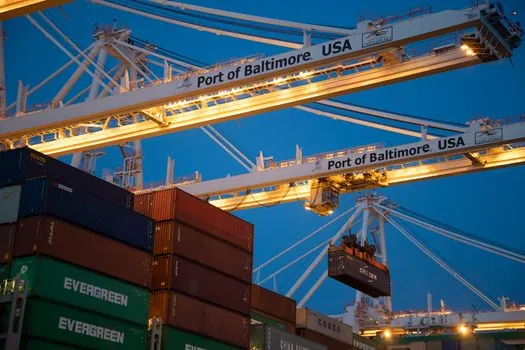
Modular diverter sorters are the right pick for ports and 3PLs that need to add or re-aim sortation on an existing conveyor spine without a full rip-and-replace, and where parcel mix varies seasonally. [S1]
They are not the right pick for greenfield, single-SKU mega-DC builds with stable geometry, where a fixed cross-belt loop is mechanically simpler and cheaper per divert. They are also the wrong pick for parcels above roughly 50 kg or for non-conveyable items such as hanging garments, tyres, or live plants; those still need a manual induct station and a separate put-wall.
For a related but distinct decision, the sorting system selection for warehouse automation page lays out the DC-side criteria in more depth, and the sprinkler system reference covers the fire-side envelope a sorter shed must clear before any vendor is shortlisted.
Comparing the main sorter types against four decision criteria
The four decision criteria that actually separate sorter families are throughput per metre of footprint, redirect accuracy, parcel-size range, and integrator complexity, not headline boxes/hour. [S1]
Cross-belt sorters win on redirect accuracy and parcel-size range but lose on footprint cost per metre. Tilt-tray sorters win on throughput density for parcels under 5 kg and lose on heavy or awkward items. Sliding-shoe sorters win on throughput for soft polybags and lose on rigid cartons. Modular diverters win on integrator fit, footprint, and seasonal re-configurability, and lose on absolute peak throughput per induction line; the published reference figure is up to 4,200 boxes/hour per line on the cited cherry-export installation [S1]. The general distribution-center reference band remains 6,000-12,000 boxes/hour for a fully built-out line [S3].
For ports that handle both container deconsolidation and break-bulk, a hybrid build is common: a cross-belt or tilt-tray loop for the parcel stream, plus a modular diverter bank for overflow and seasonal peaks. This is the architecture Flowsort's Multi Line Diverter and X-Flow modules are designed to slot into [S1].
Use cases in port logistics: terminals that have already deployed
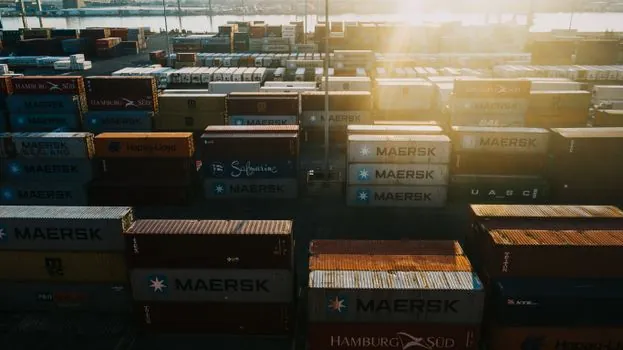
Three concrete use cases frame the 2026 port-bid landscape: export agri-terminals with high seasonal peaks, mixed-cargo 3PL sheds, and inland-port rail interfaces.
The Chilean cherry-export installation run by DANICH uses Flowsort diverters to feed 36 sealing lines at up to 4,200 boxes per hour, a configuration chosen specifically for throughput under a compressed eight-week cherry window [S1]. TBWB, a European integrator, cites the modular Flowsort system for letting engineers implement and tailor the build in record time for a Trans-o-Flex parcel network, with long-term maintainability as a stated selection driver [S1]. E-Mac, another integrator customer, points to Flowsort diverters as a key component in future-ready intralogistics builds for warehouse and distribution processes [S1].
These are intralogistics references rather than deep-sea terminal references, and a port-bid engineer should treat the throughput figures as line-level, not gate-level. For the broader DC context the sorting system selection for warehouse automation page covers the throughput ladder.
Limitations, constraints, and known failure modes
Sortation downtime in port sheds is dominated by four failure modes: misaligned diverters, scanner-induced induction starvation, chute congestion, and fire-suppression false trips, and the specification must address all four before sign-off.
Modular diverters depend on tight mechanical alignment; the Flowsort configurator runs automatic compatibility checks so the chosen module, drives, and controls are validated as a set, and the X-Flow module is positioned specifically for 90-degree transfers that historically fail at the conveyor junction [S1]. Induction starvation shows up when 3D scanners or dimensioner-weighers run at sub-cadence, dragging the line below the rated 6,000-12,000 boxes/hour band [S3]. Chute congestion is a downstream problem, not a sorter problem, but it is paid for out of the sorter budget. The shed's conveyor sorting line and ASRS system interfaces must clear the same fire-side envelope, and the sprinkler system zoning must be specified before chute geometry is frozen.
Sourcing, standards, and integrator due diligence
Specification sourcing for a 2026 port sorter should start with the integrator's STEP files, the OEM's commissioning playbook, and a third-party throughput witness test, not with a brochure. [S1]
Flowsort publishes STEP files for the full modular range and offers a product configurator that runs compatibility checks before order, with demo units available for in-environment testing on actual product [S1]. A due-diligence checklist for the port procurement team is: (1) request a throughput witness test at the rated mix for a minimum four-hour run; (2) validate spare-parts lead time against the port's vessel-berth schedule; (3) confirm integrator commissioning window against the terminal's low-season slot; and (4) require a fire-side envelope review against the sorting system and conveyor sorting line references before chute geometry is frozen. For neighbouring DC-side context the sorting system selection for warehouse automation page is the natural next read.
Trackable next signals for 2026: vendor release notes on higher-cadence diverters, integrator-published STEP libraries expanding into the 50+ kg parcel range, and port-procurement RFPs that bundle sorter, ASRS system, and fire envelope into a single tender line.