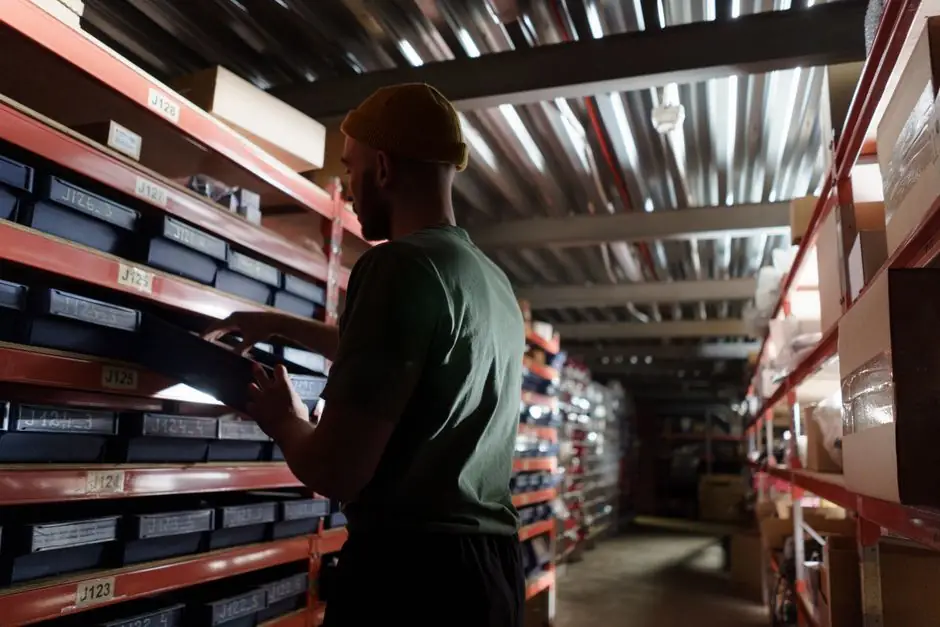
Automotive aftermarket and OEM-parts logistics require sorting throughput in the 1,500-3,000 pcs/hr band per induction lane, with DWS cells that weigh 10-60 kg at ±20 g accuracy and read 7 mil barcodes from 0.18 mm pitch onward, per the JOAN C8000/C9000 product line [S3].
Selection pivots on SKU volatility (rotating spare-part catalogues vs. stable OEM service kits), tote weight band, and the level of barcode/DPM traceability the warehouse must capture before the tote reaches a pick face, an AS/RS load port, or a shuttle lane [S1].
What a 2026 Automotive Sorting Cell Must Contain
An automotive-parts sortation cell in 2026 is a stack of five subsystems, not a single conveyor: an induction conveyor, a DWS (dimension, weight, scan) station, a decision controller, a sorter (swivel-wheel, cross-belt, or sliding shoe), and outfeeds tied to a sorting system line and a conveyor sorting line network [S1].
The DWS station is the spec gate. The JOAN C8000 reads 6,000,000-pixel images at 3072x2048 resolution, frame rate up to 52 fps, depth of field to 600 mm, 30 degree tilt plus 360 degree azimuth decode angles, Code39/Code93/Code128/EAN/QR symbologies, 10 g to 60 kg weighing at ±20 g, and a 0.2-1.0 m/s variable belt; the smaller C9000 trade cell runs 60 parcels/min and 4,000 pcs/hr in static-decode mode with a tighter ±10 g scale at 360x360x110 mm footprint, 5 kg [S3].
Power, environment, and host link are the same on both: 110-230 V AC, 50-60 Hz, gigabit Ethernet, -15 to +50 degree C operating range, 5-95 percent non-condensing humidity, and 100 kg cabinet mass (C8000) versus 5 kg industrial-PC head (C9000) [S3]. These envelopes are what a project engineer reads first to confirm the cell can live next to a paint-shop mezzanine or an unpaved receiving dock.
Throughput Math and SKU-Driven Sorter Type
Swivel-wheel diverters handle 3,000 pcs/hr per chute and handle shoe, carton, and polybag traffic with a soft-roller transfer that suits 0.2-3.0 kg service-parts SKUs, per Xuanyu's swivel-wheel product line marketed into Great Wall Motors spare-parts operations [S1].
Cross-belt and tilt-tray sorters hold their place at higher piece weights (5-30 kg brake rotors, axles, exhaust sub-assemblies) and where induction needs to be paced by a shuttle system or AS/RS tote stacker rather than a flat belt; the swivel-wheel design loses its lead when individual items exceed roughly 10 kg or have odd footprints that snag between rollers [S1].
For the typical automotive aftermarket warehouse (15,000-60,000 active SKUs, 70 percent of throughput in fewer than 1,000 fast movers) the rule of thumb is: swivel-wheel at the inbound break-bulk cells, cross-belt at the central hub, and AGV-tug or conveyor spurs to the pick-module outfeeds, with no sorter doing both piece-pick and case-pick on the same lane [S1].
DWS Spec Gates: Barcode, Weight, Footprint, Environment

Barcode minimum element width sets the camera. The 7 mil (0.18 mm) minimum bar/space spacing on both the C8000 and C9000 is the line that separates automotive DPM (direct part marking) workflows from generic parcel cells; if the warehouse must read laser-etched Data Matrix on castings, spec 3-5 mil resolution and a polarised LED ring as a hard requirement, because 7 mil cells will not consistently decode low-contrast DPM [S3].
Weighing accuracy follows the SKU mix. The C8000 at ±20 g across 10-60 kg is correct for aftermarket service parts (filters, brake pads, water pumps) and below the threshold needed for OEM kit-of-parts reconciliation; the C9000 at ±10 g over 10-60 kg is the right cell when the part is billed by weight or must pass a tare-on-tote reconciliation, with both units offering custom-range weighing above 60 kg on request [S3].
Footprint and the ambient envelope decide the building. A C8000 cell occupies 2,000x800x1,800 mm at 100 kg, runs on a 700 ±30 mm belt height, and tolerates -15 to +50 degree C at 5-95 percent humidity; these numbers rule out outdoor placement in a winter yard without a heated enclosure, and they set the structural slab load for any sorting system cell bolted into a mezzanine above a sprinkler system drop zone [S3].
Selection Criteria: Swivel-Wheel vs Cross-Belt vs AGV Sortation
Three options dominate the 2026 spec short-list for automotive-parts warehouses, and a defensible decision rests on throughput per chute, peak part weight, DPM traceability, and footprint per sort destination: [S2]
Option 1, Swivel-wheel sorter (Xuanyu-class): throughput 3,000 pcs/hr per chute, part weight band 0.05-10 kg, footprint per chute roughly 1.2x1.2 m, low noise, suits aftermarket service-parts and e-commerce spare-part SKUs; limitation is a 10 kg ceiling and roller-gap sensitivity to flat-pack boxes [S1].
Option 2, Cross-belt or tilt-tray sorter: throughput 6,000-12,000 pcs/hr per carrier, part weight band 0.5-50 kg, footprint per loop 8-15 m radius, gentler on odd footprints, suits OEM service-kit lines and chassis-grade components; limitation is higher capex per divert and tighter controls maintenance [S1].
Option 3, AGV-tug or roller-shoe conveyor sortation: throughput 200-500 totes/hr per vehicle, variable part weight, integrates with AS/RS load ports, suits heavy-item (axle, sub-frame) lanes and slow movers; limitation is traffic-management complexity and battery duty cycle in -15 degree C yards [S1].
The decision rule: if more than 80 percent of throughput is under 10 kg, pick swivel-wheel; if the SKU mix is 0.5-50 kg with a high DPM read rate, pick cross-belt; if the lane is low-volume heavy goods tied to a shuttle or AS/RS stacker, pick AGV-tug and let the conveyor sorting line carry the small-package traffic.
Integration Stack and Host Linkage
Both DWS cells above output over gigabit Ethernet using a configurable data protocol, and the sorter line is decoupled from the WMS via a sort controller that maps destination codes to physical chutes; the JOAN C8000 advertises "multiple data-transmission modes and custom-development support" for the WMS/ERP handshake, with seamless link to existing management systems [S3].
For automotive-parts sites, the handshake must carry four data fields per parcel: the barcode payload (VIN, OEM part number, or aftermarket SKU), weight in grams, volumetric weight in cubic centimetres (the C8000's 600x400 mm field of view, working distance near 1 m, gives the basis), and a timestamp for SLA audit; missing any of these breaks the OEM warranty claim trail [S3].
Xuanyu markets a "full-process automation" hand-off, with a 30 percent-plus efficiency gain on its reference installations and OEM/ODM cooperation, covering swivel-wheel sorters, DWS, conveyor, and AS/RS modules as a single-vendor stack, useful when the WMS and PLC layer are run by separate integrators and the sorter vendor must own the MFC/SCADA boundary [S1].
Failure Modes and Constraints Buyers Overlook
Swivel-wheel diverters fail in three predictable ways: roller-gap misalignment when totes run over 10 kg or have flexible walls (the wheel bites the bag and stalls), belt-edge wear at 0.2 m/s reverse cycles, and DPM misreads when the 30 degree/360 degree decode envelope is blocked by the chute-side guard rail; each of these drives the rule of thumb that swivel-wheel cells need 2-3 percent of throughput budgeted for re-circulation lanes [S1].
DWS cells fail in two: under-spec camera FPS when a 1.0 m/s belt runs 0.5 m/s barcodes at 52 fps, motion blur kills decode; and weight scale drift when the cell sits on a mezzanine near an HVAC plenum that vibrates at 25 Hz, the 5-95 percent humidity spec is met but the ±20 g tolerance is not [S3].
Constraints to write into the URS: minimum ceiling height 2,400 mm for a C8000-class cell at 1,800 mm cabinet plus 600 mm service access; 110-230 V AC, 50-60 Hz single-phase at the cell; a 700 ±30 mm belt height matching the upstream and downstream conveyor; and a 5-95 percent non-condensing humidity envelope with -15 to +50 degree C operation, beyond which the cell needs a climate enclosure [S3].
Vendor Short-List Signals Worth Tracking
Two vendor moves anchor the 2026 short-list. Shenzhen Xuanyu Automation Technology, founded in 2014, runs a roughly 1,000 square metre plant in Chang'an, Dongguan, and sells swivel-wheel sorters plus DWS and AS/RS lines, with reference installs at China Post and Great Wall Motors and an export footprint of 30-plus countries [S1].
Shenzhen Jun'an Hongtu (JOAN) sells the C8000 DWS and C9000 small-parcel sorter family with the 80 pcs/min C8000 ceiling and the 60 pcs/min C9000 ceiling, using a 6,000,000-pixel global-shutter CMOS at 3072x2048, 7 mil decode floor, 10-60 kg scale, and gigabit Ethernet link [S3].
Two trackable signals for the next planning cycle: (1) the move from 7 mil to 3-5 mil minimum decode spacing on the next DWS refresh, driven by OEM DPM rollouts; and (2) tighter native integration between DWS cells and shuttle-based storage, with shuttle system vendors exposing sort-destination events as WMS-grade messages instead of PLC-only registers. For a parallel look at the same trade-off in a regulated pharmaceutical warehouse, see the pharma sorting spec map.