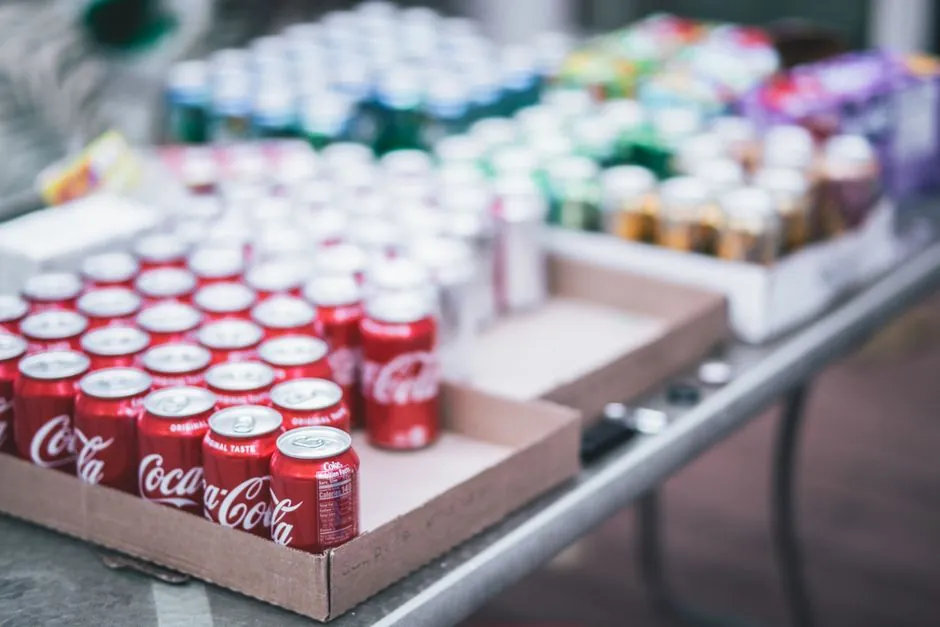
A food-grade sorting system is not chosen by throughput alone; the binding constraints are hygienic design, contact-surface compliance, and the contamination profile of the product being handled [S1][S4].
For most beverage, dairy, and bakery lines the engineering decision is between an optical color/shape sorter, a metal-detection tunnel, a dual-energy X-ray unit, or a hybrid optical + X-ray combination, and that decision is driven first by the product matrix (wet/dry, metalized film, bulk vs packaged) and only second by capacity in t/h [S7].
Hygienic design and regulatory baseline for the sorter itself
EHEDG zone concepts and HACCP mandates are the two non-negotiable design envelopes for any sorter that contacts the product or the surrounding cleanroom air in a food or beverage plant, and they have to be specified before vendor selection begins [S1][S4]. Freudenberg's industrial-F&B reference positions EHEDG zone separation together with high-efficiency air filtration as the baseline for contamination control, which is why the sorter's own enclosure, belt, and reject mechanism are treated as hygienic equipment, not as a generic conveyor add-on [S1].
Contact surfaces must satisfy FDA 21 CFR and EU Regulation 1935/2004 for food-contact materials; food and beverage QC programs further require documented Installation and Operational Qualification before routine testing starts, and the same qualification logic applies to the optical/X-ray subsystems on a sorter [S3][S4]. Inline measurement sensors used for cap inspection and dimensional checks on plastic bottles are designed to be washdown-rated, with telecentric optics that tolerate the humid, CIP-foam environment of a beverage line [S7].
Regulatory compliance pressure in food is moving in two measurable directions: tighter contaminant limits (pesticides, heavy metals, mycotoxins) at the QC lab, and stricter hygienic-design rules at the processing line, with internationally aligned standards (ISO 22000, FSSC 22000) driving both [S4][S5]. The practical consequence is that any sorter not delivered with a documented hygienic-design dossier (surface roughness Ra values, gasket material, CIP compatibility) should be eliminated at the long-list stage.
Detection technology comparison for the four common product groups
Optical sorters (RGB, NIR, InGaAs) are the workhorse for dried goods such as grains, nuts, and plastic pellets, with typical airborne-camera resolutions that resolve defects down to 0.5-1 mm and reject rates in the 1-5% range depending on incoming quality [S7]. Metal-detection tunnels cover ferrous, non-ferrous, and stainless-steel fragments down to roughly 1.0-1.5 mm Fe, 1.5-2.0 mm non-Fe, and 2.0-2.5 mm SS316, which is why they remain the standard on packaged dairy, bakery, and ready-meal lines [S7].
Dual-energy X-ray adds detection of stone, glass, bone, and some plastics, at the cost of higher capital (typically 2-4x a metal detector) and stricter radiation-shielding room requirements, so it is specified mainly where dense foreign bodies are a known recall risk or where regulatory guidance pushes beyond metal-only detection [S7]. Hybrid optical + X-ray lines are increasingly common at the higher end of the F&B market, with the optical stage doing color/shape QC and the X-ray stage doing dense foreign-body screening in a single pass.
For bottle-cap and closure inspection on beverage lines, inline telecentric vision systems are used to inspect plastic bottles and bottle caps, with the telecentric optical system eliminating the perspective distortion that mechanical gauges would introduce [S7]. For liquid-product lines, the sorter is usually mounted after filling and before labeling/packing, with the reject path routed to a sealed rework tank rather than a reject bin, to keep CIP fluid handling simple.
Throughput, belt width, and CIP integration gates
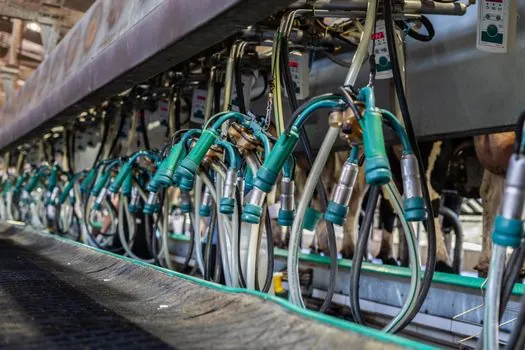
Selection criteria to pin down in writing before vendor demos: belt width (typically 300-1200 mm for F&B applications, sized to the largest acceptable product + 50-100 mm clearance), throughput in kg/h or bottles/min, reject-fraction tolerance (most F&B plants target 1-3% false reject), air-supply pressure for ejector nozzles (typically 4-6 bar), and CIP fluid compatibility (pH 1-13, up to 90 deg C on heated circuits) [S1][S7].
Conveyor integration matters because the sorter is always a node in a larger conveyor sorting line: the upstream vibratory feeder, infeed conveyor, metal detector, and downstream reject diverter must all share the same hygienic-design language, otherwise the EHEDG-zoned envelope is broken at the mechanical interfaces [S1]. Belt materials are usually PU or PE with a smooth matte finish and a documented Ra value, and frame materials are 304 or 316L stainless with crevice-free welds.
A related spec-gate pattern for adjacent cold-chain and hygienic-handling decisions is documented in a 2026 cold-chain sorting selection guide, where temperature-rated components and washdown-rated enclosures are the hard pass/fail filters before any throughput analysis. The same logic applies to chilled beverage and dairy lines, where condensation and CIP thermal cycling are the dominant failure drivers, not the optical resolution on the spec sheet.
QC instrumentation and reagent compatibility for the sorter's lab tie-in
QC reagent and analytical workflows sit on the other side of the sorter: incoming raw materials, in-process samples, and finished-product contaminants (pesticides, heavy metals, mycotoxins) are confirmed by chromatography (LC/GC), mass spectrometry, and immunoassay, with solvents and blends performance-validated for low organic-residue background [S5]. For aflatoxins and veterinary-drug residues the workflow uses LC-MS-compatible solvents, while flavor/fragrance work uses GC headspace solvents tested for low organic contamination [S5].
A sorter that flags a defect needs a QC lab behind it that can confirm the finding; that is why systems qualification (IQ/OQ) and routine-ready test protocols are now standard for laboratory QC platforms like the EZ-Fluo and Rotor-Gene Q in food labs, and the same IQ/OQ discipline is being applied to inline vision systems on the production side [S3]. Custom reagent blends (semi-bulk and bulk, returnable drum delivery) are commonly used for high-volume QC labs supporting 24/7 F&B plants, which keeps per-test cost stable as test volume scales [S5].
One common failure mode in F&B plants is the disconnect between the sorter's defect taxonomy and the lab's analyte list: the sorter sees color, shape, and density anomalies, the lab sees chemicals and microbiology, and the rejection trigger only makes sense if both teams agree on what counts as a defect. Specifying a shared defect library and a documented handoff path between inline sorter alarms and lab confirmation is now a baseline expectation, not an advanced option [S3][S4][S5].
Limitations, failure modes, and what not to specify
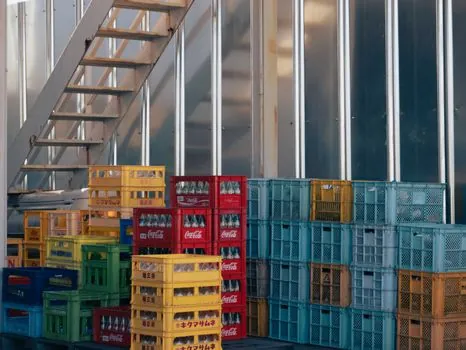
Sorter limitations in F&B are well documented: optical sorters miss clear glass, clear plastics, and any contaminant with the same color and density as the product; metal detectors miss non-metallic contaminants and are desensitized by metalized film packaging; X-ray units are blind to low-density contaminants with X-ray absorption similar to the product and trigger false rejects on product clumps [S7]. This is why hybrid configurations exist, and why any single-technology specification should be justified against the documented hazard analysis for the line.
Washdown and CIP are the most common sorter failure modes in F&B: ingress into camera housings, corrosion of ejector-valve pneumatics, and belt-joint contamination all show up within the first 6-12 months if the hygienic spec was relaxed. The corrective action in almost every retro-fit is to add a washdown-rated enclosure, swap pneumatic valves to stainless/sealed versions, and re-route the reject path so it does not pool CIP fluid [S1].
Sorting systems are NOT the right tool for batch-blending, recipe management, or final-product sensory evaluation: those belong to process-control PLCs and trained sensory panels, respectively. A sorter that is being asked to do both contamination removal and recipe correction is misapplied and will underperform on both jobs. The right upstream interface is a lighting equipment and electric lamps bank tuned to the product's reflectance spectrum, because wrong lighting collapses optical sorter accuracy more than any other variable in F&B.
Standards, sourcing, and a 2026 tracking signal
The core standards frame for F&B sorter specification is: EHEDG Doc 2 (hygienic design), EHEDG Doc 8 (hygienic equipment design criteria), EN 1672-2 (food machinery safety/hygiene), FDA 21 CFR (contact materials), EU 1935/2004 (contact materials), ISO 22000 / FSSC 22000 (food safety management), and HACCP as the operational overlay [S1][S4]. Metal detection sensitivity calibration typically references contaminant test pieces (ferrous 1.0 mm, non-ferrous 1.5 mm, SS316 2.0 mm) certified to a recognized metrological standard; X-ray installations must satisfy the local radiation-safety regulator in addition to food-safety rules [S7].
Trackable signal for the next 6-12 months: EU regulator guidance on PFAS in food-contact materials is the most likely binding change for 2026-2027 F&B sorter and conveyor-component sourcing, with EHEDG and FDA contact-surface documentation expected to require PFAS declarations at the part level. Plants that lock in a PFAS-disclosed component list now will avoid forced retrofits when the rule lands. A second signal: inline AI-vision defect libraries are maturing fast, and the practical question for 2026 is no longer "can the sorter see the defect" but "who owns the labeled defect dataset", which is a procurement question as much as a vision-engineering one.