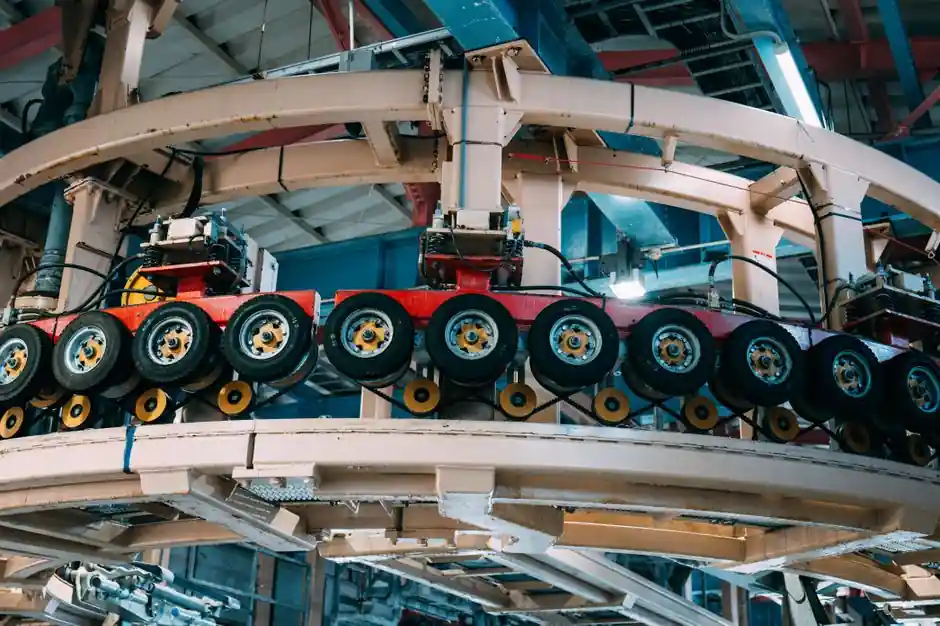
Selecting a sorting system for warehouse automation is a throughput-and-footprint decision before it is a brand decision: the four dominant architectures, cross-belt, tilt-tray, sliding-shoe, and robotic put-wall, each lock in different throughput bands, item-size envelopes, and integration points with conveying and sortation lines. Cross-belt and tilt-tray sorters handle 5,000–20,000 items/hr in distribution-center parcel hubs, while sliding-shoe sorters typically cap below 5,000 items/hr but tolerate soft polybags and apparel flats that jam loop sorter belts.
Warehouse-automation integrators now package sorter selection inside broader material-flow architectures, with end-to-end software stacks such as WAMAS covering warehouse management, control, and emulation [S1]. The practical effect is that a sorter quote is rarely just a sorter quote; it includes upstream induct scanners, downstream chute assignment, and WCS/WMS handshake scope.
Selection Criteria: Throughput, Item Profile, Footprint, and Read Rate
Items per hour is a more honest unit than cartons per minute, because a sorter rated 200 cartons/min at 300 mm length drops below 120 cartons/min when the same conveyor sees 600 mm parcels.
Item profile governs architecture. Cross-belt sorters need rigid parcels with a defined flat face; tilt-tray sorters tolerate a wider length and weight window because the tray carries the load; sliding-shoe sorters handle soft goods, polybags, and apparel flats that would flip on a cross-belt [S3]. Put-wall systems such as OPEX Sure Sort process up to 2,400 items per hour with as few as three operators, and the 2023 RFID-scanning option extends that envelope to apparel, cellular, and pharmaceutical flows where bar codes are occluded [S5].
Read rate is the hidden cost driver. Vision-based induct tunnels and RFID over-read zones are the standard mitigation, with OPEX citing RFID as the reason it removed manual re-handling for hidden bar codes in garments [S5].
Architecture Comparison: Cross-Belt, Tilt-Tray, Sliding-Shoe, and Robotic Put-Wall
Cross-belt sorters use a continuous loop of belt-on-belt carriers; each carrier has a short cross-belt that ejects left or right at a chute. They deliver 5,000–20,000 items/hr, handle parcels up to 1,200 mm length and 50 kg, and need a roughly oval footprint of 30–60 m major axis. They are the default for CEP (courier-express-parcel) hubs and e-commerce fulfillment centers running mixed-SKU parcel flows. [S3]
Tilt-tray sorters mount items on trays that tip sideways at the discharge point. They trade belt simplicity for higher per-item cost, but they carry heavier and longer items (up to 1,500 mm and 60 kg in some OEM lines) and tolerate odd-shaped goods such as tires and small appliances. They suit distribution centers where item length variance is high and where downstream chute count is large.
Sliding-shoe sorters use a series of shoes that slide across the main belt to push items off into side chutes. They run quieter, handle polybags and apparel without bag-tumble, and cap below 5,000 items/hr, which makes them a fit for retail back-room and omni-channel replenishment rather than main-line parcel hubs. Gosunm's parcel sorter and e-commerce parcel sorter lines sit in this band and target express, e-commerce, and warehousing customers with mixed small-parcel flows [S3].
Robotic put-wall systems replace the loop with stationary destinations and mobile carriers or gantry robots. OPEX Sure Sort uses iBOT robotic delivery vehicles that induct, scan, and deliver to the correct order bin, hitting 2,400 items/hr with three operators and recharging inductively as they travel the system [S5]. Put-walls are space-efficient for unit-level each-pick order profiles where SKU count is high and unit quantity per order is low, exactly the segment that cross-belt sorters handle poorly because of high exception rates.
Integration Points: WMS, WCS, Induct, and Chute Assignment
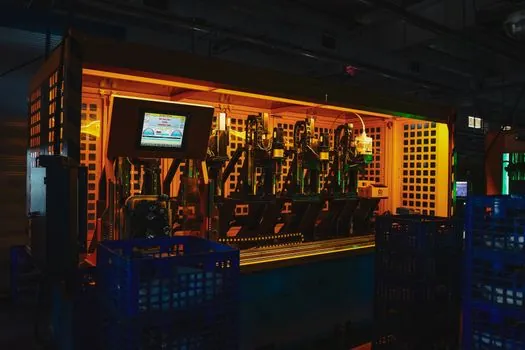
A sorter that cannot handshake with the warehouse control system (WCS) and warehouse management system (WMS) is a stranded asset, so the procurement spec must lock the protocol layer before locking the mechanical layer. WAMAS, the SSI SCHAEFER software stack, exposes warehouse management, warehouse control, material flow, and emulation modules as separate products that a sorter integrator must explicitly map against the customer's order-release and chute-assignment logic [S1].
Induct station design is the second integration choke point. Cross-belt and tilt-tray sorters need a high-speed singulator and a vision tunnel that captures weight, dimensions, and bar code in under 200 ms; sliding-shoe and put-wall systems are more forgiving because item flow is metered upstream by the operator or AMRs. Automated storage and retrieval systems feeding the sorter add another handshake, typically through a PLC-to-WCS link carrying tote ID and destination.
Chute assignment is the third integration point and the easiest to underestimate. A 50-chute cross-belt sorter needs 50 destination addresses in the WCS, each with overflow routing and downstream packing-line binding, and that logic must be tested in emulation before any metal is cut on the floor. SSI SCHAEFER exposes WAMAS Emulation Center and WAMAS Control Center as discrete products to address exactly this risk [S1].
Who a Sorter Is For, and Who Should Walk Away
A sorter is for operations with at least 2,000 items/hr sustained peak, mixed or single-SKU, and a downstream packing or dispatch line that can absorb the sorter's exit rate. The Sure Sort economics at 2,400 items/hr with three operators imply a labor-displacement payback that only holds above roughly 1,500 items/hr sustained [S5].
A sorter is not for low-SKU pallet flow, where a shuttle system or ASRS-to-pallet flow is the right answer; nor is it for a 200-line-per-day micro-fulfillment pilot, where a put-to-light wall is cheaper and faster to install. Force-fitting a cross-belt sorter onto a slow, low-SKU operation is a classic 2026 procurement failure that integrators keep selling because the per-line mechanical margin is higher.
2026 Sourcing Signals and Standards to Track
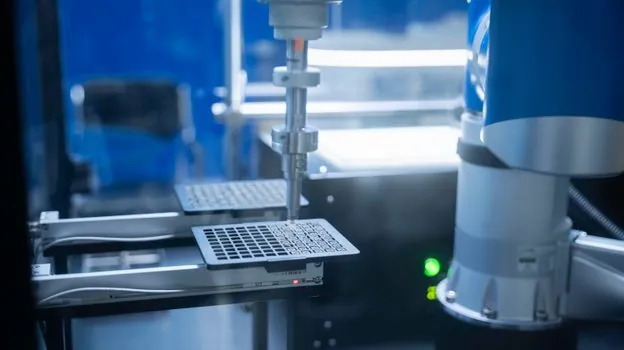
SSI SCHAEFER positions warehouse automation as a competitive necessity rather than a discretionary spend, with explicit process coverage across receiving, conveying, storage, picking, shipping, and returns [S1]. Intelligrated's August 2026 brand consolidation (Intelligrated + Trew + Transnorm) signals continued M&A in the systems-integrator layer, which means procurement should expect longer quote cycles and more bundled software scope through 2027 [S6].
For specifying engineers, the tracking signals are: (1) put-wall throughput claims rising past 3,000 items/hr in vendor 2026 roadmaps, (2) RFID induct becoming a default option on apparel and pharmaceutical sorters, and (3) WCS emulation shifting from on-prem to cloud, which changes the cybersecurity scope of any electrical-automation tender. The research literature on AGV and Industry 4.0 warehouse frameworks, published in 2024 and covering 111 papers from 1990–2022, underlines that combining automated machinery, data-collection tech, and management systems is the load-bearing finding for any future-flexible design [S4].
For broader industrial procurement context, the AC motor lifespan and VFD failure modes reference for 2026 covers the drive side of any sorter conveyor, and the Diesel generator set selection guide covers the backup-power side that most sorter RFPs bury in the electrical chapter. Sorting-system buyers who treat the sorter as a stand-alone line item, rather than as the visible end of an electrical automation stack, are the ones whose 2026 install dates slip.