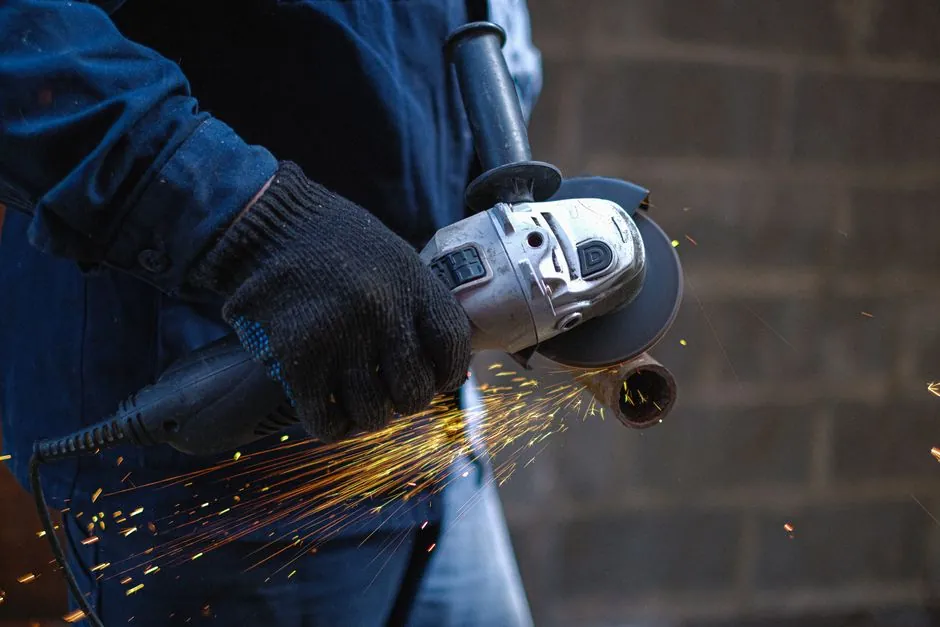
Chinese abrasive shipments, ranging from iron silicate blast media to resin-bonded grinding wheels, made up the majority of global supply chains in 2025, and 2026 buyers should expect the same volume curve, with order books anchored on factory audit, grain spec, and bonded-abrasive hardness windows rather than headline price [S1][S5].
Working numbers that repeat across multiple 2026 sourcing guides: 7-15 days for sample turnaround, 15-30 days for bulk production after sample approval, 30 days for ocean freight to most US/EU ports, and USD 300-600 for a single-day on-site third-party audit in Guangdong or Zhejiang [S1][S2][S6].
Factory or Broker: The First Filter
Step one in any 2026 China abrasive buy is the unannounced factory audit, because roughly half of "Manufacturer" badges on Alibaba and Made-in-China belong to trading companies running from commercial offices, not converting lines [S1].
An auditor checks four operational layers: business license and environmental permits, payroll and active employee ID records, converting/die-cutting machinery and warehouse square footage, and a live production run captured on the shop floor [S1]. For buyers who cannot fund a USD 300-600 third-party visit, a live, unannounced video walkthrough of the production line, raw-material warehouse, and packing zone during local working hours is a low-cost alternative that still surfaces most shell-company red flags [S1]. Trading companies are not categorically bad; top-tier consolidators outperform small factories on multi-category MOQs, so the goal is transparency, not exclusion [S1].
Abrasive Categories, Grain Types, and What Spec Actually Matters
Chinese suppliers ship four families that account for most industrial orders: coated abrasives (sandpaper, flap discs, fibre discs), bonded abrasives (resin-bonded grinding wheels, cut-off wheels, vitrified sticks), steel/iron shot and grit for blast rooms, and superabrasive products (diamond and CBN wheels), each with its own grain and binder discipline [S1][S3][S5].
Two rolls of nominal P80 from different mills can cut at completely different rates if the backing weight, open-vs-closed coat, and anti-loading stearate differ, so a written spec sheet listing grain, FEPA/ISO grit grade, backing weight in g/m², and bond type is non-negotiable before PO [S1].
Operating speed must be matched to ISO 525 and ANSI B7.1 markings, and a stamp showing maximum RPM and the test date is a procurement checkpoint that catches a high share of field failures.
MOQ, Lead Time, and the Sample-to-Bulk Quality Drop
Lead time from approved sample to bulk carton: 15-30 days for stock-spec coated goods, 25-45 days for custom-spec or private-label coated goods, 30-60 days for resin-bonded wheels requiring mold setup and cure-cycle validation, and 20-35 days for cast steel shot after confirmation of sieve analysis [S1][S5]. The classic "sample was perfect, bulk was not" failure mode has three root causes: substitution of the grain (especially swapping brown fused alumina for off-grade or recycled material in coated belts), thinning the backing weight (A-weight substituted for C-weight on a belt line), and skipping the in-process Dynamic Balance test on bonded wheels above 80 mm diameter [S1].
Inspection, Standards, and the Documents That Hold Up in Disputes
Pre-shipment inspection (PSI) on 100% of abrasive orders is a baseline, not a luxury, because cutting performance, RPM marking, and stearate coverage cannot be audited by photo [S1][S2].
Standards to require on the Certificate of Conformance (CoC): FEPA 42/43 or ISO 6344 for coated abrasive grit grade, ANSI B7.1 for grinding wheel safety markings (RPM, date, manufacturer code, bond type), ISO 525 for bonded wheel designations, GB/T 2485 for cut-off wheels exported under China origin, and REACH/RoHS documentation when the destination is the EU [S1][S2]. For iron/steel blast media, the procurement data point is hardness on the Rockwell C scale (typically 40-65 HRC for steel grit, 40-50 HRC for steel shot) and sieve analysis per ISO 11125, both of which should appear on the mill test certificate [S5]. Moisture content of steel grit above 0.5% by weight will clog blast pots and trigger corrosion in shipping containers, so a sealed-container inspection before stuffing is worth its own line item [S5].
Who Should Source from China, and Who Should Not
Buyers ordering full-container loads of stock-spec coated abrasives, resin-bonded cut-off wheels, and steel blast media with stable SKUs are the right fit for direct-from-China sourcing in 2026, because the unit savings cover the third-party audit and still net out positive [S1][S5].
Buyers who should not go direct include anyone shipping mixed small-lot trial orders under 1,000 USD per SKU, anyone specifying non-standard or custom-engineered wheels that require a running R&D dialog, and anyone whose end customer enforces a single-country-of-origin policy (US federal Buy American, EU defence contracts, certain automotive OEM lists), since the China+1 strategy exists specifically to de-risk these accounts [S2]. A practical China+1 corridor in this segment is Vietnam for coated belts and India for vitrified grinding wheels, with qualification timelines of 6-12 months once a second source is locked [S2].
Sourcing Channels: Direct Factory, Agent, or One-Stop Partner
A sourcing agent or trading company with consolidated abrasive expertise, such as the one-stop industrial procurement model described by Goldyize Sourcing, is the better fit for buyers placing USD 5k-50k in mixed-category orders, since the agent absorbs MOQ fragmentation and reworks QC reports across multiple factories [S7]. Platforms ranked in 2026 guides as the main discovery layer are Alibaba (largest SKU, paid Gold Supplier verification), Global Sources (higher entry bar, more OEM-capable factories), Made-in-China (good for smaller MOQ), and 1688.com (cheapest unit, but Chinese-language only and no trade assurance) [S4].
Comparison: Factory Direct vs. Sourcing Agent vs. One-Stop Partner
Selection criteria for the three main China abrasive sourcing channels, against the four decision variables that matter most to industrial buyers: [S1]
Unit price: Factory Direct (lowest, 8-20% below agent), Sourcing Agent (mid, 5-12% markup), One-Stop Partner (highest, 10-25% markup, offset by category breadth). MOQ flexibility: Factory Direct (strict, 1,000+ sheets baseline), Sourcing Agent (moderate, can consolidate mixed categories), One-Stop Partner (highest, fragmentation absorbed internally). QC and dispute handling: Factory Direct (buyer's responsibility, needs third-party audit), Sourcing Agent (agent-mediated, mixed reliability), One-Stop Partner (in-house QC team, single point of accountability). Best fit by order size: Factory Direct (USD 20k+ per shipment), Sourcing Agent (USD 5k-50k), One-Stop Partner (USD 2k-100k, multi-category) [S1][S2][S7].
Trackable Signals to Watch Through Q4 2026
Three nodes worth monitoring: GB/T 2485-2024 enforcement dates for cut-off wheel markings, which some Chinese mills have not yet fully implemented and which a pre-shipment RPM/marking check can catch; the 2026 EU REACH SVHC candidate list update (typically published in January and July), since several anti-loading stearates and phenolic resin modifiers are flagged in some years; and any change to US Section 301 tariff lines covering HS code 6805 (abrasive powder and grain) and 6804 (millstones, grinding wheels), which has moved the landed-cost math twice since 2024 [S1][S2].
For buyers running a parallel industrial spec library, the same factory-verification discipline that protects a coated-abrasive line also applies to flow and pressure instrumentation, where China-origin sourcing is growing under stricter IEC 60079 and ATEX 2014/34/EU documentation demands, as mapped on the pressure transmitter and industrial valve reference pages.
Related analysis: Bench Scale Selection for Port Logistics: Capacity, IP, and Hazardous-Area Spec Map.