
China produced more than 100,000 metric tons of molybdenum in 2025, more than double Chile's output, and continues to anchor global supply chains for ferromolybdenum, molybdenum oxide powder, and refined metal products [S6].
For B2B buyers in stainless steel, nickel-based alloy, and refractory metal fabrication, Chinese producers offer a combined mix of mining scale, oxide and powder conversion, and mill finishing, with major clusters in Luoyang, Chengdu, and Inner Mongolia [S1][S2].
Why China Dominates Molybdenum Supply
China's lead is structural, not seasonal. The country runs both primary mines and large by-product circuits from copper operations, and supplies both the domestic Chinese steel sector and export markets through the major Busan, Tianjin, and CIF Japan corridors [S3][S4].
Concentrate pricing inside China is the main global reference. In mid-September 2024, 45% to 50% Mo concentrate was heard traded at RMB3,760 to RMB3,795 per metric ton unit, and a single Long Yu Molybdenum Industry tender on 23 April 2024 at RMB3,750 to RMB3,800/mtu moved the global oxide spot price by roughly $1/lb Mo overnight [S3].
The 2024 Asian trade share underscores the gravity of this hub. S&P Global Commodity Insights tracked about 78% of global moly oxide powder volumes in-warehouse Busan, Tianjin, or CIF Japan, while Europe accounted for only 2,850 metric tons in the same period, equivalent to about 10% of global stainless steel output and down from nearly a quarter in 2010 [S3].
Main Product Forms Buyers Source from China
Industrial buyers typically specify one of four forms, each with its own specification envelope: molybdenum ore and concentrate, technical molybdenum oxide powder (MoO3), ferromolybdenum (FeMo), and refined metal products including mill products and powder [S3][S4].
Concentrate is the upstream feed, generally sold on a metric ton unit (mtu) basis where one mtu equals 10 kg of contained Mo. Molybdenum oxide powder is the most-traded mid-stream product; in 2024 its spot price ranged from a 1 February low of $19.175/lb Mo to a 14 June high of $24.125/lb Mo, well below the 2023 peak of roughly $40/lb Mo [S3].
Ferromolybdenum and downstream powders feed stainless steel, full alloy steel, and nickel-based alloy melts, with end uses spanning pressure transmitter diaphragms, industrial valve trims, and flow meter wetted parts that demand corrosion resistance at temperature. The major Chinese producers split across these forms, with names like China Molybdenum Co., Ltd. (3993.HK), Zijin Mining, Luming Molybdenum Mining, Luoyang Combat Tungsten & Molybdenum, and Chengdu Jinchun Metallic Materials covering the value chain from concentrate to high-purity powder [S2][S5].
Selecting a Chinese Supplier: Decision Criteria

Buyers should evaluate Chinese suppliers against four concrete criteria: purity and assay, capacity and consistency, certification coverage, and export logistics maturity. Each maps to a verifiable document or data point rather than a marketing claim [S1][S2].
For molybdenum powder and sheet, the key technical KPIs are Mo content, residual metallic impurities, particle size distribution, and the availability of mill test certificates (MTC) to EN 10204 3.1.
On capacity, Chinese sheet manufacturers in the 2025 cohort report an aggregated annual capacity measured in thousands of metric tons, with multi-furnace, multi-rolling-mill configurations and at least one ISO 9001 quality system in place at the leading suppliers [S1]. Powder makers such as Chengdu Jinchun and SaiShu Technology emphasize controlled particle size distribution and customized material solutions, which matters for press-and-sinter and thermal spray applications [S2].
A useful side-by-side view for procurement teams:
Concentrate / oxide powder: lowest cost per unit Mo, widest Chinese supplier base, suited to stainless steel mills and traders with their own conversion; main risk is assay drift and lot-to-lot moisture variance.
Ferromolybdenum: standard 60% to 65% Mo grade, sized for direct ladle addition in alloy steel and stainless melts, supplied by both integrated miners and dedicated FeMo smelters; main risk is residual Cu and Sn in the FeMo briquette.
Refined metal powder and mill products: highest specification ceiling (purity, particle size, surface finish), supplied by Chengdu Jinchun, Luoyang Combat Tungsten & Molybdenum, and similar specialty processors; main risk is longer lead time and higher minimum order quantities [S1][S2].
Price Benchmarks, Trade Flows, and Risk Signals
Three trade signals deserve a buyer's attention in 2026. First, the Asian-versus-European volume split is heavily tilted to Asia, with about 78% of tracked moly oxide powder volumes routed through Busan, Tianjin, and CIF Japan in 2024; European spot activity that year totaled only 2,850 t, equivalent to roughly 10% of global stainless steel output, and that share is structural rather than cyclical [S3].
Second, Indian import duty reform changed the regional landscape. India scrapped its 2.5% import duty on molybdenum products in July 2024, and although 2024 year-to-date Indian volumes reached only about 244 t (roughly 2% of tracked global volumes), the duty cut is the most concrete policy signal in this market over the past two years [S3].
Third, Chinese export data for molybdenum ore show a deliberately modest outbound share. In 2024, China held 5.35% of total global molybdenum ore exports, ranking as the 6th largest exporter; the rest of Chinese concentrate is absorbed by domestic converters, which is why the Chinese import price band of $21.40 to $21.50/lb Mo tracked by S&P Global Commodity Insights in mid-September 2024 acts as a near-arb for the rest of the world [S3][S7].
Quality, Certification, and Specification Discipline
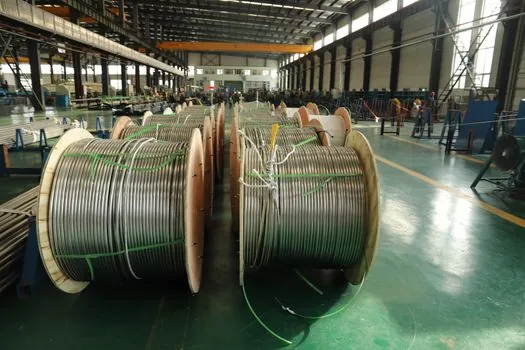
Buyers who treat molybdenum as a specification-driven commodity rather than a commodity-driven purchase get fewer surprises. The minimum documentation pack should include an assay certificate aligned with the IMOA Assaying Procedure Guidelines, an ISO 9001 quality system certificate at the producing site, and for export to Europe, REACH registration coverage through the MoConsortium (MoCon) [S4].
For steel and alloy applications, the relevant product standards remain ASTM and EN/ISO grade designations for FeMo, while high-purity Mo metal powder and mill products are commonly supplied against ASTM B386 (molybdenum plate, sheet, and foil) and ASTM B387 (molybdenum wire, rod, and bar). Buyers should pin the standard revision and acceptance criteria on the purchase order rather than on the supplier's brochure [S1].
Process industries that fabricate corrosion-resistant components, including linear guide rails for clean-room machinery, crossed roller guide carriages for precision equipment, and pressure sensor housings, should request lot-level traceable MTCs so that each heat can be linked back to the mine and converter, the same discipline used for stainless 316L and alloy C276 [S4].
Who Should, and Should Not, Source Molybdenum from China
Chinese molybdenum sourcing fits stainless steel mills, alloy steelmakers, FeMo traders, refractory metal fabricators, and PM parts makers that need scale, multiple qualified suppliers, and competitive landed cost. It is less appropriate for buyers who need a single named mine source for full chain-of-custody, who require REACH-registered substance dossiers outside the MoConsortium, or who need small lot sizes with short lead times from Western warehouses [S1][S4].
The most direct parallel is vanadium, where Chinese producers also dominate the upstream and a comparable spec-first discipline applies, as outlined in the Sourcing Vanadium from China: Spec Map for 2026 Industrial Buyers reference. For powder buyers, the same logic behind defense-grade alloy selection, where atomization method, particle distribution, and lot traceability drive the buy, applies, and is covered in the Defense Metal Powder Selection: Alloy, Atomization, Spec Map guide.
Limitations, Failure Modes, and Contract Safeguards
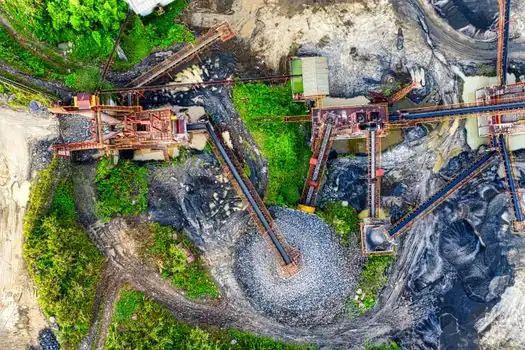
The most common failure mode in molybdenum sourcing is specification drift between the contract and the delivered lot, especially on Mo content, residual Cu/Sn, and moisture in concentrate. A second is currency and policy exposure, since the Chinese reference price is set in RMB per mtu and the international benchmark is set in USD per lb Mo, and the gap between them is a tradable spread that has compressed and widened several times in the past three years [S3].
Contract safeguards that have held up in 2024 and 2025 trade include pricing the Mo content separately from the FeMo or oxide premium, pegging assay acceptance to an independent umpire lab, defining the basis of delivery (in-warehouse Busan, CIF, FOB Tianjin) on the same Incoterms reference, and capping penalty thresholds for Cu, P, S, and C on a per-heat basis. Buyers who need predictable supply for tool steel, die steel, or Ni-based alloy production should also pre-qualify at least two Chinese suppliers and maintain safety stock equivalent to at least one shipping cycle from Tianjin [S1][S2][S3].
Two trackable signals to watch over the next two quarters: the next Long Yu Molybdenum Industry tender price, which historically has moved the global spot price within a day, and any further changes to Indian or Southeast Asian import duties, since the July 2024 Indian duty cut was the most concrete policy shift in this market and a similar move elsewhere would reroute spot trade volumes away from the Busan-Tianjin corridor [S3].