Electrolyte is roughly 10-15% of a lithium-ion cell's bill of materials by mass but drives most of the ionic-conductivity and SEI-formation behaviour, so procurement choices here cascade into cycle life and rate capability [S1]. The 2026 procurement question is no longer "where to source LiPF6", it is which salt-solvent blend matches the chosen cathode, and which sulfuric acid grade clears the metals and chloride ceiling your incoming-QC enforces [S2].
Three reference frames matter for a working buyer: the cell-chemistry stack (LFP vs NMC vs sodium-ion), the acid-grade-and-UN-number matrix (UN 1830, UN 2796, UN 1831), and the supplier-tier question (direct cell-maker allocation vs distributor spot). Getting any of the three wrong shows up either on the formation-cycle data or at the receiving dock [S1][S2].
Cell chemistry sets the electrolyte spec, not the other way around
LFP cells pull the bulk of 2026 cell-maker allocation because of 6,000+ cycle life, lower thermal-runaway risk, and cost per kWh, but LFP still needs a LiPF6 salt in a carbonate blend (typically EC:EMC:DMC) tuned for high-temperature SEI stability [S1]. NMC cells demand a tighter water-content ceiling (often below 20 ppm) and frequently add LiFSI or LiPO2F2 as a conductivity and high-voltage additive, which shifts procurement toward dual-salt RFQs and additive masterbatches rather than a single LiPF6 drum [S1]. Sodium-ion cells, the third 2026 entrant, run on NaPF6 or NaClO4 in similar carbonate solvents, and the salt supply chain is thinner: a buyer who treats NaPF6 as a drop-in for LiPF6 will wait on allocation.
The procurement consequence is that the RFQ must declare the cathode and the voltage window before the solvent ratio is fixed. A 4.2 V upper-cutoff NMC cell needs oxidation-stable solvents (FEC, VC additives) that an LFP RFQ at 3.65 V does not. Specifying the solvent ratio without the voltage window is the single most common cause of a 2-3 month requote loop in 2026 [S1].
Sulfuric acid grade, UN number, and CoA: three different decisions in one PO
Lead-acid battery electrolyte (roughly 33-37% H2SO4) ships under UN 2796 (acid at or below 51%), while concentrated technical acid at 93-98% H2SO4 ships under UN 1830, and oleum (20-65% free SO3) ships under UN 1831, all three flagged as IMDG and DOT 49 CFR Class 8 corrosive dangerous goods [S2]. A buyer who writes "sulfuric acid" on the PO without the concentration window is buying ambiguity: the same supplier will quote two different UN numbers, two different container types, and a 3-10x price spread between a fertilizer-grade and an electronic-grade acid at the same nominal 98% assay [S2].
The CoA parameters that actually matter for a battery-electrolyte buyer are chloride (typical ceiling 5 ppm to keep 316L stainless free of pitting), iron (below ~10 ppm for high-purity cells), color (APHA), and assay tolerance, none of which appear on a one-line "98% H2SO4" line item [S2]. The procurement lesson is to pin the impurity ceiling on the RFQ, not on the PO, because by the time the QC lab rejects a 24-MT ISO tank at 35 ppm chloride, the freight and demurrage bill is already accruing [S2].
Materials of construction and container choice are part of the spec
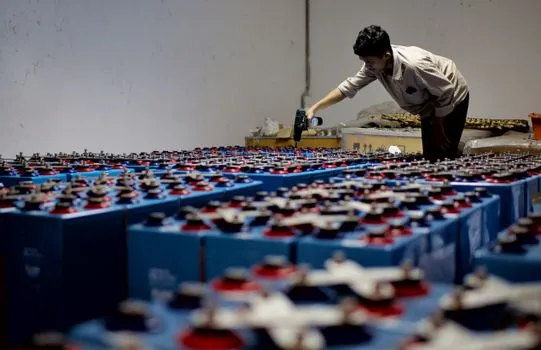
Battery-grade dilute acid (30-40%) is normally handled in HDPE drums, lined IBCs, or 316L stainless for transfer, while 93-98% technical acid is shipped in passivated carbon-steel ISO tanks because the concentrated acid passivates carbon steel but will pitting-attack 316L if chloride spikes above the passivation threshold [S2]. Oleum demands pressure-rated dedicated tanks and heated lines, which is why a buyer who tries to consolidate oleum into a standard ISO tank discovers the equipment limit the hard way [S2].
For the electrolyte salt side, LiPF6 is moisture-sensitive to single-digit ppm and ships in stainless or aluminium cylinders with vacuum or inert-gas blanket; a buyer who accepts LiPF6 in HDPE drums is accepting water ingress and a hydrolyzed batch on arrival. Container choice is therefore a procurement variable, not a logistics afterthought, and should sit on the RFQ beside assay and moisture [S1].
Supplier tier and allocation: the supply-chain reality behind the spec
2026 supply-chain volatility in lithium carbonate and LiPF6 means a buyer without a direct Tier 1 cell-maker or salt-producer relationship is buying on the spot market, where lead times stretch and price moves with smelter rates and sulfur, not with the published commodity index [S1][S2]. Successful BESS and cell-factory procurement now hinges on supplier relationships that bundle cell, salt, and acid allocation, reducing the risk of a single-node stranding that takes a whole line down [S1].
For the acid side, the analog is direct ties to smelter-acid producers (often copper smelters running byproduct H2SO4) rather than trading houses, because smelter acid swings with copper output and sulfur prices in ways a one-line PO cannot hedge [S2]. The trade-off is volume commitment: smelters prefer 5-10 kt annual offtake, which excludes small buyers and pushes them to distributors at a 10-20% premium. The spec the buyer writes must fit that tier choice, not the other way around [S2].
Criteria comparison: salt vs acid on the four decision axes that actually fail

Across the four decision axes that drive real procurement failure, LiPF6 salt and sulfuric acid diverge predictably: (1) moisture/water ceiling, salt is sub-20 ppm and acid is concentration-driven with separate metals ceilings; (2) transport classification, salt is UN 3260 or UN 2924 depending on solvent, acid is UN 1830 / UN 2796 / UN 1831 by concentration; (3) container-MOC, salt is stainless or aluminium with inert blanket, acid is HDPE for dilute and passivated carbon steel for concentrated; (4) price volatility driver, salt tracks Li2CO3 and LiPF6 precursor markets, acid tracks copper smelter rates and sulfur [S1][S2]. A buyer who treats both as "wet chemicals on a one-line PO" pays for it in QC rejections and requote loops.
Who this procurement map is for, and who it is not
This map is for procurement engineers, cell-factory sourcing leads, and BESS integrators writing 2026 RFQs for LiPF6/LiFSI salt, carbonate solvents, or sulfuric acid for lead-acid electrolyte, where a CoA-driven spec and a UN-number check sit on the critical path [S1][S2]. It is not for electrolyte-formulation chemists deciding between FEC and VC additive ratios, not for gigafactory process engineers tuning formation cycling, and not for lab-scale cell R&D buying 1-kg research-grade bottles from a catalogue. The downstream engineering decisions belong to a different document; the procurement decisions belong here.
Standards, sourcing traceability, and what the 2026 RFQ has to pin down
Industry guidance for BESS procurement aligns with the U.S. DOE FEMP BESS Procurement Checklist, and electrolyte buyers should expect supplier disclosure of cell-maker tier (Tier 1 vs Tier 2), UN-number-correct CoAs, and impurity ceilings written into the contract, not negotiated after delivery [S1]. For sulfuric acid, the 2026 RFQ should pin UN number, assay window, chloride and iron ceilings, color (APHA), container MOC, and lead time, because these six fields decide whether the incoming-QC pass rate holds or collapses [S2].
Trackable signals into late 2026: LiPF6 supply tightness tied to lithium-carbonate spot price, and any tightening of chloride ceilings on battery-grade H2SO4 as lead-acid electrolyte spec drift in EV auxiliary batteries pushes impurity limits lower.
Spec-level background on the components involved: linear guide, crossed roller guide, and pressure transmitter.
For related coverage, see Battery Pack Process Control: 2026 Instrumentation Spec Map.