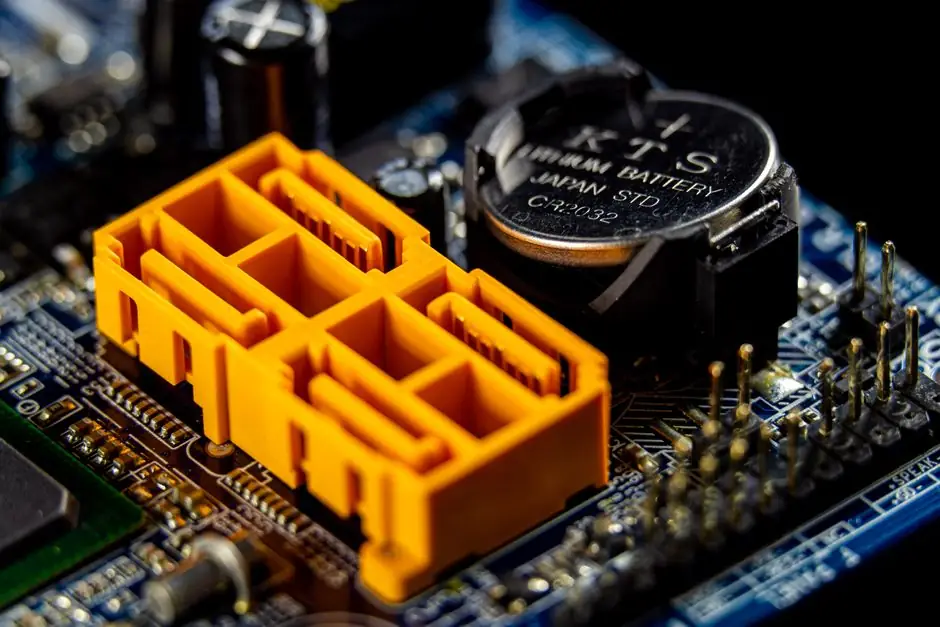
China is the single largest supply source for lithium-ion battery separators, with the bulk of microporous polyolefin film, ceramic-coated film, and glass-fibre roll goods produced in Guangdong, Jiangsu, and Zhejiang, the same three provinces that house the country's cell-pack assembly base [S1][S5].
Specifying a separator is no longer just a polymer choice: a 93.5% US tariff on Chinese graphite (effective January 2025) ripples through the anode supply that sits on one side of every separator, and total landed cost on Chinese battery components has risen as much as 69% since that date, so buyers must now qualify the separator, the anode coating, and the ceramic layer as separate tariff line items [S2]. Lithium battery exports from China passed 420 billion RMB in 2025, with energy-storage products up 38.7% year-over-year and H1 2026 overseas storage orders up another 45.3% [S1], which keeps separator demand structurally tight for 2026 sourcing runs.
Main Separator Families and the Specs That Drive Selection
Three polymer families cover the majority of separator orders from Chinese factories: monolayer polypropylene (PP), monolayer polyethylene (PE), and PP/PE/PP trilayer film, all produced as microporous membranes by a stretch-and-anneal or wet-process route [S4]. The trilayer PP/PE/PP is built around a PE core associated with thermal-shutdown behaviour when cell temperature reaches the PE melting range, while ceramic-coated PE or PP film adds an inorganic surface layer (typically Al2O3 or boehmite) for wettability and high-temperature dimensional stability [S4]. Glass-fibre separators (Whatman GF/A, GF/B, GF/C grade equivalents) are thicker, hold more electrolyte, and are used mainly in lab coin cells and supercapacitor stacks where high uptake matters more than stack energy density [S4].
Typical commercial polyolefin separator grades for lithium-ion production sit in a 12-25 µm thickness range, with porosity commonly 35-50% and Gurley air-permeability values between roughly 100-400 s/100 mL depending on the grade; lab-grade films such as the 25 µm monolayer PP films in the Celgard 2400 and 2500 families are the reference point most Chinese producers benchmark against, although equivalent families vary in pore structure even at the same nominal thickness [S4]. Buyers asking for a generic "25 µm PP" should always demand a data sheet listing thickness, porosity, Gurley, puncture strength, and MD/TD shrinkage at 90-120 °C, since those values drive cell-level behaviour more than the polymer name.
Cell Format, Electrolyte, and Stack Pressure Constraints
Separator choice must be matched to cell format, electrolyte chemistry, and applied stack pressure rather than picked from a generic catalog. In CR2032 coin cells, 16-25 µm PP or PP/PE/PP is the standard starting point and needs to be cut to a disc slightly smaller than the electrode to avoid internal-edge contact with the can; in pouch cells the same film is cut oversized, because the separator must overlap the electrode edge to prevent lithium plating at the perimeter [S4]. Cylindrical prototypes (18650, 21700) usually use a single wound PP/PE/PP separator with controlled tension to control stack compression, and that compression target typically sits in the 0.5-2.0 MPa range for graphite/NMC jellyrolls, depending on the manufacturer [S4].
Electrolyte coupling matters: carbonate-based LiPF6 systems are fully compatible with standard polyolefins, but ether-based, ionic-liquid, and high-voltage (>4.4 V vs Li/Li+) chemistries may demand ceramic-coated film or alternative substrates to suppress oxidative degradation and dendrite penetration [S4]. Glass-fibre separators are often picked when the cell design needs high electrolyte uptake and fast wetting, but they are not a direct proxy for production polyolefin films and will distort cycle-life data because of their higher thickness (typically 250-675 µm) and far higher electrolyte inventory per unit area [S4].
Supplier Clusters, MOQ, and Documentation Baseline
The supplier base is geographically concentrated, with the densest cluster in the Pearl River Delta (Shenzhen, Dongguan, Huizhou) for ceramic-coated and PE/PP film, plus a second cluster in Suzhou and Changzhou in Jiangsu for wet-process PE separators, and a third in Zhejiang for glass-fibre and specialty nonwovens [S1][S5]. For OEM buyers the typical MOQ is one full roll (typically 1000-3000 m depending on grade and width), with sampling runs of 5-50 m offered at higher per-square-metre pricing; first-production lots at 500-2000 m are commonly negotiated by domestic trading companies, which typically add 18-32% on top of the factory price compared with 3-6% from a local sourcing agent [S1].
Documentation is non-negotiable for any cross-border shipment. Lithium-ion cells and batteries, whether standalone (UN 3480), packed with equipment (UN 3481), or contained in equipment (UN 3481), all require a valid UN38.3 test report, an MSDS aligned to the destination market (GHS, REACH for Europe, HCS for the US), and a sea-transport appraisal or air waybill approval; missing UN38.3 alone accounts for roughly 58% of port detentions on Chinese battery shipments [S1][S5]. The same three documents are now also required by the integrated battery-materials suppliers that ship separator plus cathode and electrolyte as a single kit: the materials are released only after in-house lab validation of first-cycle coulombic efficiency and capacity retention, since the same nominal NMC powder can deliver anywhere from 92% to 98% first-cycle efficiency depending on trace impurities at the ppm level [S3].
Tariff and Trade-Compliance Overlays for 2026
The trade-compliance picture for 2026 has moved well beyond a single HS code. Effective January 2025, the US imposed a 93.5% tariff on Chinese graphite (the dominant anode material that physically contacts the separator in every cell), and a 30% baseline tariff on most Chinese-origin battery components sits alongside 50% steel and copper tariffs that affect separator coating machinery and battery-pack housings; the net effect has been up to 69% landed-cost inflation on US-bound battery packs since January 2025 [S2]. Section 301 measures also cover finished cells, packs, and key raw materials, so the separator, ceramic coating slurry, and any PVDF binder used in ceramic-coating formulations must be classified on separate commercial-invoice lines to avoid stacking tariffs onto the wrong line [S2].
For European buyers, REACH registration of the separator polymer and any ceramic surface treatment is required for any shipment above 1 tonne per year per substance, and a separate SDS in the local language is required for downstream handling; Australia and North America follow UN38.3 plus IATA DGR for air freight and IMDG for sea freight, with sodium-ion cells now treated as a distinct classification under newer IATA provisions that need to be checked before booking [S5]. Buyers who do not pin down tariff classification, country-of-origin, and FEOC compliance (the US regulation that changes the eligibility of Chinese components for federal-funded projects in 2026) at the RFQ stage routinely see container detentions of 2-6 weeks and re-classification penalties [S2].
Verification Workflow: Audit, Sample Test, and Production Sign-Off
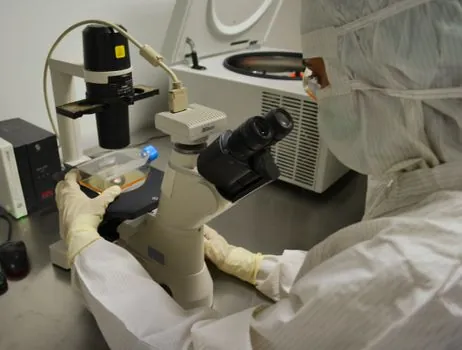
The on-the-ground verification sequence for a Chinese separator supplier has five non-skippable steps: (1) confirm the factory's business licence scope includes battery separator production (not just trading), (2) audit the cleanroom or film-line ISO certification and check that the roll-to-roll coating line is in-house rather than toll-processed, (3) pull a 5-10 m reference sample and run it through thickness, porosity, Gurley, puncture strength, and 120 °C MD/TD shrinkage in your own lab against a reference such as Celgard 2500 [S4], (4) request a 50-200 m pilot run under the actual stack pressure and electrolyte of the target cell, not a generic cell build, and (5) lock the QC plan (AQL, sampling rate, certificate of analysis format) before the first production PO is released. Case studies from Chinese sourcing agents repeatedly show that the two failure modes that surface within weeks of delivery are inflated capacity labelling on the datasheet and second-hand material repackaged as new, both of which can be screened only with third-party lab testing, not paperwork [S1][S6].
For OEM buyers who already handle finished cell assembly, the same QC chain can be applied through a battery pack process control map that links separator incoming inspection to electrode coating dry-room humidity and stack-pressure setpoints, since a separator that meets spec on the roll can still fail in-cell if upstream moisture or compression drifts. Adjacent buying decisions, such as cathode material sourcing from China and the battery pack quality standards map, should be run in parallel so the separator's first-cycle wetting and long-cycle interface behaviour are validated against the same lot of cathode and electrolyte rather than three different incoming batches.
Limitations, Failure Modes, and Sourcing Pitfalls
Chinese separator supply has three structural limits that no quote sheet will tell you about. First, the wet-process PE lines in Jiangsu run tighter on average thickness tolerance (typically ±2 µm) than dry-process PP lines, but their lead time in peak season (Q2-Q3) stretches to 8-12 weeks because the same lines feed the major domestic cell makers. Second, ceramic-coated film performance depends heavily on the coating slurry and the binder (commonly PVDF or acrylic latex); two nominally identical 12 µm PE + ceramic-coated films from different suppliers can deliver a 30-50 °C difference in thermal shrinkage onset, so the data sheet's "ceramic-coated" line item is not a specification. Third, glass-fibre separators are imported into China in many cases (the main global producers are outside the PRC), so asking a Chinese trading company for "Chinese-made glass fibre" without a real factory audit will frequently return a relabelled imported roll [S4].
For lab-scale users, the same risk applies at smaller volume: coin-cell case, separator, and current-collector foil kits sold as bundles on Chinese B2B platforms are convenient but rarely come with traceable lot numbers for the separator, which makes publication-grade cycling data hard to defend. The pragmatic workaround is to order separator film directly from a known mill and pair it with a coin-cell hardware kit that carries its own batch certificate, so each cell's components are individually traceable. This is consistent with the battery cell production line design map for any pilot line scaling from lab to pre-production.
Trackable signals for the next sourcing cycle: whether the 93.5% Chinese graphite tariff is extended or partially rolled back in late 2026 (it would shift demand for ceramic-coated separators versus plain polyolefin), whether any major Chinese separator maker publicly files for a foreign listing that would expose capacity figures (CATL- and BYD-tier suppliers remain the bellwether), and whether the new IATA sodium-ion provisions are extended to cover separators shipped standalone rather than only as part of a cell.
The underlying component specifications are covered under cyclone separator, linear guide, and steam separator.