
Made-in-China.com's 2026 Epoxy Resin product list pulls Diamond Member and Audited Suppliers from Jinan, Hebei, and Shandong, with listed price bands running US$2.00–2.80 per kilogram on craft-grade resin and US$100.00–670.00 per piece on FRP pipe and tube SKUs [S1][S4][S7].
The publicly visible supplier pool in mid-2026 spans generalist B2B platforms (Made-in-China.com, Alibaba.com), chemical directories (ChemicalBook, ChemNet), and dedicated compounders such as Epolab (established 1975) covering electronic, electric, composite, coating, adhesive/sealant, thermal interface, and specialty ink applications [S1][S2][S5]. Buyers sourcing on grade — E-12 solid, E-44 liquid, n-epoxy intermediate, or finished FRP tubing — should confirm epoxy equivalent weight, viscosity, and packaging before requesting quotes.
Supplier Channels and Platform Tier Differences
Made-in-China.com lists 2026 Epoxy Resin entries with Diamond Member and Audited Supplier badges, separating factory-trading hybrids from audited factories, with related search terms such as "Casting Resin," "Epoxy Glue," and "Polyester Powder Coating" appearing as cross-sell anchors [S1].
Alibaba.com's 2026 listings for craft-grade 3:1 epoxy+resin kits target DIY and resin-art buyers, with US shipping as the default delivery filter — useful for small-batch craft but not representative of industrial procurement volumes [S2]. ChemNet functions as a chemical-focused directory (Zibo Saibo Import & Export Co., Ltd. listed for n-epoxy resin, address Zhangdian District, Zibo, zip 255000) where supplier entries surface CAS, EINECS, and molecular-formula metadata rather than live SKU pricing [S3]. Epolab's site positions itself as a custom-formulation compounder with 50 years of operating history and an explicit product split across Epoxy Compounds for Electronic / Electric / Composite / Coating applications, plus Epoxy Adhesive/Sealants and Thermal Interface Materials [S5]. For broader synthetic resin context, these channels handle the full liquid-and-solid grade spread, from BPA-epichlorohydrin derivatives to formulated systems.
Grade and Spec Snapshot: E-12, E-44, n-Epoxy, FRP
ChemicalBook's 2026 E-12 (solid epoxy resin) supplier page lists two member companies offering 99% purity in 25 kg / 5 kg / 1 kg packs (one) and 500 g pack (second), with epoxy equivalent typically in the 700–900 g/eq range for solid grades in this class [S6].
E-44 is the workhorse liquid BPA-epoxy grade, with ChemicalBook's 2026 "E-44 Epoxy Resin Manufacturers" entry framing it as a bulk-procurement search term and tagging manufacturer profiles under that label rather than as a separate product code [S9]. Epoxy resin pipe and tube SKUs (Hebei Yingnai Environmental Protection Technology Co., Ltd., pultruded epoxy-fiberglass round tubes, US$100.00 per meter MOQ) overlap with resin sand line process outputs where the same resin system is used as a binder in foundry molds and as a matrix in cured-in-place piping [S7]. For n-epoxy (Novolac-type multifunctional) intermediates, ChemNet 2026 lists Zibo Saibo Import & Export Co., Ltd. as the visible supplier on the directory, and these grades are the upstream feed for high-temperature-cure laminates and electronic encapsulants [S3].
Price Bands, MOQ, and Incoterm Reality
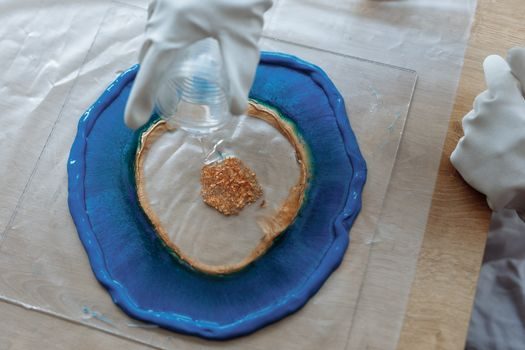
Made-in-China.com's 2026 Epoxy Resin entry shows Qinmu Biotechnology (Jinan) Co., Ltd. offering 1 kg MOQ at US$2.00–2.80, with Diamond Member status — useful for sample-stage qualification but not reflective of container-load pricing [S1].
Industrial pipe and tube SKUs run on dramatically different economics: Beijing Red Sun Technology Co., Ltd. lists Epoxy Resin Pipes at US$2.00–50.00 per 100 pieces MOQ, while Jinan Mech Piping Technology Co., Ltd. anchors the high end at US$0.00–670.00 per 32 tons MOQ — a spread that reflects epoxy-resin-versus-pipe-component pricing, not resin alone [S4]. Epolab does not publish list prices and routes inquiries through a contact form, consistent with a custom-formulation compounder model rather than a spot-resin distributor [S5]. The Wuhan Jiye Chemical Co., Ltd. entry (ChemicalBook CB54804742, tel 13545234822, China, ProdList count 664) is the single visible supplier on the "Epoxy resin manufacturer" landing page with no public price — also consistent with bulk direct-sale norms [S8]. For E-12, the smaller pack sizes (500 g, 1 kg, 5 kg) on ChemicalBook 2026 listings are lab/R&D samples, not production runs, and full-batch pricing requires an RFQ [S6].
Who This Supplier Map Fits — and Who It Doesn't
The 2026 Made-in-China.com + ChemicalBook + ChemNet map fits procurement engineers, coatings formulators, and electrical-encapsulant buyers who need documented CAS, epoxy equivalent, and viscosity data, and who can absorb China-origin container-load logistics and Audited-Supplier verification cost [S1][S6].
It does not fit buyers needing reactive-flame-retardant grades with full UL 94 Yellow Card traceability on every lot, nor those whose specs require pre-qualified aerospace or nuclear-grade resin on a single CoA — those paths run through dedicated compounders (Hexion, Olin, Nippon Steel Chemical, Momentive) not represented in the 2026 platform scrapes [S1][S5]. The map is also weak on Western distributors: Epolab ships globally but does not publish a regional warehouse list, and Alibaba's 2026 craft-grade 3:1 listings are US-shipped consumer SKUs that do not transfer to industrial tank-truck procurement [S2][S5]. The upstream feedstock picture — BPA, epichlorohydrin, and downstream end-use splits — is mapped in this epoxy resin upstream and downstream industry map for buyers who need the full chain context.
Selection Criteria: Matching Grade, MOQ, and Audit Tier

Three decision criteria dominate the 2026 shortlist: (1) grade and form (E-12 solid vs E-44 liquid vs n-epoxy Novolac vs formulated system), (2) MOQ and pack size (1 kg sample vs 25 kg drum vs 32-ton bulk), and (3) audit/verification tier (Diamond Member Audited vs directory-only entry vs direct-compounder RFQ) [S1][S5][S6].
On grade, E-12 (99% purity, 25 kg / 5 kg / 1 kg on ChemicalBook 2026) is the standard solid resin for powder-coating and electrical-insulation varnish; E-44 is the default liquid BPA-epoxy for casting, tooling, and adhesive compounding; n-epoxy (ChemNet 2026, Zibo Saibo) routes into high-temperature laminates; and finished FRP tubes (US$100.00/meter, Hebei Yingnai, pultruded epoxy-fiberglass) sit downstream as cured-matrix artifacts [S3][S6][S7]. On audit tier, Made-in-China.com's Diamond Member + Audited Supplier badges in the 2026 listings give a baseline of business-license and on-site audit, but they are not a substitute for epoxy-equivalent and viscosity CoA on each lot [S1]. On MOQ, the gap between 1 kg sample (Qinmu Biotechnology) and 32 tons (Jinan Mech Piping Technology) spans five orders of magnitude, so qualification-sample and production-run should be negotiated as separate lines with the same supplier [S1][S4]. The aramid fiber supply map for 2026 uses a similar MOQ-and-audit structure, and the sourcing mechanics transfer directly to epoxy resin.
Limitations, Failure Modes, and What to Verify
The visible 2026 supplier data carries three known limitations: platform scrapes only show suppliers who pay for directory placement, Epolab and similar compounders hide pricing behind RFQ, and ChemicalBook's "E-44 Epoxy Resin Manufacturers" entry is a search-term landing page rather than a SKU [S5][S6][S9].
Common failure modes on this grade: solid E-12 with too-low epoxy equivalent (below ~700 g/eq) causes under-cure and brittleness in powder coating; liquid E-44 with high viscosity at room temperature (>15 Pa·s) signals advanced storage age and risks exotherm during large-mass castings; n-epoxy Novolac with high free-epichlorohydrin residual (>10 ppm per supplier CoA) fails electrical-insulation partial-discharge tests. Buyers should require the epoxy-equivalent value, viscosity at 25 °C, hydrolysable chlorine, and color (Gardner or APHA) on every CoA, and should test DSC cure behavior on first article before releasing the production lot. Buyers also cross-checking resin quality on cured parts sometimes use an insulation resistance tester on wound coils, though the instrument choice belongs to electrical QA rather than resin procurement.
Sourcing Workflow and Trackable Signals

A defensible 2026 workflow: (1) lock grade and epoxy-equivalent window from your formulation, (2) shortlist 3–5 Diamond-Member Audited Suppliers on Made-in-China.com plus one custom compounder such as Epolab, (3) request CoA + 1 kg sample from each, (4) qualify via DSC and viscosity bench data, (5) negotiate 25 kg drum or bulk pricing with audit-trail escrow [S1][S5].
Trackable signals for the next procurement cycle: ChemicalBook's 2026 directory refresh on E-12 and E-44 supplier counts (member-company rosters at /ProdSupplierGNCB61140523_EN.htm and /ProdSupplierGNCB214060043_EN.htm) and any new Diamond Member audits published on Made-in-China.com's Epoxy Resin Pipes landing [S4][S6][S9]. For buyers also evaluating mechanical-site equipment tied to cured-resin maintenance, this urban excavator spec map covers the parallel capital-equipment side, and this pneumatic actuator market 2026 spec map covers the actuator tier adjacent to resin-mold pneumatic circuits.