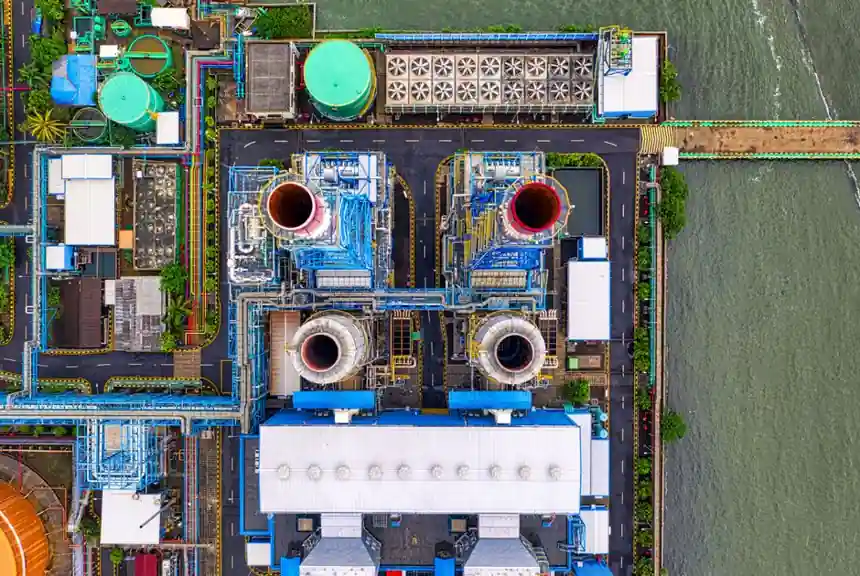
Industrial refrigeration procurement in 2026 is no longer a quote-comparison exercise: post-pandemic supply chain diversification, EU F-gas restrictions, and U.S.-China tariff flux have pushed buyers toward multi-region supplier networks and documented total cost of ownership (TCO) instead of headline unit price [S1][S2].
Across food processing, cold storage, pharmaceutical storage, and concrete cooling, the same compressor, chiller, or plate heat exchanger decision now carries regulatory weight (CE, ISO 9001, RoHS in the EU; UL, ETL, NSF, DOE, ERP in North America) and operational weight, since a 24/7 line losing refrigeration in July is measured in thousands of dollars per hour of downtime [S2][S3].
What the 2026 Trade Environment Does to a Refrigeration RFQ
Post-pandemic procurement teams have moved from single-source dependencies to multi-regional supplier networks, evaluating manufacturers on global footprint, not just catalog price [S1]. A direct consequence: suppliers that operate production bases in more than one region (for example, China plus Germany, with distribution hubs in destination markets) can offset U.S.-China tariff exposure and EU carbon border tax exposure through localized assembly or free-trade-zone routing [S1].
Regulatory pressure has equal weight. EU F-gas restrictions continue to compress the allowable refrigerant envelope, while buyers specifying into North American retail and foodservice now have to clear UL, ETL, NSF, DOE, and ERP compliance gates before equipment can be installed, financed, or insured [S1][S3]. A practical effect: a quote that omits the certification list is incomplete, and an RFQ template that does not enumerate CE, ISO 9001, RoHS, UL, ETL, NSF, DOE, and ERP up front will produce apples-to-oranges bids [S3].
Cost vs Value: Why the Cheapest Quote Is Usually the Most Expensive
GEA-published procurement case data, drawn from roughly $180,000 in cumulative spending on compressors, chillers, and heat exchangers over a 6-year tracking window, shows that identical spec sheets from different vendors diverge sharply once installation, maintenance, and downtime risk are priced in [S2]. A refurbished centrifugal separator originally designed for 15 years of continuous service, for example, will not perform to the same curve if it enters service already 8 years old, and a 15% performance shortfall on a chiller that costs $50,000 to buy can impose roughly $5,700 in extra annual energy cost, which exceeds the upfront savings within 5 years [S2].
Warranty depth tracks the same gap: a new plate heat exchanger typically ships with a 2-year warranty on materials and workmanship, whereas a refurbished unit often carries 90 days, meaning the buyer is effectively underwriting mid-life overhaul risk [S2]. In one cited case, a "same specs" refurbished chiller failed within 6 months because the compressor had been run hard for 12 years prior, turning an apparent saving into a $9,000 net premium [S2]. For 24/7 cold storage, food processing, and pharmaceutical storage facilities, the predictable, serviceable tier is therefore the rational pick even when it is not the cheapest line item [S2].
Three Procurement Scenarios and the Equipment That Fits Each
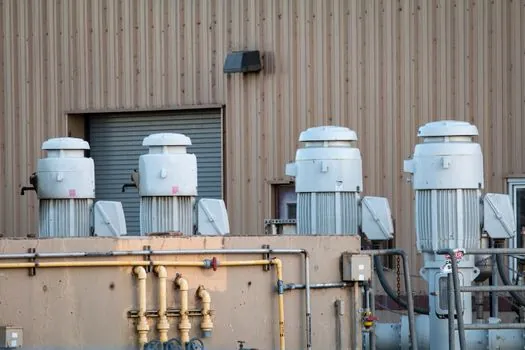
Scenario A applies when upfront budget is capped and some operational risk is tolerable: target a documented fallback plan (redundant capacity, signed local service agreement, line-item reserve for mid-life repair) before signing, and require vendors to disclose remaining service life, performance guarantee terms, and warranty length in writing [S2]. Scenario B applies to facilities that run continuously and need maximum uptime: the procurement question shifts from cooling capacity to remote monitoring, vibration analytics, and oil-degradation alerts, since proactive screw-compressor telemetry can flag failure precursors weeks in advance [S2]. Scenario C, the general-purpose plant with moderate flexibility, is the case where a mid-tier commercial refrigeration package (fan cooling or direct cooling matched to walk-in cooler or freezer duty) usually fits, provided the RFQ enforces CE, UL/ETL, NSF, and DOE/ERP compliance on every line [S2][S3].
The technology choice inside each scenario is itself a spec question: fan cooling suits most restaurants, supermarkets, and convenience stores where heat load is moderate and defrost cycles can be scheduled, while direct cooling typically wins in bakeries, butcher rooms, and food factories that need tighter temperature stability and lower air-borne dehydration [S3]. Refrigerant selection, compressor type (hermetic, semi-hermetic, screw), and defrost strategy (off-cycle, electric, hot gas) are not interchangeable and should be locked in the RFQ rather than negotiated after award.
Capacity, Footprint, and Layout: The Numbers Buyers Get Wrong
Walk-in cooler and freezer sizing is the single most common procurement error: buyers routinely order by static shelf count instead of by daily product throughput, peak pull-down load, and door-opening duty cycle [S3]. For a commercial refrigerator or freezer, the right capacity calculation is driven by business size, product mix, and daily operating hours, not by an equipment vendor's standard SKU list [S3].
Structural choices also matter: single-door, double-door, and multi-door commercial refrigerators deliver different storage organization, footprint efficiency, and energy consumption, and the comparison is not linear with capacity [S3]. For a food-service operation, the difference between a display freezer and a storage freezer is a different decision tree altogether, since visibility, merchandising, and door-open frequency drive compressor runtime and therefore 12-month operating cost [S3].
OEM vs ODM, and What "Made in China" Actually Means in 2026

Importing commercial refrigerators from China in 2026 is a structured workflow, not a single PO: minimum order quantity (MOQ), certification list, container loading plan, and shipping cost need to be lined up before the first deposit, and the OEM/ODM distinction must be explicit in the contract so that branding, mold cost, and tooling ownership do not become a year-two dispute [S3]. For an industrial buyer, the same logic applies to sourcing industrial chillers, plate ice machines, or concrete cooling systems from Chinese suppliers: production capacity in ton-hours, refrigerant type, compressor brand, and controller platform are all negotiable line items, and a refusal to enumerate them in writing is a red flag [S1][S3].
Mitigation against tariff and trade-barrier exposure is now part of the RFQ, not an afterthought. Buyers should ask whether the supplier runs localized assembly, holds free-trade-zone inventory, or can ship from a non-China production base; a "no" on all three usually means the supplier has no answer to a tariff shock, and the buyer's landed cost will move with every policy change [S1]. Related operational buys that share the same multi-region logic are covered in Sourcing Industrial Refrigeration From China: A Spec-First Buyer's Map and in adjacent process-equipment categories like Heat Exchanger Types and Industrial Applications: A Spec-Driven Selection Map, where plate heat exchanger selection and ammonia screw compressor duty follow the same TCO discipline.
Certification Matrix and Compliance Gates by Region
A complete 2026 compliance list for commercial and industrial refrigeration equipment covers CE (EU conformity), ISO 9001 (quality management), and RoHS (hazardous-substance restriction) for European delivery, plus UL (Underwriters Laboratories safety), ETL (Intertek-tested), NSF (sanitation for food contact), DOE (U.S. Department of Energy efficiency), and ERP (EU energy-related products) for North American and EU sale respectively [S1][S3]. A buyer-facing check: every quote should map each certification to a specific model number and a certificate ID, not a generic "CE compliant" line, since customs, insurers, and end customers will ask for the document trail at commissioning, not at quote stage [S1][S3].
F-gas compliance, refrigerant type disclosure, and leak-check protocol are now core RFQ fields for European sites, while U.S. buyers should expect EPA SNAP alignment and, for hydrocarbon refrigerants, ignition-source mitigation in the equipment layout [S1]. Omitting any of these is a procurement error that surfaces months after delivery, when the unit cannot be commissioned without retrofit.
Total Cost of Ownership: The Five-Year Lens

A defensible TCO calculation for an industrial refrigeration asset includes upfront purchase, installation, commissioning, energy cost over a defined duty cycle, scheduled maintenance, expected mid-life overhaul, and end-of-life disposal or refrigerant recovery, summed over a 5 to 15-year service window depending on the equipment class [S2]. For a screw compressor, plate heat exchanger, or chiller, the energy line typically dominates: a 15% efficiency shortfall, for example, compounds into a five-figure penalty over a decade of continuous operation and exceeds the entire upfront saving of a lower-tier bid [S2].
Remote monitoring and predictive maintenance contracts change that math: a GEA-style screw compressor with vibration and oil analytics can shift maintenance from calendar-based to condition-based, cutting unplanned downtime and extending mean time between overhaul, but only if the buyer commits to the data integration and the service-level agreement [S2]. Without that commitment, the monitoring hardware is a stranded cost.
Risk Register: What Buyers Are Underwriting in 2026
Four risks dominate an industrial refrigeration RFQ in 2026: tariff and trade-barrier exposure on imported equipment, refrigerant regulatory risk (especially F-gas and EPA SNAP alignment), uptime risk on 24/7 lines measured in thousands of dollars per hour, and warranty-gap risk on refurbished or relabeled equipment [S1][S2]. Each is mitigable: tariff risk via multi-region suppliers and free-trade-zone inventory, refrigerant risk via locked specifications and a written compliance matrix, uptime risk via remote monitoring and redundant capacity, and warranty-gap risk via service-life disclosure and written performance guarantees [S1][S2][S3].
The disciplined RFQ in 2026 therefore asks for capacity, refrigerant, compressor type, controller platform, certification list with certificate IDs, warranty length, performance guarantee, remote-monitoring option, and multi-region shipping, in that order, before price. The cheapest quote that cannot answer all nine questions is not a valid benchmark.
For broader context on how this RFQ discipline connects to adjacent B2B equipment categories, see Industrial Fastener Procurement: 2026 Spec-First Buyer's Map and Industrial Wireless Module Sizing and Selection Guide, where the same TCO and certification-first logic applies to spec-driven industrial buying.
Spec-level background on the components involved: linear guide, crossed roller guide, and industrial adhesive.