
China produces the dominant share of global cold chain hardware for fresh produce, frozen food, and biopharma, with the country accounting for roughly 60% of world vegetable output, 30% of fruit and meat, and 40% of eggs and aquatic products, moving approximately 400 million tons of agricultural goods in circulation annually [S1].
The same review notes that biopharmaceutical cold-chain monitoring in China is still maturing, and that the 2016 Shandong vaccine incident (illegally distributed vaccines worth nearly $90 million across 24 provinces) exposed systemic gaps in temperature-controlled transport and traceability [S1]. For an industrial buyer in 2026, those legacy gaps define the qualification bar a Chinese supplier must clear before a PO is cut.
Cold chain equipment categories and the China supply map
Cold chain hardware splits into three buyer-facing families: primary production (insulated panels, refrigeration compressors, evaporator/cooler units, cold-room doors), logistics hardware (reefer containers, refrigerated trucks, phase-change material (PCM) boxes, data loggers), and last-mile or pharmaceutical kit (vaccine refrigerators, passive cold boxes, temperature monitors) [S6].
For buyers running cold chamber machine programmes alongside refrigerated storage, the same Qingdao, Dalian, and Guangdong clusters that build die-casting and aluminium-bronze cold-chamber cells also build industrial cold rooms and plate freezers, which simplifies combined sourcing trips. Pharmasource's cold-chain management guide flags that all cold-chain equipment and facilities require formal validation and qualification, including installation qualification (IQ), operational qualification (OQ), and performance qualification (PQ) thermal mapping, before any regulated load touches them [S9]. UNICEF's vaccine-focused procurement guidance further defines minimum prequalification (PQS) performance classes for compression and absorption refrigerators, freezers, and cold boxes used in immunization supply chains [S6].
Mandatory supplier qualification gates
Supplier verification in China must move past a business-license screenshot and into four hard gates, per the 15-part sourcing framework still used by quality engineers: business identity and ownership check, on-site factory audit, production-capacity review, and recent export-document review covering EU/UK/MENA shipments [S2][S5].
For medical-grade buyers, ISO 13485 adherence plus complete component traceability is now treated as a baseline, not a differentiator, and shortage of qualified secondary suppliers is the single most-cited supply risk in the 2026 medical device market context [S3]. The 2026 medical-device supply-chain analysis values the global medical devices market at USD 745.25 billion in 2025, projected to USD 797.19 billion in 2026 and USD 1.36 trillion by 2034 at a 6.97% CAGR, which is the demand pull behind why Chinese cold-chain OEMs are scaling ISO 13485 lines [S3]. Practical gate list buyers should run, in order: (1) verify the supplier on the National Medical Products Administration (NMPA) export whitelist if shipping to regulated markets, (2) audit for GDP-compliant temperature mapping capability, (3) confirm refrigerant type (R404A, R448A, R290, or CO2 transcritical) and GWP class against destination rules, and (4) demand a pre-shipment thermal-performance test report traceable to a named chamber serial number [S5][S9].
Selection criteria: reefer trucks, cold rooms, and pharma fridges

Cold chain equipment cannot be compared on a single spec line; the three main product types must be evaluated against different decision criteria, summarised below, with the data points the research supports. [S1]
Reefer trucks and refrigerated containers should be scored on compressor class (standalone diesel-Stirling vs. electric-driven), holdover time at ambient 30 °C, multi-temperature zone count, and telematics readiness (3G/4G gateway, ISO 10368 sensor interface). Cold rooms and walk-in freezers are scored on panel U-value (typically 0.18–0.24 W/m²·K for 100 mm PU panels), panel fire rating (PIR vs. PUR, B-s2,d0 vs. B-s3,d0), door cycle rating, and refrigerant type. Pharmaceutical refrigerators and ultra-low freezers are scored on holdover time at +43 °C ambient (PQS E003 performance class is a common reference), temperature uniformity (≤ ±1 °C at setpoint), and data-logger integration with central monitoring [S6][S9]. Cross-referencing the related sourcing briefs, the Cold Box Core Shooter Suppliers and Manufacturers: A 2026 Sourcing Map walkthrough uses the same dual-sourcing and on-site audit pattern that cold-chain buyers should adopt, since both rely on heavy capital equipment with long lead times. Buyers running mixed foundries and cold-room builds can also pull lessons from the gravity die casting machine selection for energy equipment piece on Chinese cluster sourcing, which covers how Qingdao and Guangdong suppliers package commissioning and spares.
Cost structure, MOQ, and lead-time reality in 2026
Connected Sourcing's 2025 China sourcing update notes that Chinese factories support everything from small-batch production to multi-million-unit orders, with competitive pricing and flexible MOQs, and that prototyping-to-mass-production speed is unmatched globally [S5]. That flexibility is real for cold-chain kit as well, but with hard caveats.
Container-load MOQs apply to insulated PU/PIR panels (typically a 20 GP minimum per thickness), refrigerated truck bodies (single-unit builds are common but reefer chassis are MOQ-1 with 30–60 day lead time), and pharmaceutical refrigerators (MOQ 5–20 units depending on temperature class). A 2026 buyer's risk register should price in four landmines: (1) tariff structure volatility on US/EU routes, which Connected Sourcing and Medtec both flag as an active cost line [S3][S5], (2) factory consolidation pressure that pushes non-leading OEM suppliers financially thin and threatens spare-parts continuity [S3], (3) refrigerant phase-out (R404A GWP > 2500 is restricted under F-Gas revision timelines in the EU), and (4) a single-source bottleneck on specialised polymers and micro-components for temperature controllers and data loggers [S3]. Mitigation tactics are mechanical: dual-source any compressor brand (Copeland, Bitzer, or domestic Hanbell/Refcomp), keep a second-qualification file warm on a backup supplier, and demand country-of-origin declaration plus HS code visibility on every shipping document [S3][S5].
QC cadence: pre-production, in-line, and pre-shipment
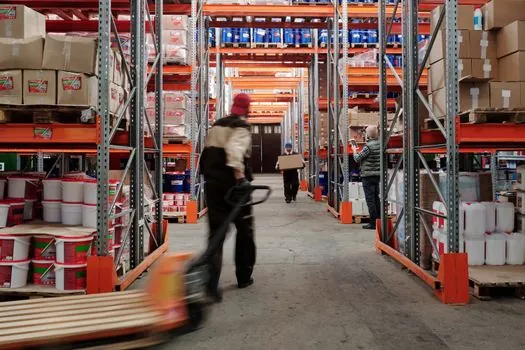
Quality Inspection's 15-part series still in use by quality engineers tells buyers to check quality early in the manufacturing cycle, always verify quality before shipment, and keep leverage over suppliers through structured follow-up rather than ad-hoc email [S2]. Cold-chain kit makes that cadence concrete.
Pre-production gate (before the first panel is cut): raw-material certificates for PU foam density (typically 38–42 kg/m³) and lambda value, stainless-steel grade for pharma-contact surfaces (304 vs. 316L), and copper-piping specification. In-line gate (during production, at 10–30% completion): panel cam-lock pull-test, door-cycle test at the rated cycle count, and compressor vacuum-hold test at 24 h. Pre-shipment gate (FAT, AQL 2.5 sampling for cosmetic, AQL 1.0 for functional): full thermal mapping run on at least one randomly selected unit from the lot, with a 24-hour temperature log at the rated ambient, and verification of all data-logger serial numbers against the bill of materials [S2][S6]. Pharmasource's cold-chain management guide underscores that equipment validation and qualification activities are both time-consuming and expensive, which means the FAT report is a contract artefact a buyer should own and archive, not a vendor courtesy [S9].
Who should source from China, and who should not
China is the right answer for buyers who need scale, cost, and clustering: fresh-produce cold rooms, reefer truck bodies, vaccine refrigerators, and insulated panels all have a deep Chinese supply base with documented export experience to EU, MENA, and ASEAN markets [S1][S5].
China is the wrong answer for buyers who cannot run a structured supplier-development programme. If a buyer's procurement team cannot physically audit, run an IQ/OQ/PQ, hold a dual-source file, or push back on a shipment with an AQL plan, the cost savings will be eaten by validation rework, customs holds, and field failures [S2][S3][S9]. UNICEF's procurement guidance is explicit that cold-chain equipment for vaccines is essential, and effective procurement is the difference between a working immunization programme and a public-health failure, which is why the same buyers typically run a Chinese supplier as a price-disciplined second source rather than a single point of supply [S6]. For a more general 2026 sourcing-risk frame, the Sourcing from China Guide 2026: Overcome Buyer Risks write-up covers supplier, QC, and shipping risks, though buyers should treat the linked piece as background on general tooling rather than as cold-chain-specific guidance.
Trackable signals for the next buying window

Three signals will mark the next 6–12 months of cold-chain sourcing out of China. First, NMPA and provincial filings on refrigerant transition timelines: any new acceptance of R290 (propane) in commercial cold rooms will reshape the Chinese OEM lineup, so buyers should track GB/T 9237 and related standard updates via NMPA notices. Second, the 2026 Medtec China exhibition floor (Shanghai, all autumn dates) is the live venue where ISO 13485 cold-chain OEMs typically unveil new pharma-grade SKUs, so a pre-registered visit and a list of audited factories are the cleanest way to compress supplier-development time [S3]. Third, watch exporter consolidation: the 2026 supply-chain analysis explicitly cites survival pressure on non-leading OEMs as a top-five risk, and any Chinese cold-chain OEM appearing in a merger or asset-transfer filing deserves a quick re-audit before the next PO is released [S3].
Spec-level background on the components involved: linear guide, and crossed roller guide.