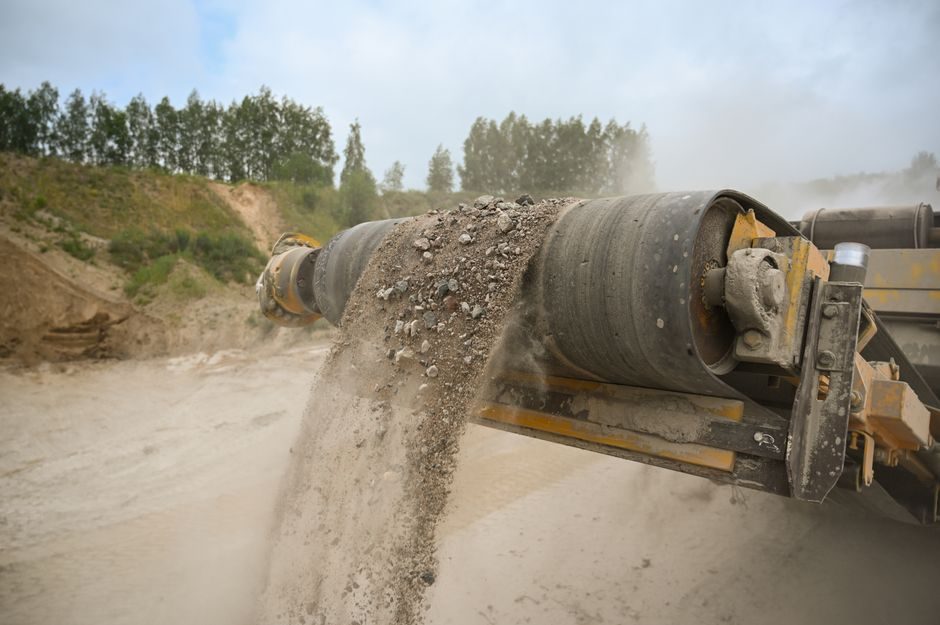
Chemical-shipment screw conveyors in 2026 are not generic augers — they are engineered units specified against material corrosivity, ATEX zone, and temperature envelope, with standard units rated for horizontal or inclined runs up to 30° and custom designs to 45°.
The vendor base has consolidated around three archetypes: UK/EU custom builders (Serpecon, CableConveyors), North American CEMA-standard shops (KWS), and Asian OEM/ODM capacity (Feipuda, Metasis, CableConveyors), each exposing different lead-time and certification profiles for chemical-handling work [S1][S2][S3][S5][S6].
Scope, Definition, and Governing Standards
A screw conveyor for chemical shipping is a rotating helical-flight trough or tube that meters, transfers, or elevates bulk chemical solids — powders, granules, flakes, lump-bearing prills — typically between a road tanker, ISO tank, FIBC discharger, reactor feed hopper, or a storage silo. The unit sits inside the broader screw pump family only by shared geometry; the duty here is solids handling, not fluid displacement. [S1]
European chemical plants default to ATEX 2014/34/EU for any unit in a zoned area and to the Pressure Equipment Directive for any conveyor that is part of a pressure or vacuum envelope, and CableConveyors explicitly designs custom units to both [S1]. In the UK, Serpecon additionally publishes DSEAR risk-assessment documentation as part of the conveyor manual, which is the operational layer that sits on top of the ATEX hardware certification [S2]. North American buyers will work to CEMA Standard 300/350 dimensions and tolerances, and KWS holds CEMA stock components to those dimensions for immediate shipment [S3].
Selection Criteria: Material, Temperature, Containment, Angle
CableConveyors publishes four explicit custom-engineering triggers that map almost perfectly onto chemical-shipping risk: extreme-temperature materials, highly corrosive materials, high-containment materials, and lumpy or agglomerated materials, plus pressure/vacuum envelope duty [S1]. The first three dominate the chemical-carrier decision tree.
For corrosion class, the standard menu is carbon steel with industrial coating, 304 stainless, 316 stainless, and high-alloy steels, with wear parts (flights, casings) optionally upgraded to abrasion-resistant steel or surface-coated [S1]. For angle, horizontal and inclined up to 30° is the routine envelope, and proper design extends that to 45°; above 30° a vertical screw elevator is the engineering-grade answer, not a tilted standard unit [S1]. For temperature, the OEM positions high- and low-temperature service as a custom-engineering scope item rather than a catalog option [S1].
For driver sizing on a chemical line, Serpecon's geared-motor catalogue runs 1.5 kW to 30 kW on its in-stock drive train, with centreless and centre-tube (shafted) frames at SC250 / SC600 and SCT250 / SCT600 sizes — a useful real-world envelope for solids transfer rather than a 200 kW bulk-handling line [S2]. Liners are stocked at 10 mm and 12 mm white or green, plus 12 mm and 15 mm duo red-and-white, which is the typical wear-management decision point for abrasive chemical solids [S2].
Who a Screw Conveyor Is — and Isn't — For

It is for: chemical shippers and tollers moving free-flowing to moderately cohesive powders (sodium-based salts, calcium chloride, fertilizer prills, plastic pellets, flake caustic) between tanker, sack line, and silo, where the duty is metered transfer, gentle handling, and enclosed containment [S1][S3]. The enclosed trough or tube plus controlled feed from a screw feeder or rotary valve is the structural reason enclosed screw units are specified for chemical shipping rather than open belt or drag conveyors [S1].
It is not for: highly cohesive, fluidizable, or stringy materials; severe abrasion with no allowance for liner replacement; or sanitary pharma duty where clean-in-place validation is the controlling document. CableConveyors does offer hygienic builds to food, dairy, and pharma standards, but for sterile API handling a dedicated contained-transfer system is the engineered choice, not a general-purpose screw unit [S1].
For a separate comparison of in-plant solids handling versus fluid handling, the screw pump reference distinguishes volumetric fluid displacement from bulk-solids conveyance — the geometry overlaps, but the engineering, sealing, and wear logic do not.
Comparison: Centreless vs Centre-Tube vs Shafted Screw
For chemical shipping, three screw architectures compete, and the right pick is driven by material and maintenance access rather than throughput alone. The table below lines up the options the 2026 vendor base actually sells and supports with in-stock spares [S2][S3].
Centreless (shaftless) spiral: a single helix welded to a centreless drive, suited to cohesive, sticky, or stringy chemical waste and to grit-classifier duty. Serpecon stocks the SC250–SC600 range as the canonical size band [S2]. Advantage: no central shaft to wrap around or foul. Disadvantage: limited to smaller diameters and lower tonnage per rpm than shafted units.
Centre-tube screw conveyor: a helixed flight running inside a fixed tube, with the material carried on the flight face. Stocked at SCT250–SCT600 by Serpecon [S2]. This is the standard enclosed transfer unit for chemical plants — easy to seal, easy to purge, and easy to fit intermediate discharges.
Shafted screw conveyor: the CEMA-standard heavy-duty geometry with a central pipe/shaft, end bearings, and intermediate hanger bearings every 8–10 ft typical. KWS builds these to CEMA dimensions and stocks the components for immediate shipment [S3]. For high-tonnage chemical shipping (e.g. mineral additives, fertilizer, soda ash), this is the default industrial workhorse, and KWS advertises 98.6% on-time delivery and 99.5% complaint-free shipments on this build class [S3].
Portable radial screw conveyors — Serpecon's SPRC300 / SPRC350 / SPRC400 RangeMaster — are the right answer for ship-to-silo transfer where the unit must swing under a discharge and stockpile to a radius, and they are available for both purchase and hire [S2].
Real Use Cases, Sourcing, and Lead-Time Signals

For a European chemical shipper, the practical 2026 path is a custom-built unit from a UK or EU manufacturer, sized against ATEX zone and PED category, with liner material selected from the published 10–15 mm stocked thicknesses [S1][S2]. For a North American bulk-chemical operator, a CEMA shafted unit with KWS-style six-step inspection and 48.3% early-shipment performance is the lowest-friction engineering path [S3]. For a high-volume Asian supply chain or an export-spec OEM, Chinese manufacturers — CableConveyors with 20 years in business, Feipuda in Jiaxing since 2012, and Metasis in Pune (India) — provide ODM and custom-engineered capacity for chemical-handling and environmental-protection duties [S1][S5][S6].
CableConveyors explicitly markets custom engineering for difficult installations, tricky materials, and complex processing needs, and states compliance with UK and European law including the ATEX directive and Pressure Equipment Directive [S1]. Feipuda positions itself as an environmental-protection technology supplier from the Jiaxing Economic and Technological Development Zone, founded in 2012, and ships screw conveyors, auger conveyors, and bucket elevators as its core product family [S5]. Metasis in Pune serves the Indian chemical and process market with a focus on accurate transfer design [S6].
The verifiable next node to track: a chemical-shipment buyer should request the OEM's ATEX 2014/34/EU certificate, the PED conformity assessment module, and the CEMA dimensional drawing set for any shafted unit, and confirm the 10 mm / 12 mm / 15 mm liner stock at order placement if abrasive wear is in scope. A working cross-reference for adjacent in-plant material-handling decisions is the roller conveyor selection logic, which covers the packaged-goods side of the same shipping line. For an analogous spec map on a different bulk-handling class, see the screw conveyor selection for e-commerce fulfillment lines reference, which covers the same screw geometry applied to non-chemical parcels and totes.