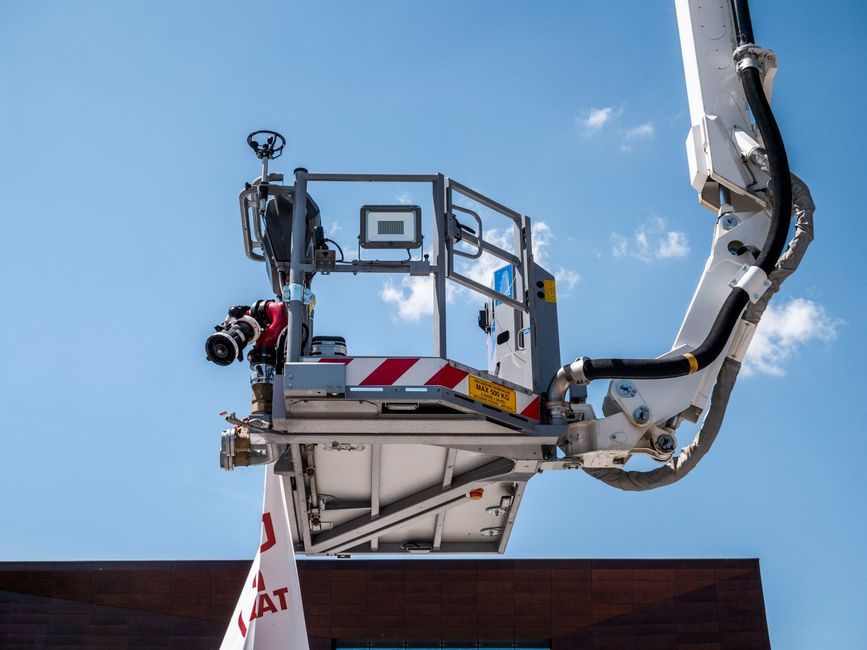
A concrete concrete pump truck selected for aerospace infrastructure — hangars, MRO bays, apron extensions, runway shoulder repairs — is constrained by reach geometry, pour-rate stability, and OEM documentation depth, not by raw boom length. Aerospace pours favor compact 38–45 m four- or five-section articulated booms with single-side outrigger support, because taxiway and hangar door clearances commonly cap boom footprint to under 9 m of lateral spread [S5][S8].
Where it fits: new terminal apron slabs, aircraft maintenance hangar foundations, vertical-extension hangar pads, and A380/B747-class heavy-stiffened slabs. Where it does NOT fit: open-cut highway or high-rise core pours, where 56 m+ vertical-boom machines dominate; or shotcrete-heavy tunnel or slope work, where separate trailer pump and concrete mixer truck trains remain standard [S7].
Selection criteria specific to aerospace placement
Aerospace concrete work runs against three binding constraints that general-spec buyers miss. First, output stability: apron and hangar slabs typically call for consistent 30–80 m³/h placement, not the 150 m³/h peaks used on dam pours, because rebar congestion and slab-thickness uniformity suffer from surge-driven pressure spikes [S5][S7]. Second, footprint: 38 m-class truck-mounted pumps are designed to operate on 3-axle chassis with one-side lateral support and an unfolding height of roughly 8.9 m, matching the door-restricted access of mid-size MRO hangars [S8]. Third, OEM parts traceability — the same criterion that gates aerospace seal selection under standards like EN 2795 — applies to wear-parts sourcing for any pump intended to log on airport-controlled work, with multiple Chinese OEMs offering factory-direct spare-parts channels through 2026 [S1].
For buyers running comparative sourcing, the relevant product bands collapse into three working classes: 38 m 3-axle truck-mounted pumps (Apron Class), 45 m 4-section truck-mounted pumps (Hangar Class), and 56 m+ 5- or 6-section booms reserved for wide-body assembly halls where taxiway-edge clearance is not the binding constraint [S5][S8].
Apron Class (38 m) vs Hangar Class (45 m) — a criteria-based comparison
The 38 m Apron Class — specified as compact 3-axle design, 4-arm placing boom, 8.9 m unfolding height, and one-side lateral outrigger support — fits narrow taxiway-edge pours and hangar door-restricted bays; it is the right pick when the site envelope is the binding constraint, not pour volume [S8]. The 45 m Hangar Class is widely offered on OEM catalogs in 2026 with 4-section articulated booms, supply capability cited at 1,500 PCS/month for popular models, and a chassis envelope that still works inside most MRO apron footprints [S5].
On four decision criteria, the comparison reads as follows. (1) Reach envelope: 45 m clears a typical 90 m wide hangar in a single-side setup; 38 m requires repositioning for the far third of the slab. (2) Outrigger footprint: both classes run single-side lateral support, but 38 m-class units hold the unfolding height below 9 m, the practical ceiling for standard 8 m hangar doors [S8]. (3) Pump-unit runtime rating: Hangar Class units are typically configured for sustained shift-length output monitoring with real-time diagnostics and alarm logging, a feature the Apron Class also advertises but in a lighter-duty package [S8]. (4) Spare-parts and traceability: both classes are supported by OEM-direct parts lines active in 2026, including factory channels marketing consistent-grade wear parts across multiple brand platforms [S1][S9].
Spec sheets collected from OEM listings in mid-2026 show controller features common to both classes: real-time working-data monitoring, alarm logging, and on-board diagnostics — all of which are useful when airport QA requires per-pour traceability rather than just a delivery ticket [S8].
Who this is for — and who should walk away
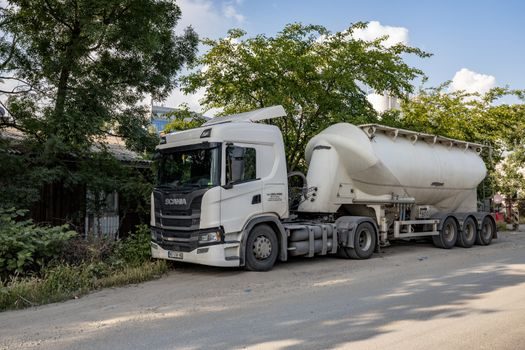
The Apron Class and Hangar Class trucks are built for: airport-authority civil works, MRO hangar expansions, military flight-line slab replacements, and aerospace-tier precast yards. They are not built for: long-distance trailer-pump line work exceeding 300 m horizontal run, high-pressure high-rise columns, or wet-mix shotcrete where the truck-mounted concrete pump needs a separate agitator feed and accelerator dosing system. Buyers who only need occasional pours under 50 m³/day are typically better served by a 38 m rental from a regional pumping contractor than a purchase order [S3][S4].
Regional pumping operators — Sacramento-area and US-Midwest concrete-pumping services in operation through 2026 — maintain fleets of boom and line pumps sized to the same 38–47 m band, which gives one-stop contractors a credible alternative to direct OEM purchase when airport security vetting of new equipment is a multi-month process [S3][S4].
Real use cases and standards linkage
Three concrete scenarios drive the 2026 aerospace demand picture. (a) Narrow-access taxiway shoulder repair, where 38 m 4-arm booms with 8.9 m unfolding height are the standard specified by airport-authority bid documents. (b) Wide-body MRO hangar slabs in the 8,000–12,000 m² range, where 45 m 4-section booms balance reach against chassis maneuverability inside a single apron-side set-up. (c) Apron extensions on active runways, where pour-window restrictions compress delivery into overnight blocks, favoring the kind of controller-level monitoring and alarm-logging the Apron and Hangar Class units advertise [S5][S7][S8].
Aerospace buyers should be aware that the pump itself is rarely the bottleneck on slab quality — mix-design control at the concrete mixer truck and aggregate conditioning dominate the durability outcome. For a parallel review of how a concrete mixer truck is sized for marine-grade delivery (a similar high-spec placement context), see this spec-driven comparison of marine concrete-delivery mixer sizing. Buyers evaluating wear-parts and seal selection on aerospace-grade equipment should cross-check the seal-grade bands discussed in FKM vs FFKM aerospace seal selection, because the same traceability-and-batch-cert logic that gates aerospace elastomer choice also gates wear-part acceptance for pumps logging on airport-controlled work.
Limitations, constraints, and failure modes
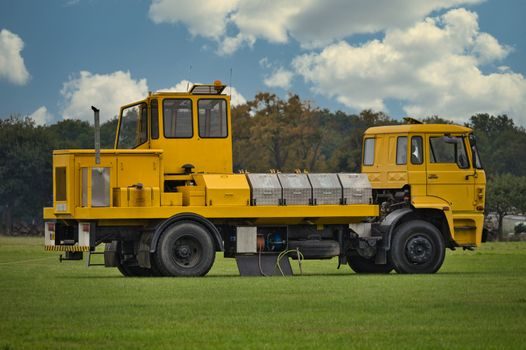
Three failure modes recur on aerospace-class pours. (1) Boom creep on long reach: a 45 m boom extended to full radius with a 50 m³/h sustained pour can lose roughly 0.2–0.4 m of tip height over a shift if the hydraulic counterbalance valves are not on a documented service interval — which is why OEM channels pushing factory-direct, brand-consistent spare parts emphasize valve kits, not just S-pipe wear parts [S1][S9]. (2) Surge-induced segregation at low flow: when the Apron Class 38 m unit is throttled to under 15 m³/h for rebar-congested zones, the operator must drop the pump into low-stroke mode to avoid aggregate packing, a control feature that not every mid-tier Chinese OEM unitizes in 2026 catalogs [S8]. (3) Outrigger-pad settlement on apron subgrade: single-side lateral support is only as good as the bearing capacity under the pad; airport QA typically requires a documented pad-bearing check before each pour, a procedural step that no OEM datasheet can substitute for [S8].
For buyers running fleet-level decisions, the practical 2026 constraint is supplier depth rather than machine specification: with multiple Chinese OEMs offering 38 m and 45 m truck-mounted pumps at OEM-direct pricing and 1,500 PCS/month supply capability on popular models, the gating decision is usually spare-parts logistics, not headline boom length [S1][S5][S7].
Sourcing levers and OEM landscape (2026)
Three sourcing channels dominate 2026 buyer flow for aerospace-class concrete pump trucks. (1) OEM-direct catalogs from Chinese manufacturers, with model coverage spanning 38 m 3-axle Apron Class through 45 m Hangar Class and beyond; pricing is typically quoted on FOB Shanghai or CN-port basis, with TT or LC payment terms and 1-unit MOQ for popular 45 m models at 1,500 PCS/month supply capability [S5]. (2) Brand-agnostic spare-parts suppliers — typified by SANF Group's 2026 positioning as a multi-brand, factory-direct parts channel — useful when buyers run mixed-fleet aerospace deployments and need wear-parts consistency across multiple pump brands [S1]. (3) Regional used-pump dealers and pumping contractors in North America and Europe, who keep refurbished 38–47 m boom and line-pump inventory with operator-bundled service; viable when the pour calendar does not justify a fresh OEM order [S3][S4][S9].
Cross-checked against 2026 OEM product pages, the controller specification language on Apron and Hangar Class units is consistent across suppliers: heavy-duty controller, monitor, real-time working-data display, diagnostics, alarm logging, and on-board service logging — features that map directly onto the per-pour traceability that airport QA usually demands [S7][S8].
Trackable next signals for buyers comparing offers on or after 2026-07-08: the 38 m 4-arm Apron Class spec sheet (3-axle, 8.9 m unfolding height, single-side outrigger, OEM controller with diagnostics) remains the most-cited narrow-access spec in mid-2026 OEM catalogs [S8]; the 45 m 4-section Hangar Class is the most-listed 2026 SKU on Chinese OEM storefronts at 1,500 PCS/month OEM supply [S5]; and brand-aggregated spare-parts channels with multi-OEM coverage continue to position themselves as the lower-friction route for buyers standardizing on aerospace-grade wear-parts documentation through 2026 [S1][S9].