ASTM's 2024–2026 special-cement revisions (C845/C845M-24, C1600/C1600M-25, C1960/C1960M-26) define the three families — expansive, rapid-hardening, and expansive-component systems — that plant engineers specify when ordinary Portland cannot survive the service environment [S1].
The decision is rarely about 28-day compressive strength. It hinges on the chemistry of exposure: sulphate-rich soils, chloride-bearing groundwater, elevated service temperatures, abrasion from bulk solids, and dimensional stability of large pours. The right specification ties the cement type to a named exposure condition, not to a brand [S3][S4].
Sulphate-Resisting and Low-C₃A Cements for Aggressive Soil and Water
ASTM C150 Type V (sulphate-resisting) and equivalent AASHTO M 85 Type V cements are specified for structures exposed to sulphate-rich groundwater, with C₃A content typically capped at 5 % for severe exposure and 8 % for moderate exposure [S3][S4].
Typical industrial applications include sewage-treatment aeration tanks, foundation mats in coastal plant sites, substructures under clarifiers, and basements where groundwater sulphate concentrations exceed 0.2 % by soil mass or 1,500 mg/L in water. Sulphate-resisting cement is also the default binder for canal linings, retaining walls, and chemical-plant secondary-containment slabs in coastal regions [S3]. For exposures where Type V is insufficient but stainless rebar is uneconomic, supplementary cementitious materials (SCMs) — Class F fly ash, slag, silica fume — are blended with Type II or V cement; the blended-cement family is governed by AASHTO M 240 (Types IS, IP, IT, IL) rather than M 85 [S4].
Rapid-Hardening and High-Early-Strength Cements for Plant Outage Windows
ASTM C1600/C1600M-25 covers rapid-hardening hydraulic cement designed to develop design strength in hours rather than days, making it the standard pick for plant turnaround work, emergency patch repairs, and grouting under vibrating equipment bases [S1].
Two chemistries dominate the C1600 family: calcium sulfoaluminate (CSA) based and rapid-hardening Portland variants. CSA-based cements can reach 40 MPa compressive strength within 24 hours and are commonly used where sustained-heat curing is impractical. Where ambient temperature falls below 10 °C, accelerators combined with Type III Portland (high-early-strength) or CSA blends are typically substituted. Engineers should note that C1600 rapid-hardening cements have higher heat of hydration than Type I/II Portland and require attention to thermal-stress cracking in mass placements above 0.5 m thickness.
Expansive and Shrinkage-Compensating Cements for Crack Control
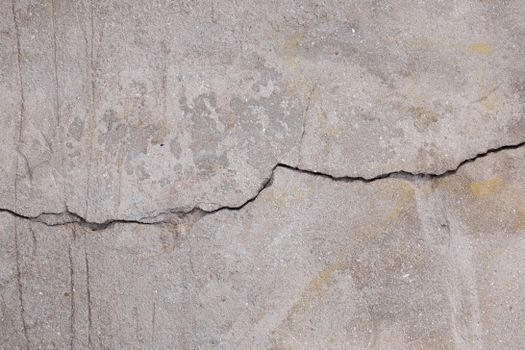
ASTM C845/C845M-24 covers expansive hydraulic cement used to compensate for drying shrinkage in restrained placements such as grouted machinery bases, post-tensioning anchor pockets, and large slab pours where shrinkage cracking would create serviceability problems [S1].
C1960/C1960M-26, a separate specification, governs expansive *components* (typically calcium-sulfoaluminate or Type K expansive clinkers) that are interground or blended with Portland at the mixer. The restrained expansion behaviour of these systems is quantified by ASTM C806-23, which measures expansion of expansive cement mortar under restrained conditions — a critical acceptance criterion for grouting applications where the cement must develop a calculated compressive stress against the restraining steel or substrate. Restraint expansion of 0.04–0.10 % at 28 days is typical for Type K shrinkage-compensating cement used in industrial grout.
Blended Cements, PLC, and the SCM Decision
Portland-limestone cement (PLC), covered by ASTM C595 and AASHTO M 240 Type IL, replaces a portion of clinker with limestone fines and is referenced in current U.S. cement standards guidance. infrastructure specifications and is referenced in NRMCA CIP 45 as a sustainable option that performs comparably to Type I/II Portland in most exposure classes [S5].
For chloride exposure — bridge decks, marine terminals, parking structures — ACI 318 exposure class C1 (corrosion) and C2 (corrosion + cyclic wet-dry) drive the maximum w/cm ratio and minimum supplementary cementitious material (SCM) replacement. A typical spec for a marine-exposed plant slab calls for Type II/V cement with 25–40 % slag replacement (AASHTO M 240 Type IS) and a maximum water-cementitious ratio of 0.40. Selection between blast-furnace slag (BFS), fly ash, and silica fume follows service temperature: silica fume is preferred where early-age strength and low permeability dominate, slag where long-term durability and lower heat of hydration are priorities, and Class F fly ash where alkali-silica reaction (ASR) mitigation is the controlling concern [S3][S4].
High-Alumina and Calcium-Sulfoaluminate Cements for Thermal and Refractory Service
High-alumina cement (HAC), historically used for refractory and high-temperature service up to 1,300 °C, undergoes strength regression at intermediate temperatures (20–400 °C) due to conversion of metastable phases; most industrial specifications have moved away from HAC for structural service and reserve it for refractory linings only [S3].
Calcium-sulfoaluminate (CSA) cements, falling under ASTM C1600, are now the preferred low-CO₂ alternative for rapid-hardening industrial applications. Type I Portland) and ability to reach 40 MPa in 6–24 hours make it attractive for both turnaround work and large slabs where thermal-stress cracking must be controlled. Blast-furnace slag cement, a blend of Portland clinker and slag, also sees wide industrial use in mass concrete pours and high-rise structures where low heat of hydration reduces thermal-stress cracking risk [S3]. For more on how cement selection interfaces with adjacent material decisions in process plants, see industrial ceramic refractory-lining guidance.
Selection Criteria and Standards Mapping
Six criteria drive cement selection for industrial facilities: exposure chemistry (sulphate, chloride, low pH), service temperature range, required strength gain rate, dimensional-stability requirements, mass-pour thermal management, and compatibility with reinforcing steel or post-tensioning strand. Matching each to a governing standard keeps the spec defensible. [S1]
Sulphate exposure maps to ASTM C150 Type V (or AASHTO M 85 Type V) with SCM blends per AASHTO M 240; chloride/marine exposure maps to ACI 318 Classes C1/C2 with M 240 Type IS or IP; rapid turnaround maps to ASTM C1600; shrinkage compensation maps to ASTM C845 with restrained expansion verified per C806; refractory service maps to calcium-aluminate cement (separate from Portland-CSA family). For abrasion-heavy service like mineral processing, the binder alone is rarely sufficient — see hot chamber die casting for energy equipment: selection spec map for adjacent wear-surface decisions, and where prefabricated elements enter the scope, concrete admixture selection for prefabricated construction covers the admixture side of the same decision.
Common Specification Pitfalls
Specifying by compressive-strength grade alone (e.g., "53-grade cement") rather than by ASTM/AASHTO type and exposure class is the most frequent error, and it leaves the spec open to substitution of an inappropriate binder. Specifiers should require submittal of mill certificates showing C₃A, C₃S, alkali content, and loss-on-ignition for Type V and Type II work. [S1]
Second, mixing ASTM C150 (Portland) and AASHTO M 240 (blended) requirements within the same spec without addressing interground addition compatibility produces borderline alkali-silica reaction (ASR) risk. ACI 318 and ASTM C1778-25 provide the modern framework for evaluating ASR risk and selecting combined cement-plus-SCM systems. Third, expansive cements (C845) require tight moisture control during curing — a 7-day wet cure is the typical minimum — and this is frequently underestimated in fast-track plant projects. Fourth, high-alumina cement must not be specified for structural service under ACI 318; modern codes have effectively removed HAC from the structural concrete menu in most U.S. jurisdictions.
Sourcing and Specification Documentation
For U.S. industrial work, the controlling documents are ASTM C150 / C595 / C845 / C1600, AASHTO M 85 / M 240, ACI 318 exposure classes, and (for Florida DOT or other state highway-spec interfaces) FDOT Section 346 — which restricts cement to Types I, II, II(MH), III, IV, V (AASHTO M 85) and IL, IP, IS, IT (AASHTO M 240) and explicitly prohibits mixing types or brands within a structural element without retesting [S4].
Mill-test reports should accompany each delivery, with C₃A, total alkali, and sulphate-resistance results reported against the spec. For international projects, EN 197-1 (common cements) and EN 15743 (supersulphated cement) cover the European equivalent framework. Cement selection intersects with admixture chemistry — water reducers, accelerators, air-entrainers — and a special cement spec that omits admixture compatibility testing risks set-time and air-content failures in the field. For plants where cement-bound surfaces interface with mechanical equipment, industrial adhesive and industrial borescope inspection of post-cure grout lines are downstream checks worth specifying.