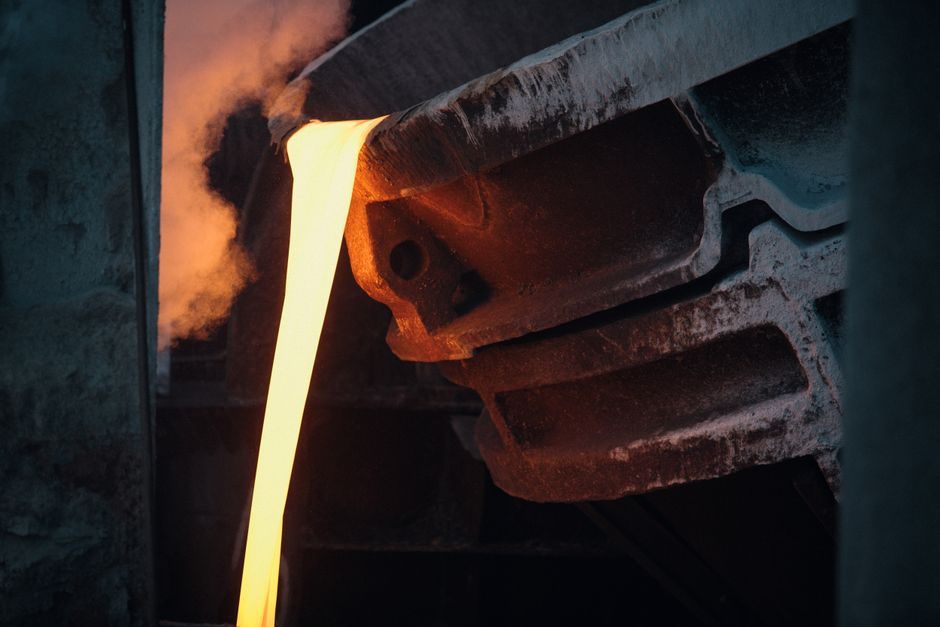
For zinc and lead alloy energy-product parts — terminal blocks, fuse bodies, small connector housings, luminaires, and battery hardware under roughly 100 mm projected area — a hot chamber die casting machine in the 16-180 t clamp window remains the correct economic choice, with hot-chamber hot-chamber die casting machine offerings from Chinese builders like Jiangmen Zhenli, HYBERS, and SHIMI spanning 20 t up to 180 t for zinc/lead work [S7][S9].
For aluminum or magnesium energy components where melt temperature exceeds ~420 °C and iron attack on the gooseneck is the binding constraint, the hot chamber class is the wrong tool and a cold chamber or vacuum machine must replace it [S6]. The selection mistake in the energy sector is not in the tonnage — it is in picking the wrong alloy/machine class pair, then trying to compensate with process tricks.
Why Hot Chamber Fits Most Zinc/Lead Energy Hardware
A hot chamber die casting machine keeps the metal inside an integrated furnace-and-injection system, so the shot is taken from molten metal already at temperature rather than from a ladled transfer, and that is exactly why cycle time on small zinc parts routinely drops to 30-90 s per shot in production [S6]. For energy-equipment parts this matters: the alloy is the alloy (Zn, Zn-Al, or Pb-Sn for solderable hardware), and the volume is small, so the bottleneck is shots/hour, not melt rate.
On the 2026 sourcing market, 20 t badge-makers are quoted at ~US$24,640 per piece (MOQ 1) and 130 t zinc/lead hot chamber units at US$43,100-52,800 per set (MOQ 1) from Jiangmen Zhenli, and 180 t auto hot chamber units in the same vendor's catalog for higher-volume zinc/lead work [S7]. A 25-ton class machine is also sold for SH-25 zinc work and similar small-format energy fittings [S3].
Tonnage and Clamp Force: Matching the Part, Not the Brochure
Hot chamber builders cluster their lines into roughly three bands: micro (16-25 t for badges, small terminals), mid (50-130 t for connector bodies, fuse hardware, small enclosures), and upper-mid (160-180 t for larger zinc structural pieces), with HYBERS publishing a 16-180 t hot chamber range alongside its 25-2500 t cold chamber line [S9]. The common selection error is to over-spec clamp force to be "safe," which just inflates machine cost and energy draw without changing part quality.
For a 700-ton aluminum job in the cold chamber class, the same vendor's catalog prices a 700 t cold chamber standard aluminum alloy die casting machine at US$126,560-156,000 per set (MOQ 1) — useful as a reference point for the price gap between classes and the cost of picking cold chamber when hot chamber would have done the job [S2].
Process Limits That Decide Hot Chamber vs Cold Chamber
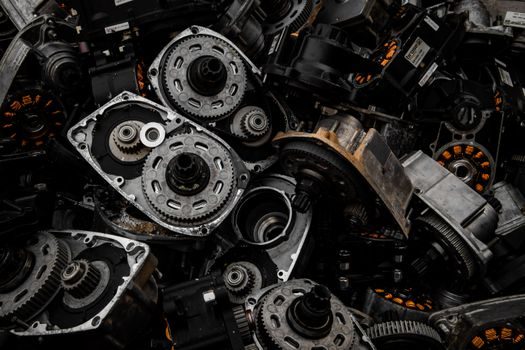
Hot chamber machines are limited to low-melting alloys — essentially zinc, zinc-aluminum, lead, tin, and magnesium in well-controlled setups — because the submerged gooseneck, plunger, and nozzle are continuously immersed in molten metal and are attacked by it above roughly 420 °C [S6]. Aluminum melts at ~660 °C and will dissolve a standard iron gooseneck in days; that is the structural reason hot chamber is excluded from aluminum energy castings.
Within the zinc envelope, a die casting machine in the hot chamber configuration gives better metal quality than a cold chamber on the same part because the alloy never contacts atmosphere between melt and shot — lower oxide inclusions, lower dross generation, and tighter shot-to-shot chemistry. For a battery connector or a fuse clip where conductivity and contact resistance are part of the spec, that is a real engineering benefit, not a marketing line.
Energy-Equipment Part Categories That Fit Hot Chamber
Energy equipment has a long tail of small, high-volume zinc and zinc-alloy parts that map cleanly to hot chamber: terminal blocks, junction box covers, small conduit fittings, fuse bodies and clips, switchgear sub-components, LED heat-sink-adjacent hardware, transformer small hardware, earthing clamps, and battery terminal / busbar hardware. The decision rule is alloy + projected area + cycle-time target: if all three are inside the hot chamber envelope, hot chamber wins on cost per part. [S3]
Where the part is aluminum (heat sinks, inverter housings, larger enclosures) or magnesium (lightweight battery enclosures, drone/UAV power components), the aluminum die casting machine class or a vacuum die casting machine becomes mandatory — and for lower-volume or thicker-section magnesium parts, a magnesium die casting machine is the dedicated class. Related coverage of hot chamber die casting machine selection for lighting fixtures uses the same alloy-vs-tonnage logic and is a useful cross-reference for fixtures-grade zinc hardware.
Selection Criteria Comparison: Hot Chamber vs Cold Chamber for Energy Parts
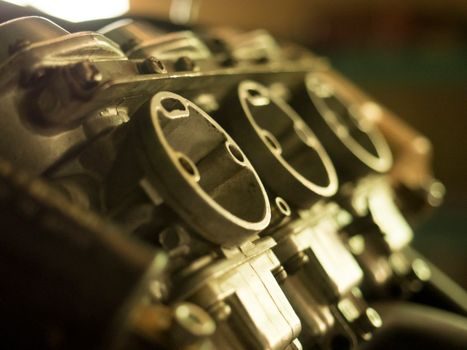
Side by side, on the four criteria that actually drive a buy decision: (1) Alloy compatibility — hot chamber covers Zn/Zn-Al/Pb/Sn (and Mg in protected setups); cold chamber covers Al, Mg, Cu alloys and high-melt Zn-free grades. (2) Cycle time on small parts — hot chamber typically 30-90 s/shot; cold chamber 60-180 s/shot because of ladling and cooldown. (3) Part size ceiling — hot chamber roughly 0.05-5 kg practical, cold chamber 5-50+ kg. (4) Capex for similar tonnage — a 130 t hot chamber sits in the ~US$43-53k band, while a 700 t cold chamber aluminum machine is ~US$127-156k per set [S2][S7].
The fifth, often-overlooked criterion is energy draw: a hot chamber holds the melt at temperature continuously, so its steady-state kW per part is dominated by holding losses; a cold chamber only melts what it shoots, so for low-duty-cycle aluminum work it can actually be more energy-efficient. For a continuous three-shift energy-components line, hot chamber on zinc is the lower total-energy choice; for batch aluminum housings, cold chamber or vacuum die casting wins.
Standards, Quality, and Vendor Vetting
There is no single ISO or EN standard that pins a hot chamber machine's clamp force or shot weight; instead, buyers evaluate against machine-builder published specs, OEM part drawings, and process-capability data (Cp, Cpk) on real production runs. Chinese builders like Guangdong SHIMI Intelligent Equipment publish OEM/ODM service capability for both cold and hot chamber machines and were founded in 2009 with more than a decade of stated development [S5].
For energy applications where the cast part carries current or sits in a dielectric environment, additional standards govern the part itself rather than the machine: IEC 61238-1 for power connectors, UL 486A-B for wire connectors, and RoHS/REACH for the alloy chemistry — these are part-design constraints, not machine constraints, and they are how the cast housing is specified and accepted. Buyers should request material certificates (alloy grade, impurity limits), shot-weight repeatability data, and a sample run on the actual part before accepting a machine for production energy-equipment work [S6].
Failure Modes and Operational Pitfalls
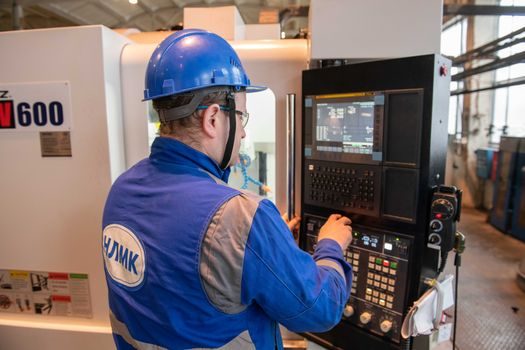
The most common hot chamber failure modes in energy-component production are: (1) gooseneck erosion from Zn-Al alloys with high aluminum content (above ~4% Al in the melt accelerates attack on the iron gooseneck); (2) plunger and nozzle wear that drifts shot weight upward over thousands of cycles, changing part density and conductivity; (3) furnace controller drift that lets the melt sit above the alloy's safe range and burn off magnesium or aluminum additives; (4) cold-shut and misrun on parts with thin walls (below ~1.0 mm in zinc) when shot speed is set too conservatively. For aerospace-adjacent energy hardware — UAV battery enclosures, satellite power housings — the hot chamber class is usually the wrong call for reasons that are worth reading before committing capex. [S2]
Maintenance intervals on a 130-180 t hot chamber line typically run 50,000-100,000 shots between gooseneck replacements and 200,000+ shots between plunger-replacement service, with shot-weight calibration checked per shift. These numbers are operational ranges that buyers should confirm with each builder rather than treat as universal [S6].
Two trackable signals to watch before placing a 2026 order: confirm the builder's stated hot chamber tonnage band actually matches the part's required clamp force (HYBERS publishes 16-180 t, Jiangmen Zhenli lists 20-180 t hot chamber machines in active 2026 catalogs [S7][S9]), and ask for a sample run on production-intent dies before signing the PO. For aluminum energy hardware, route the spec to a cold chamber aluminum die casting machine line, not a hot chamber — alloy class beats clamp force every time.