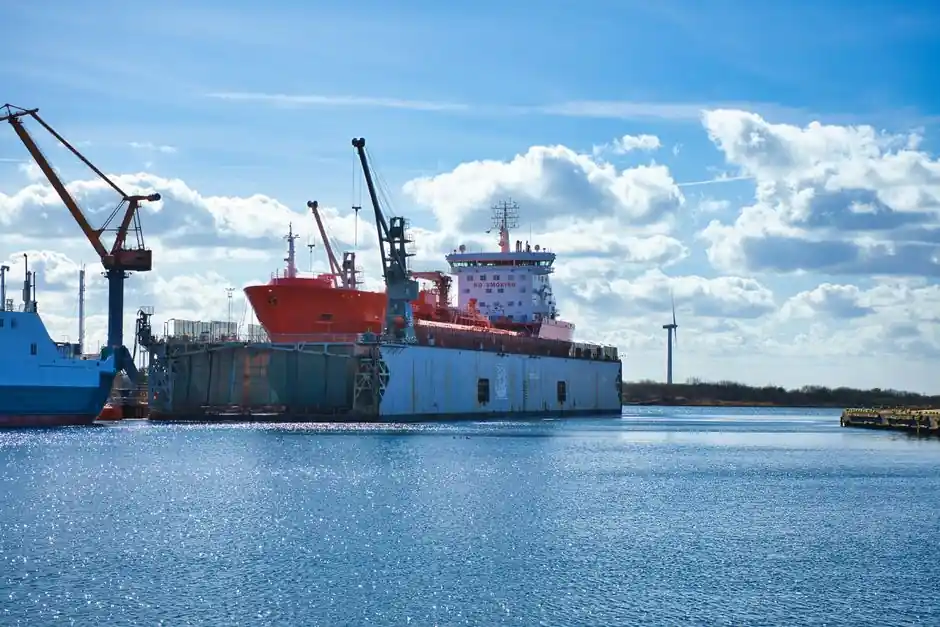
When selecting a shipyard goliath gantry crane, shipbuilders typically focus on lifting capacity, span, working height, operating stability, and customization options [S2].
A shipyard goliath gantry crane is a large-scale lifting machine used for hull blocks, ship sections, marine equipment, and other oversized structures in shipyards, docks, and offshore construction projects [S2].
What Block-Turning Duty the Crane Must Execute
Goliath gantry cranes are built for hull-block lifting, airborne turning, final alignment and closing operations rather than for routine cargo handling [S2][S4].
The gantry crane classification is useful here because the selected machine must combine portal travel, girder-mounted trolley movement, long-span rigidity and controlled main-hoist behavior. A shipyard crane that can lift a block but cannot control rotation, braking and landing alignment does not meet the complete production requirement [S2][S4].
Capacity, Span and Height Selection
Shipbuilding goliath cranes are selected according to project requirements for load and capacity, span and lifting height, operating conditions, control method, and project materials [S4]. A production crane should be specified against the project requirements for load and capacity, span and lifting height, operating conditions, control method, and existing crane specifications [S2][S4].
Capacity selection should use the actual mass of the heaviest block, its rigging arrangement and any dynamic allowance applied by the project specification. The span must cover dock width and side clearances, while lifting height must provide room for the tallest hull geometry and the required lift above the supporting structure [S2][S4].
Typical shipyard applications divide loosely by load, but the useful comparison is operational. These are selection bands, not universal rules; vessel mix, block dimensions and the yard’s production plan determine the final rating [S4].
Single-Girder and Double-Girder Configurations
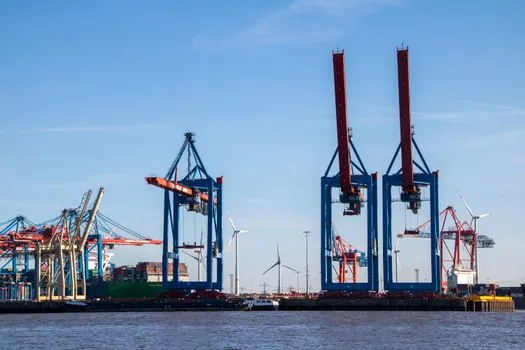
Shipbuilding portal cranes may use a portal frame with single or double main girders supported by a combination of one rigid leg and one flexible leg and installed on dry-dock and slipway rails [S4]. The configuration decision should be weighed against four criteria: required block mass, turning space, trolley arrangement and structural redundancy.
Control methods include pendant, remote, or cabin control, with the arrangement determined during project engineering [S4]. For large outdoor duties, the electrical architecture, visibility from the cabin, radio coverage, maintenance access and emergency-stop arrangement need to be reviewed as one system rather than selected separately.
Turning Control, Braking and Positioning
These features support smoother movement and accurate positioning during lifting, air turning and closing, but they remain design inputs rather than guarantees that every block can be turned.
The speed split reflects the practical need for faster transfer during less sensitive phases and slower movement for final alignment, where trolley drift, braking distance and block geometry become critical.
Duty Cycle and Environmental Exposure

Shipbuilding gantry cranes are specified according to their duty class, operating frequency, and working environment [S4]. Because block assembly repeats across a vessel program, availability, rail condition, wheel wear, brake inspection and trolley maintenance affect production more than isolated peak-speed figures.
Outdoor dock service also exposes the crane structure and electrical equipment to weather. Any exposed installation should define the protection boundary for drives, panels, sensors, access systems and operator stations rather than treating “weatherproof” as an unlimited duty condition.
The overhead bridge crane comparison highlights a different duty model: a shipyard goliath must travel along dock rails and coordinate trolley-based block rotation, whereas a fixed overhead crane serves a defined bay. Neither can substitute for the other where a block must be lifted clear, turned and carried to a hull assembly position.
Safety and Verification Before Procurement
A project inquiry should establish the maximum block weight, available span, required lifting height, duty frequency, control method and yard drawings before selecting a crane [S4]. Those six inputs determine the load case, rail geometry, portal arrangement, trolley travel, machinery sizing and commissioning acceptance criteria.
Finite-element structural analysis and a monitored PLC and inverter-control system are defined features of the referenced shipbuilding design [S4]. Type testing should also verify the agreed rated capacity, span, lifting height, operating modes and motion performance; a manufacturer’s use of the term “MU type” does not by itself establish compliance with a project-specific standard [S4].
Multi-hook synchronization is identified as a shipyard use case, but it should be specified only where the lifting arrangement and block design require it [S4]. For ordinary single-point block turns, the purchase specification should state sling geometry, rotation tolerance, brake performance, trolley positioning accuracy and the permitted operating envelope instead of adding unrelated features.
Application Fit and Operating Limits

A goliath crane is appropriate for large hull sections, marine equipment, offshore structures, block assembly and dry-dock operations where outdoor space permits rail-mounted gantry travel [S2]. It is not the right selection for compact workshops, loads below the engineered block-handling range, or sites where dock width, rail geometry and overhead clearance cannot support the required span and lift.
The Meyer Turku installation illustrates the distinction between general shipbuilding capability and a dedicated production role: the crane was assigned to turning blocks weighing about 100 t for cruise-ship hull construction [S6]. A specification that names “hull block turning” should still define the actual load range and turning sequence, because a 100 t operation does not establish suitability for 800 t or 1500 t blocks [S4][S6].
For yards comparing structural alternatives, the decision sequence is direct: confirm the heaviest production block, select a rating with the project’s required margin, fit the dock span and lifting height, then verify trolley coordination, braking, controls, fatigue duty and weather protection. That sequence converts “goliath crane” from a product label into an executable shipbuilding duty specification [S1][S2][S4].